The Core Pillars of Modern Digital Growth Strategies

In June 2026, a truly effective digital growth strategy transcends mere marketing tactics; it’s a comprehensive blueprint that aligns business objectives with digital capabilities.
As we’ve seen, 91% of businesses are already engaged in some form of digital initiative, underscoring its foundational importance.
Yet, a significant challenge remains: 70% of digital initiatives often miss their ROI targets, largely due to prioritizing superficial metrics over genuine strategic vision.
This highlights the critical need for a structured approach, moving beyond disconnected campaigns to an integrated system.
The shift towards digital platforms is undeniable, with projections indicating that by 2025, three out of every four business executives will be leveraging digital platforms to adapt to new markets and industries.
This evolution demands a framework built on four fundamental pillars: Data Intelligence, User Experience, Multi-Channel Synergy, and Conversion Architecture.
These pillars ensure that every digital touchpoint is aligned with the customer journey, transforming raw data into actionable insights for growth.
To illustrate the varying impact and investment across key digital channels, consider the following ROI comparison:
Channel Time to Results Long-Term ROI (per $1 spent) Primary Benefit SEO & Content 3-6 Months $30-$40 Organic visibility, authority, sustained traffic Email Marketing Immediate $36-$42 Retention, nurture, direct sales Paid Advertising Days $2-$5 Immediate traffic, targeted reach Mobile App Dev. 6-12 Months Varies widely Enhanced UX, customer loyalty, unique features Note: ROI figures are indicative and can vary based on industry, strategy, and execution quality.
This integrated perspective is crucial for building a resilient and scalable digital strategy, as detailed in guides like Digital Strategy in 2026: The Definitive Guide to Scalable Growth. It emphasizes the need for a unified approach where every component works in harmony to drive measurable outcomes.
Redefining Search with SEO, AEO, and GEO in Digital Growth Strategies
The landscape of search engine optimization (SEO) has undergone a profound transformation, moving beyond traditional keyword rankings to embrace Answer Engine Optimization (AEO) and Generative Engine Optimization (GEO).
In 2026, these advancements are not just buzzwords; they are reshaping how businesses achieve visibility and connect with their target audiences.
AEO focuses on optimizing content to directly answer user queries, especially as search engines increasingly provide direct answers or summaries within search results. This means crafting content that is clear, concise, and authoritative, capable of being extracted and presented as a definitive answer.
GEO, on the other hand, addresses the rise of generative AI in search. With Google’s Search Generative Experience (SGE) having already altered traffic patterns for a significant portion of informational keywords, businesses must now optimize for how AI models interpret and synthesize information.
This involves establishing deep topical authority through content clusters – a strategy where a central “pillar page” comprehensively covers a broad topic, supported by numerous “cluster pages” that delve into specific sub-topics.
This architecture, rich in quotable passages and semantic depth, signals to both traditional search algorithms and generative AI models that your site is a definitive source of information.
As highlighted in Digital Marketing Strategy 2026: The Complete Playbook for Growth, generalist brands struggle for visibility in this new era, making deep authority in focused topic clusters paramount.
Local SEO and the Power of AI Local SEO Automation
For many businesses, particularly those with physical locations or serving specific geographic areas, local SEO remains an indispensable component of their digital growth strategy.
In 2026, optimizing your presence for local searches means not only appearing in relevant results but also dominating them. This involves meticulous management of your Google Business Profile (GBP), ensuring accuracy and completeness across all online directories, and actively soliciting and responding to customer reviews.
The complexity of local SEO is increasingly being streamlined by AI local SEO automation. These tools leverage artificial intelligence to monitor, optimize, and manage local listings at scale, freeing up valuable human resources.
For example, platforms like the GBP Audit Tool by Paige, the ProfilePro Chrome extension, and the Heatmap Audit Tool provide invaluable insights into local performance, helping businesses identify gaps and opportunities. Solutions like Yext and BrightLocal offer comprehensive local listing management, ensuring consistent information across hundreds of platforms.
By integrating these AI-powered tools, businesses can significantly enhance their local search visibility and drive more foot traffic and local inquiries. For deeper insights into leveraging such technologies, exploring resources on AI local SEO automation can provide a competitive edge.
Paid Advertising and Precision Marketing Tactics
The days of broad, untargeted advertising campaigns yielding significant returns are largely behind us. In 2026, effective paid advertising is synonymous with precision marketing. For early-stage startups, broad-based campaigns are not only expensive but often ineffective.
Instead, the focus has shifted to targeting narrow audience segments with highly relevant messages that resonate deeply.
This approach relies heavily on sophisticated audience segmentation, leveraging detailed demographic, psychographic, and behavioral data to identify ideal customer profiles. Paid search platforms (like Google Ads) and paid social channels (Meta, TikTok, LinkedIn) allow for granular targeting, ensuring your advertising spend reaches those most likely to convert.
Retargeting campaigns, once reliant on third-party cookies, have evolved to utilize first-party data and AI-predicted intent models, making them even more potent.
The deprecation of third-party cookies has cemented first-party data as arguably the most valuable marketing asset a business can possess.
Companies that own and effectively utilize their first-party data are seeing a 2.9x increase in marketing efficiency. This data fuels hyper-personalization and allows for more accurate measurement of campaign effectiveness.
A significant portion of digital marketing budgets, typically 30-40% for search and 20-30% for paid social, is now allocated to these precision-driven strategies, reflecting their critical role in acquiring high-intent buyers and driving top-of-funnel engagement.
Mobile App Development and User Experience
In an increasingly mobile-first world, the quality of a business’s mobile experience can make or break its digital growth. This extends beyond just having a mobile-responsive website; it increasingly involves strategic mobile app development and a relentless focus on user experience (UX).
A mere 100ms delay in page load time can lead to a 7% drop in conversions, illustrating the profound impact of performance on user behavior.
Mobile apps offer a unique opportunity to cultivate deeper customer engagement, provide personalized experiences, and streamline interactions. They can serve as powerful tools for loyalty programs, direct communication, and even product-led growth. However, the success of an app hinges on its UX – it must be intuitive, fast, and deliver tangible value to the user.
Optimizing for mobile also means ensuring that all digital assets, from websites to landing pages, are designed with mobile users in mind. Despite advancements, the average UK mobile conversion rate still lags significantly behind desktop, indicating a persistent challenge and opportunity for improvement.
Investing in robust mobile app digital growth strategies not only enhances customer satisfaction but also unlocks new avenues for revenue and brand loyalty.
Understanding the nuances of mobile engagement is paramount, and resources like those found on Mobile app digital growth strategies can provide valuable guidance.
Five Startup Growth Strategies for 2026 vs. Traditional Approaches
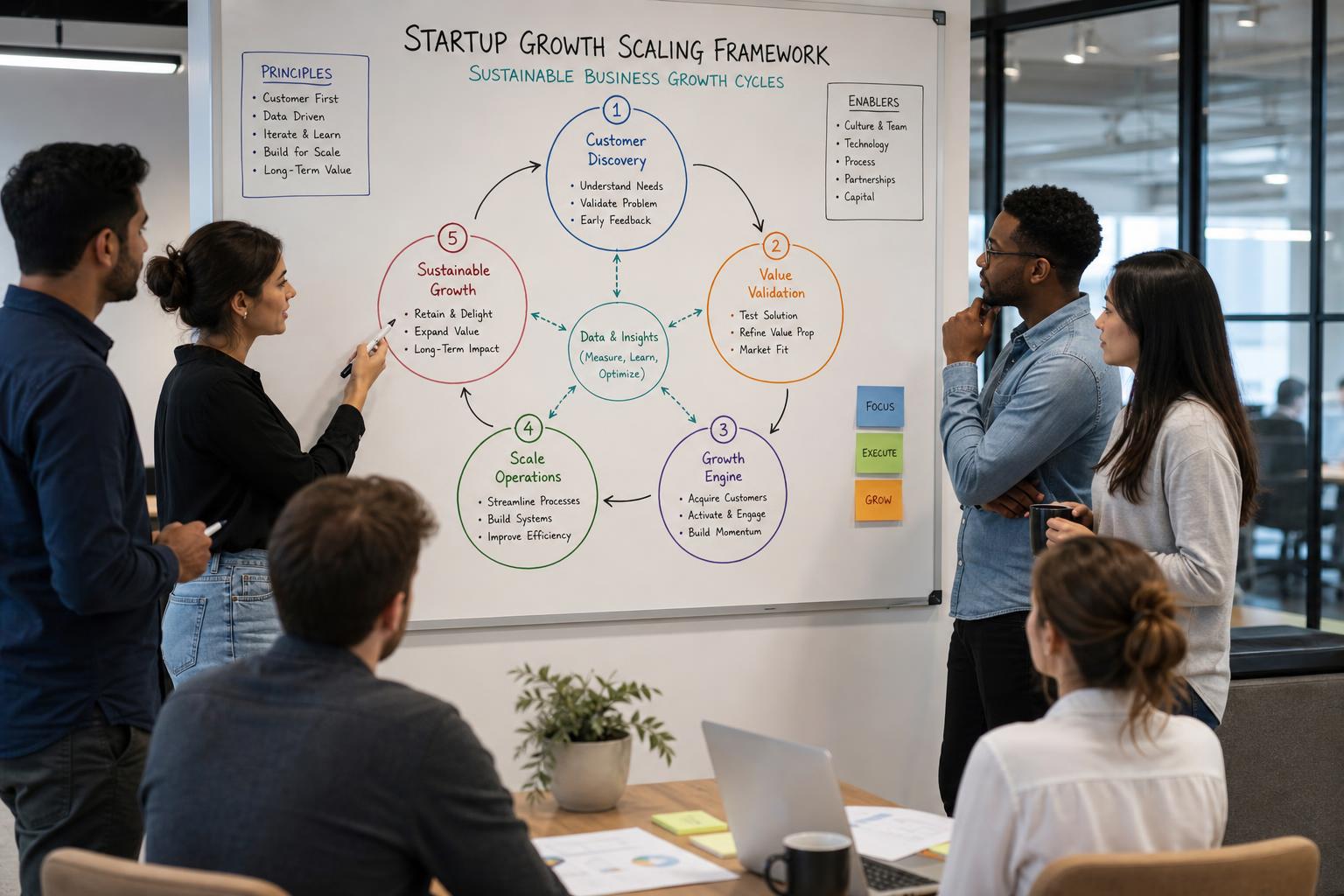
The growth tactics that propelled businesses forward just a few years ago are rapidly becoming obsolete. For early-stage startups in particular, merely replicating traditional marketing models is a recipe for stagnation.
In 2026, the most successful startups are embracing a new paradigm of growth that prioritizes systems, precision, and sustainability over broad-stroke campaigns.
Unlike traditional marketing, which often focuses on brand awareness and broad reach, modern growth marketing is metrics-driven, laser-focused on customer acquisition and revenue expansion, and characterized by rapid iteration and testing.
The Business Growth Framework for 2026 | Involve Digital emphasizes that many businesses don’t have a growth problem, but rather a systems problem, highlighting the need for structured frameworks over disconnected tactics.
Here are five key strategies that differentiate successful early-stage startups in 2026:
Creating Sustainable Growth Loops and Flywheels for Digital Growth Strategies
One of the most powerful shifts in digital growth strategies is the move from linear funnels to self-sustaining growth loops and flywheels. Instead of viewing customer acquisition as a one-off event, these models design systems where each acquired customer or action inherently leads to the acquisition of the next, creating compounding returns without a proportional increase in effort.
For instance, a growth loop might involve a user inviting friends to a platform, those friends joining and inviting more, fueling continuous user acquisition.
A flywheel, on the other hand, builds momentum by continually reinvesting profits and positive customer experiences back into the business, enhancing its value proposition, attracting more customers, and further improving the offering.
This approach ensures that growth is not just achieved but sustained and accelerated over time.
As articulated in Digital Growth Strategy (2026): Stop Guessing, Start Growing | CyberCraft Bangladesh, while “growth hacking” offers short-term spikes, true “growth strategy” builds long-term compounding systems that fundamentally change a business’s trajectory.
Strategic Collaborations and Mutual Value Partnerships
In 2026, businesses are increasingly recognizing that they don’t have to grow in isolation. Strategic collaborations and partnerships are becoming a cornerstone of digital growth, particularly for startups.
The most effective partnerships are built on genuine alignment and complementary capabilities, moving beyond transactional relationships to create mutual value.
Consider a fintech startup collaborating with an established accounting software provider to embed its payment solutions directly into trusted workflows. This creates value for the startup through access to a new user base, for the partner through an enhanced product offering, and for the end-user through seamless integration.
Such collaborations require clear success metrics, defined roles, and regular check-ins to ensure both parties benefit and contribute to ecosystem growth.
These partnerships can unlock new markets, accelerate product adoption, and share resources, leading to more efficient and sustainable growth.
Accessing Specialized Talent via Fractional and Hybrid Models
The digital ecosystem of 2026 is characterized by a dynamic talent market that demands flexibility. For startups, building an in-house team with every specialized skill needed for rapid growth can be prohibitively expensive and time-consuming. This is where hybrid work models and fractional arrangements offer a significant advantage.
Fractional talent, such as a fractional CMO or CFO, brings a wealth of cross-industry experience and proven processes that a full-time hire from a single company might lack.
A fractional CFO, for example, who has navigated multiple fundraises, can spot patterns and provide strategic guidance that a first-time hire simply wouldn’t have.
Similarly, a conversion specialist can test more ideas in six months than a generalist might in two years. These arrangements allow startups to access highly specialized skills on-demand, filling critical gaps without the overhead of a full-time employee.
By identifying pressing skill gaps and exploring fractional or contract engagements, businesses can build agile, high-performing teams optimized for digital growth.
Integrating Digital Growth with Sales and Operations

The siloed approach to business functions is a relic of the past. In 2026, achieving scalable digital growth necessitates a seamless integration of digital strategies with existing sales and operational efforts. Companies with highly integrated departments have reported a 19% increase in faster growth compared to their siloed competitors.
This convergence is often facilitated by the adoption of Revenue Operations (RevOps), with 75% of the highest-growth companies expected to operate with a formal RevOps model by 2026. This holistic view ensures that digital transformation isn’t just about technology adoption but also a cultural shift towards agility and continuous improvement.
The Digital Marketing Strategy in 2026: 9-Stage Framework – CO Consulting underscores this by emphasizing a strategy-first approach that integrates all business functions.
Aligning Marketing Systems with Existing Sales Efforts
For digital growth to be truly effective, it must feed directly into and support sales efforts. This means moving beyond simply generating leads to ensuring those leads are qualified, nurtured, and seamlessly handed off to sales teams. Robust CRM systems are foundational, acting as the central nervous system for customer data and interactions.
Effective lead routing, based on predefined criteria and behavioral triggers, ensures that sales teams receive the right leads at the right time.
Furthermore, establishing clear Service Level Agreements (SLAs) for lead response times – such as responding to inbound leads within 5 minutes – can dramatically improve conversion rates.
Documenting playbooks for lead handling, sales conversations, onboarding, and client management ensures consistency and efficiency across the entire customer journey.
This unified approach, where digital marketing and sales efforts are interwoven, prevents leads from falling through the cracks and maximizes the return on marketing investment.
Balancing AI Assistance with Human Creativity
Artificial intelligence has become an indispensable tool in digital growth strategies, but its role is to amplify human capabilities, not replace them. In 2026, the most successful businesses are those that use AI to streamline repetitive tasks, analyze vast datasets, and generate initial content drafts, freeing human strategists and creatives to focus on higher-level thinking, originality, and strategic positioning.
Developing AI literacy across the team is crucial, ensuring everyone understands what AI tools excel at and where human intervention is indispensable.
For instance, AI can handle keyword research and generate initial content outlines, but seasoned marketers are needed to review messaging, add unique perspectives, and ensure the content truly resonates with the target audience, avoiding generic outputs.
AI content operations, which automate content creation workflows, allow human strategists to concentrate on editing, distribution, and refining the overall brand voice. This balance ensures that digital growth strategies remain innovative, authentic, and deeply connected to human insights.
Tracking Metrics and Analytics for Predictable Digital Growth
Predictable digital growth is impossible without a robust framework for tracking metrics and analytics. In 2026, this goes far beyond vanity metrics like page views or social media likes. The focus is squarely on key performance indicators (KPIs) that directly correlate with business objectives, primarily Customer Acquisition Cost (CAC) and Customer Lifetime Value (LTV).
Businesses should track CAC and LTV by channel monthly. A healthy indicator of a working strategy is when your CAC is consistently below one-third of your LTV and trending downwards over time. This provides a clear signal of sustainable profitability. Advanced attribution models, particularly multi-touch attribution, are critical for understanding which touchpoints contribute to conversions, moving beyond the limitations of last-click attribution.
Data-driven decision-making is paramount. With 74% of conversion rate optimization programs leading to increased sales, and only 17% of marketers currently using landing page A/B tests, there’s a huge opportunity for improvement.
Leveraging analytics to continuously refine strategies and optimize marketing spend is key to achieving Predictable digital growth.
As emphasized in the Digital Marketing Strategy Guide 2026 | Involve Digital, data is not just important for tracking; it’s essential for identifying improvements and optimizing strategies for better results and resource efficiency.
Common Pitfalls to Avoid in Digital Growth Execution
Even with the most meticulously crafted digital growth strategy, execution can falter if common pitfalls are not recognized and actively avoided. In 2026, these pitfalls are more insidious than ever, capable of derailing even well-funded initiatives.
One of the most significant dangers is the proliferation of disconnected tech stacks. Projections indicate that by 2026, a staggering 75% of marketing budgets will be wasted on such fragmented systems that fail to track a single user journey from start to finish.
This creates data silos, where valuable information is trapped in different platforms, preventing a holistic view of customer interactions and campaign performance. The result is often inefficient spending, redundant efforts, and a lack of actionable insights.
Another common mistake is an over-reliance on vanity metrics. Focusing on metrics like high traffic numbers or social media follower counts, without correlating them to actual business outcomes like conversions or revenue, can lead to a false sense of success. This can mask underlying problems in the conversion funnel or lead to misallocation of resources.
Furthermore, many businesses collect vast amounts of data but fail to utilize it effectively; 72% of businesses collect data they never use. This represents a massive missed opportunity for optimization and personalization.
Compounding this issue is the lingering dependence on third-party cookies, even as their deprecation reshapes the digital advertising landscape.
Businesses that haven’t developed robust first-party data strategies risk losing significant retargeting and personalization capabilities.
Finally, a significant number of self-developed strategies—82% to be precise—fail to scale due to technical blind spots and a lack of appropriate data tools. This underscores the need for expert guidance and the right technological infrastructure to support ambitious growth objectives.
Avoiding these pitfalls requires a commitment to integrated systems, data-driven decision-making, and a continuous focus on measurable, revenue-generating outcomes.
Conclusion
The journey to driving digital growth in June 2026 is complex but immensely rewarding. It demands a strategic roadmap that integrates SEO, paid advertising, and mobile app development into a cohesive, data-driven ecosystem. We’ve explored how the evolution of search with AEO and GEO, the power of AI local SEO automation, and the precision of modern paid advertising are reshaping the landscape.
We’ve also highlighted the need for sustainable growth loops, strategic collaborations, and agile talent acquisition models, all while emphasizing the critical integration of digital efforts with sales and operations.
The future of digital growth is not about isolated tactics but about interconnected systems. By balancing AI assistance with human creativity, meticulously tracking the right metrics, and proactively avoiding common pitfalls, businesses can build a resilient, future-proof strategy that delivers continuous, compounding returns.
The key lies in continuous optimization, a deep understanding of your audience, and a commitment to leveraging technology as an amplifier for human ingenuity.
FAQ 1: What is the difference between digital marketing and a digital growth strategy?
While often used interchangeably, there’s a crucial distinction. Digital marketing typically refers to the tactical execution of specific campaigns and activities across various online channels—like running a Facebook ad campaign, optimizing a blog post for SEO, or sending out email newsletters. It’s about performing individual marketing actions.
A digital growth strategy, however, is the overarching, high-level blueprint that dictates why and how those digital marketing tactics are employed.
It’s a systems-thinking approach that defines how all the individual tactics work together to achieve specific business goals, how they compound over time, and how they integrate with broader sales and operational objectives.
It’s less about the “what” (the specific ad or email) and more about the “why” and “how” (the strategic framework and interconnected system).
FAQ 2: How long does it take to see results from a digital growth strategy in 2026?
The timeframe for seeing results from a digital growth strategy in 2026 is nuanced and depends heavily on the specific tactics employed and the maturity of the business.
Quick wins can be observed within days or weeks, particularly with paid advertising campaigns, which can generate immediate traffic. Email automation can also show returns almost immediately after setup.
However, for sustainable, compounding growth, a longer view is necessary. SEO and content marketing, while offering the highest long-term ROI, typically begin to show significant results within 3 to 6 months.
A comprehensive strategy, integrating various channels, usually produces measurable leads and conversions within 30-60 days, with substantial improvements and significant results becoming evident at the six-month mark.
Sustainable growth, often involving iterative optimization cycles, usually requires 6 to 12 months to fully materialize.
FAQ 3: How does AI impact local SEO and Google Business Profile management?
AI is fundamentally transforming local SEO and Google Business Profile (GBP) management in 2026 by enabling greater efficiency, precision, and scalability. AI agents can automate routine tasks such as monitoring GBP listings for accuracy, updating business information across multiple directories, and even generating personalized responses to customer reviews.
Tools like the GBP Audit Tool by Paige, the ProfilePro Chrome extension, and the Heatmap Audit Tool leverage AI to provide deep insights into local search performance, identifying areas for improvement that would be time-consuming for humans to uncover manually.
AI can analyze vast amounts of local search data to pinpoint optimal keyword targeting, identify local trends, and even predict customer behavior.
This allows businesses to optimize their local presence with unprecedented accuracy, ensuring they appear prominently in local search results and attract more high-intent local customers.