Key Takeaways
- Hands-on learning connects academic concepts with meaningful tasks and local experiences.
- Well-designed projects help students practice persistence, communication, research, and teamwork.
- Confidence grows when students can see progress, receive specific feedback, and revise their work.
- Choice matters, but clear expectations, checkpoints, and reflection keep projects productive.
- Nashville families can encourage active learning through everyday home and community activities.
Table of Contents
- What Hands-On Learning Looks Like
- Why Active Learning Is Memorable
- How Projects Build Confidence
- Curiosity and Deeper Thinking
- Real-World Skills Students Practice
- Why Mistakes Matter
- Balancing Choice With Structure
- Hands-On Ideas for Home
- Questions for Families
- A Practical Path Forward
In Nashville, students are surrounded by opportunities to connect learning with real life, from studying local weather and waterways to exploring music, food, neighborhoods, and community needs. Families considering a more active approach to education may find it helpful to look for signs your child needs project-based learning, especially when traditional assignments do not fully reflect a child’s interests or capabilities.
Hands-on learning does not mean students simply stay busy. It means they use knowledge to investigate a question, make a decision, create something, test an idea, explain their thinking, and reflect on what they would improve next time. The strongest experiences pair student activity with purposeful instruction.
A class might calculate the cost of a small garden, write persuasive letters about a neighborhood issue, design a water filter, or produce a short presentation about Tennessee history. Each activity can involve academic content, but students also see why that content matters beyond a worksheet or quiz.
This approach can work across subjects. Math becomes useful during measurement and budgeting. Reading supports research and source evaluation. Science comes alive through observation and testing. Language arts develops through planning, discussion, writing, and presentation.
For families comparing learning options, project-based learning schools in Nashville can offer a useful starting point for asking how students are guided through inquiry, collaboration, feedback, and revision.
1. What Hands-On Learning Looks Like
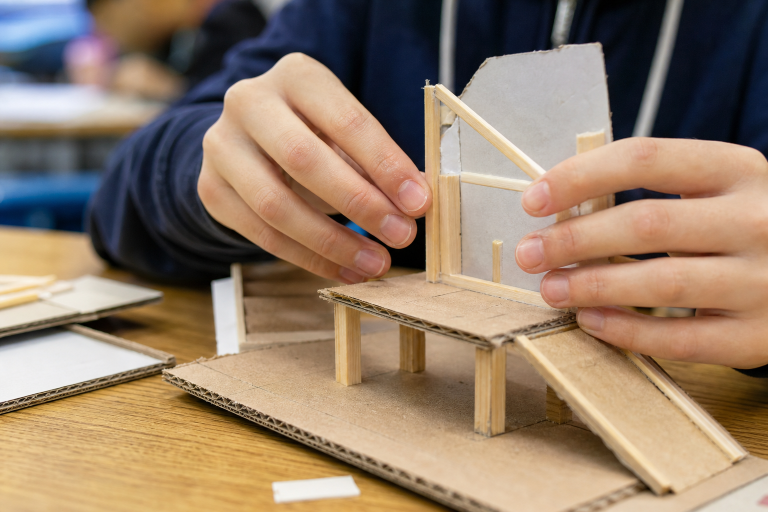
Hands-on learning is active, but it is also intentional. Students may build models, conduct interviews, analyze data, debate solutions, create visual work, or share findings with an audience. Instead of receiving information only through lectures or memorization, they have structured chances to use it.
2. Why Active Learning Is Memorable
Direct experience gives abstract ideas a clear context. A student who measures ingredients for a recipe is applying fractions. A student who tracks rainfall is working with observation, patterns, charts, and evidence. Discussion and reflection help turn the activity into learning rather than a one-time event.
Tennessee’s science and engineering practices include asking questions, developing models, carrying out investigations, analyzing data, and communicating information. Those practices show why carefully planned projects can support rigorous academic goals as well as engagement.
3. How Projects Build Student Confidence
Confidence is more durable when students have evidence of their own progress. Consider a student whose first bridge model collapses under a small amount of weight.
With guidance, the student identifies a weak connection, changes the design, and tests it again. The successful revision does more than produce a better model. It shows that improvement can follow effort, feedback, and persistence.
Useful feedback is specific. Rather than saying, “Great job,” an adult might say, “Your explanation became clearer when you added measurements and labeled the diagram.” Students then know what worked and what to do next.
4. Curiosity and Deeper Thinking
Curiosity grows when students can pursue worthwhile questions that do not have an instant answer. In Nashville, a project might begin with questions such as: How could our school reduce lunchtime waste? What makes one neighborhood safer for walking than another? How does sound change in different performance spaces?
Open-ended questions encourage reading, observation, research, and conversation. Still, choice works best within boundaries. Students need a clear goal, reliable sources, realistic deadlines, and an understanding of how their work will be assessed.
5. Real-World Skills Students Practice
- Problem-solving: Defining a challenge, comparing options, and improving a plan.
- Communication: Explaining ideas through writing, speaking, visuals, or demonstrations.
- Collaboration: Dividing responsibilities, listening carefully, and working through disagreements.
- Time management: Turning a large assignment into smaller, manageable deadlines.
- Research: Finding information, questioning its reliability, and using evidence responsibly.
- Self-advocacy: Asking for clarification, requesting feedback, and identifying needed support.
Project work is most inclusive when teachers make expectations visible. Vanderbilt University’s IRIS Center recommends practices such as breaking projects into smaller components, using checklists, establishing group roles, and building in reflection. These supports can help students who need additional structure without removing meaningful participation.
6. Why Mistakes Matter
Mistakes belong in learning when students are supported in responding to them. A prototype that fails, a flawed first draft, or a research source that proves unreliable can become a productive turning point.
The important question is not whether the first attempt was perfect, but what the student learned from reviewing it.
7. Balancing Choice With Structure
Hands-on learning should not feel unorganized. Strong projects often follow a simple sequence:
- Introduce a central question and learning target.
- Teach or review essential background knowledge.
- Develop a plan, assign roles, and set milestones.
- Research, build, draft, or test.
- Receive feedback and revise.
- Present the result and reflect on the process.
8. Hands-On Ideas for Home
- Plan a family meal using a budget, grocery list, measurements, and nutrition labels.
- Build a recycled-material structure and test how much weight it can hold.
- Track Nashville weather for a week and create a simple chart.
- Interview a family member about a job, skill, or life experience.
- Grow herbs, record changes, and discuss what plants need to thrive.
- Challenge children to reduce food waste or improve the organization of a shared space.
9. Questions for Families
- How do teachers connect projects to academic learning goals?
- What happens when a student becomes stuck or falls behind?
- How are research, teamwork, communication, and final work assessed?
- Do students have time to revise after feedback?
- Can families see examples of student work and project expectations?
10. A Practical Path Forward
Hands-on learning can begin with one meaningful question and one manageable challenge.
For Nashville students, the city itself offers material for investigation, creativity, and service.
When curiosity is paired with guidance, students gain more than a finished project. They practice how to think, make, solve, explain, and try again.