Canada has emerged as a significant player in the global cryptocurrency landscape, establishing a relatively clear regulatory framework compared to some other jurisdictions.
For individuals and institutions looking to engage with digital assets in the country, understanding how platforms operate and the rules governing them is essential. One such platform that has garnered attention is Coinberry, a prominent Canada crypto exchange.
How Does Canada’s Crypto Platform Coinberry Work?
Coinberry operates as a digital asset trading platform designed to facilitate the buying, selling, and trading of various cryptocurrencies for Canadian users. Its core function is to provide a user-friendly and secure gateway for individuals to interact with the crypto market.
As a regulated entity, Coinberry has worked to instill confidence in users seeking to participate in Canada crypto activities.
The Mechanism of a Canadian Crypto Exchange
At its heart, Coinberry, like other reputable Canada crypto exchanges, functions as an intermediary. It allows users to convert Canadian dollars (CAD) into cryptocurrencies such as Bitcoin, Ethereum, and a selection of other altcoins, and vice versa. The process typically involves several steps:
Account Creation and Verification
Users first create an account on the Coinberry platform. Crucially, as part of Canada crypto regulation and anti-money laundering (AML) protocols, users must undergo a Know Your Customer (KYC) verification process.
This involves providing personal identification documents to confirm their identity. This stringent verification is a requirement for any Canada crypto exchange license and is fundamental to combating illicit financial activities.
Funding the Account
Once verified, users can deposit CAD into their Coinberry account using various methods, often including Interac e-Transfer or wire transfers. The availability and speed of these funding options are a key convenience factor for Canada crypto users.
Buying and Selling Cryptocurrencies
With funds deposited, users can then place orders to buy or sell cryptocurrencies. Coinberry typically offers “Express Trade” or similar simplified interfaces for beginners to quickly execute trades.
For more experienced traders, advanced trading features might be available, offering more control over order types (e.g., limit orders). When a user buys crypto, Coinberry facilitates the exchange of CAD for the chosen digital asset at the prevailing market rate, minus any applicable fees.
Crypto Storage
After a purchase, the cryptocurrency is typically held securely in the user’s Coinberry account. Reputable exchanges like Coinberry emphasize security measures, often employing a combination of “cold storage” (offline storage) for the majority of client assets and robust cybersecurity protocols to protect funds and user data.
This focus on security is paramount given past incidents in the broader industry, though thankfully, there hasn’t been a major Canada crypto exchange scandal specific to Coinberry.
Withdrawals
Users can withdraw their crypto assets to an external Canada crypto wallet (a personal hardware or software wallet for self-custody) or withdraw fiat currency back to their bank account.
The Regulatory Landscape: Canada Crypto Laws and Compliance
Canada has taken a proactive stance on cryptocurrency regulation, aiming to provide clarity and foster innovation while protecting investors.
This contrasts with some other nations that have adopted a more reactive or even prohibitory approach, such as concerns around a potential Canada crypto ban (which has not materialized).
Registration and Licensing
Crypto trading platforms in Canada, including Coinberry, are required to register as Money Services Businesses (MSBs) with the Financial Transactions and Reports Analysis Centre of Canada (FINTRAC).
Furthermore, platforms that deal in crypto assets that are deemed “securities” or “commodities” must comply with provincial securities regulations. Coinberry, for instance, has obtained registration with the Ontario Securities Commission (OSC) and has been granted nationwide registration via the Canadian Securities Administrators (CSA), solidifying its position as a compliant Canada crypto exchange. This demonstrates their commitment to operating within established Canada crypto laws.
AML/KYC Requirements: A cornerstone of Canada crypto regulation is strict adherence to Anti-Money Laundering (AML) and Know Your Customer (KYC) procedures.
This includes verifying customer identities, monitoring transactions for suspicious activity, and reporting large or unusual transactions to FINTRAC. These measures are critical for preventing financial crimes and enhancing the integrity of the Canada crypto ecosystem.
Consumer Protection
Canadian regulators emphasize consumer protection, aiming to ensure that platforms operate transparently and have robust systems in place to safeguard client assets. This focus helps differentiate regulated platforms from unregulated entities.
Taxation in the Great White North: Canada Crypto Tax
A crucial aspect for anyone engaging in Canada crypto is understanding the tax implications.
The Canada Revenue Agency (CRA) treats cryptocurrency as a commodity for tax purposes. This means that engaging in crypto transactions can trigger tax obligations.
Capital Gains Tax
For most casual investors, selling, trading, or spending cryptocurrency can result in a capital gain or loss.
In Canada, only 50% of a capital gain is taxable. The Canada crypto capital gains tax rate is not a fixed percentage; instead, the taxable portion of your capital gain is added to your total income for the year and taxed at your marginal income tax rate.
For Canada crypto tax capital gains rate 2024 CRA rules, and similarly for Canada crypto tax capital gains rate 2025 CRA, the inclusion rate for individuals remains at 50% for capital gains.
While there were discussions about changes to the inclusion rate in the 2024 federal budget, current guidance confirms the 50% inclusion rate for calendar year 2024 and onwards.
Canada crypto tax rules CRA require diligent record-keeping of all crypto transactions, including dates, amounts, and fair market value in CAD at the time of transaction, to accurately calculate gains and losses.
Business Income Tax
If crypto activities are considered a business (e.g., frequent day trading, mining as a primary income source), then 100% of the profits are taxed as business income, at applicable income tax rates. The CRA assesses this on a case-by-case basis, considering factors like frequency and volume of transactions.
This robust tax framework is part of the broader Canada crypto regulation efforts to ensure compliance and fair taxation within the digital asset space.
The Broader Canada Crypto Ecosystem
Beyond exchanges like Coinberry, the Canada crypto scene is vibrant and diverse. The country has been a pioneer in certain areas, notably Canada crypto ETF XRP and other crypto exchange-traded funds.
Canada was among the first countries globally to approve Bitcoin and Ethereum ETFs, providing regulated investment vehicles for traditional investors to gain exposure to cryptocurrencies without directly holding them.
The landscape also includes various other players, from dedicated Canada crypto wallet providers to burgeoning decentralized finance (DeFi) projects, and even a nascent, though heavily regulated, market for Canada crypto casinos (though strict regulations apply to online gambling).
Events like Canada Crypto Week (a hypothetical event, but indicative of community engagement) often showcase innovation and foster discussion within this evolving sector.
If you want to start buying some crypto, one of the fastest ways is by signing up to Coinberry (and start for as little as 50 CAD).
You can start by downloading their app, creating your account, verifying your identity, funding your account, and buying some crypto (they support 29+ cryptocurrencies and tokens).
What is a crypto platform?
Before we talk more about Coinberry, it helps to understand first what a crypto platform is, how it works, and how it makes money. This way, you’ll make a more informed decision when starting your crypto investing journey.
First, what is a crypto platform? This is where you can buy and sell cryptocurrencies and tokens. Its role is to facilitate and process transactions. It’s like a stock trading app where you can buy and sell shares. When investing in stocks, you buy shares at what you think is a low price (or undervalued) and you sell them at a higher price (“Buy low, sell high”). Similarly, when you buy some crypto, you hope or expect its price to rise in the near future or long term. You make a profit when you buy some crypto at a low price and sell it later at a higher price.
Right now, there are hundreds of crypto platforms and thousands of cryptocurrencies and tokens. Many of these crypto platforms support dozens of tokens and cryptos. This way, investors will have several options, and they can easily shift their funds or rebalance their portfolios according to the movements of the crypto market.
For example, if Bitcoin’s price is getting too high or has already reached its peak for this month, investors might want to sell it, take the profit, and buy other cryptos that are cheaper (which may increase in value a bit later). With proper execution and luck, investors can make money by regularly rebalancing their portfolio (sell when high, buy other cryptos at low prices).
As a result, it’s important for a crypto platform to support dozens of cryptos and tokens. This way, investors can make their strategies more responsive and dynamic according to market trends. In addition, beginners will also have several options as to where to start and which crypto they should first buy (such as when the prices of Bitcoin and Ethereum are too high when they start, so they might want to consider buying less popular cryptocurrencies).
How do crypto exchanges work?
As mentioned earlier, a crypto trading platform or a crypto exchange facilitates and processes buy and sell transactions. In other words, it acts as an intermediary or a middleman between buyers and sellers.
Perhaps you’ve already heard about how cryptocurrencies and blockchains are peer-to-peer, decentralized, and there’s no middleman. But in crypto platforms, they act as a middleman. How do we make sense of that and is a middleman always necessary?
There are other ways (that don’t require a middleman) to earn crypto such as through crypto mining and storing crypto through a physical or hardware wallet (this looks like a USB drive). However, this requires some technical know-how and several precautions so you can protect your digital assets.
Many beginners and investors might not be willing to learn those technical details. They might just want to quickly buy some crypto and get into action. To do that, a fast and easy way is to use a crypto exchange platform. The entire process is straightforward and intuitive, just like creating a new email address and opening a new bank account. Instead of figuring out the technical details, investors can go straight to buying some crypto and focus on analyzing the trends. Later on, they can always learn more about cryptocurrencies, physical crypto wallets, and blockchains. But for now, it might be enough for them to invest and see the results.
How do crypto exchanges make money?
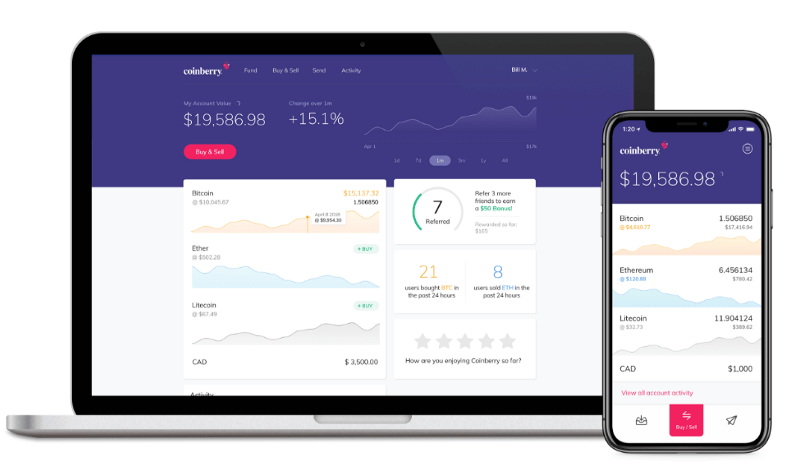
As an intermediary, a crypto platform usually makes money from transaction fees. Similar to banks and payment network processors such as Mastercard and Visa, they take a small percentage of the total transaction amount as payment. This way, they can sustain their businesses, make a profit, and improve or expand their services.
Similarly, many crypto platforms take a small percentage of the total transaction amount (which may reach up to more than 3% depending on the transaction amount and mode of payment). There could also be a small flat fee that usually applies to transactions under $100 or $200.
In these cases, the platforms make money with each transaction (including each deposit and withdrawal), which comes at the investor’s expense (higher transaction fees mean less money available for buying more crypto).
On the other hand, there are also other crypto platforms that have no deposit and withdrawal fees.
Instead, they make money by buying discounted crypto from several providers and then selling that crypto at the listed prices. In other words, they make money “behind the scenes,” and as a result, customers get to keep more of their money and use that to buy more crypto.
Which crypto platform has the lowest fees?
When choosing a crypto platform, it helps to study its fee structure so that you know exactly what you’re paying for and you can better estimate and calculate your ROI.
As mentioned earlier, many platforms charge a small flat fee or a small percentage of each deposit, withdrawal, and other transactions.
There are also other platforms such as Coinb erry that have zero CAD deposit and withdrawal fees. In this case, it makes sense to choose a platform that can help you save money and help you buy more crypto.
As crypto investing becomes more competitive (and many more platforms are sure to enter the market), expect the fees and charges to become lower so that those platforms can attract more customers or retain their existing ones. This way, customers will get more value out of their money, and further take advantage of the rapidly evolving crypto market.
In summary, Coinberry functions as a key component of the regulated Canada crypto ecosystem, offering a streamlined platform for users to access digital assets while operating under a clear framework of Canada crypto laws and tax regulations.
This commitment to compliance helps position Canada as a leader in fostering a secure and predictable environment for cryptocurrency engagement.