Narrow trenching is a critical requirement across many industries, including construction, utilities, telecommunications, agriculture, and infrastructure development. Whether installing underground cables, water pipes, drainage systems, or irrigation lines, contractors need equipment that can deliver precision, efficiency, and cost-effectiveness.
An excavator trencher has become one of the most effective solutions for narrow trenching applications. Designed to create clean, consistent trenches with minimal ground disturbance, these attachments help contractors complete projects faster while maintaining high levels of accuracy.
When paired with other specialised attachments such as an excavator auger drive, excavators become highly versatile machines capable of handling multiple site preparation tasks.
What Is an Excavator Trencher?
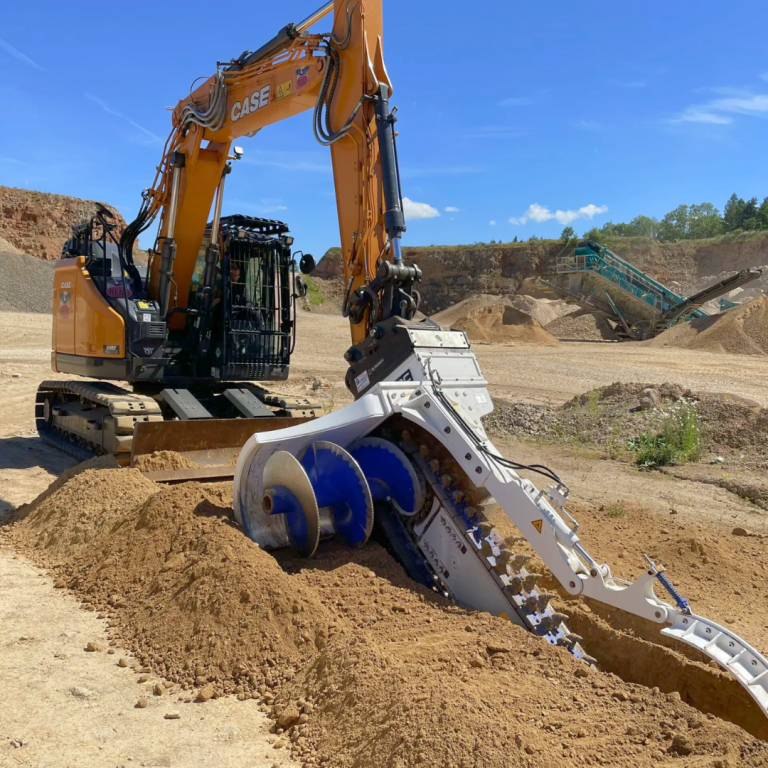
An excavator trencher is a hydraulic attachment that mounts to an excavator and uses a rotating chain equipped with cutting teeth to dig narrow trenches. Unlike traditional excavation methods that remove large amounts of material, trenchers are specifically designed to create precise trenches with controlled widths and depths.
Excavator trenchers are commonly used for:
- Utility installations
- Telecommunications projects
- Drainage systems
- Irrigation networks
- Electrical cable placement
- Pipeline installations
- Road and infrastructure projects
Their ability to produce uniform trenches makes them particularly valuable for projects that require precision and consistency.
1. Greater Precision and Accuracy
One of the biggest advantages of an excavator trencher is its ability to create highly accurate trenches.
Traditional excavation methods often result in wider-than-necessary trenches, which can increase material removal, backfilling requirements, and labour costs. An excavator trencher allows operators to maintain consistent trench dimensions throughout the project.
Benefits include:
- Uniform trench width
- Controlled trench depth
- Improved alignment
- Reduced excavation errors
This level of precision is particularly important for utility and telecommunications installations where exact placement is required.
2. Faster Trenching Performance
Time is a critical factor on every construction site. Excavator trenchers are specifically engineered to improve productivity by cutting through soil efficiently and consistently.
Compared to manual excavation or conventional digging methods, trenchers can:
- Complete projects faster
- Reduce labour requirements
- Increase daily output
- Minimise project delays
For large-scale utility installations involving hundreds of metres of trenching, these productivity gains can significantly reduce project timelines.
3. Minimal Ground Disturbance
Many projects require excavation work in developed or environmentally sensitive areas.
An excavator trencher creates narrow, precise trenches that minimise disruption to surrounding surfaces. This is especially beneficial when working in:
- Residential developments
- Urban environments
- Landscaped areas
- Agricultural properties
- Roadside corridors
Less ground disturbance means reduced restoration costs and a cleaner overall worksite.
4. Lower Material Handling and Backfill Costs
Wider trenches generate larger volumes of excavated material that must be managed and eventually replaced.
By creating narrow trenches, excavator trenchers reduce:
- Soil removal volumes
- Material transport requirements
- Backfill material usage
- Site cleanup costs
These savings can have a significant impact on overall project budgets, particularly on large infrastructure projects.
5. Improved Safety on Site
Safety remains a top priority on excavation projects.
Using an excavator trencher helps improve site safety by reducing the need for manual digging and minimising worker exposure to excavation hazards.
Key safety benefits include:
- Reduced physical labour
- Fewer workers near active excavation zones
- Improved operator control
- Consistent trench profiles
Operators can complete trenching tasks from the safety of the excavator cab while maintaining excellent visibility of the work area.
6. Versatility Across Multiple Industries
Excavator trenchers are suitable for a wide range of applications and industries.
Construction
Used for:
- Utility connections
- Drainage systems
- Electrical installations
Agriculture
Ideal for:
- Irrigation infrastructure
- Water management systems
- Drainage improvements
Utilities and Telecommunications
Commonly used for:
- Fibre optic cable installation
- Power distribution projects
- Pipeline construction
Infrastructure Development
Supports:
- Road construction
- Public works projects
- Civil engineering applications
This versatility allows contractors to maximise equipment utilisation across different job types.
Complementing Trenching with an Excavator Auger Drive
While trenchers are ideal for creating linear excavations, many projects also require drilling operations.
An excavator auger drive is often used alongside trenching equipment for tasks such as:
- Pole installation
- Fence construction
- Foundation drilling
- Signage installation
- Utility support structures
For example, utility contractors may use an excavator trencher to install underground cables and then use an excavator auger drive to drill holes for poles or support structures along the same route.
Using both attachments on a single excavator platform improves operational flexibility and reduces the need for additional machinery.
Choosing the Right Excavator Trencher
To achieve maximum efficiency, contractors should consider:
Soil Conditions
Different trenching chains and teeth configurations are designed for:
- Soft soil
- Clay
- Compacted ground
- Mixed terrain
Required Trench Dimensions
Select a trencher capable of achieving the desired depth and width for the application.
Hydraulic Compatibility
Ensure the attachment matches the excavator’s hydraulic flow and pressure specifications for optimal performance.
Maintenance Requirements
Regular inspection and maintenance of chains, teeth, and hydraulic components help ensure reliable operation and minimise downtime.
Conclusion
An excavator trencher offers numerous advantages for narrow trenching applications, including improved precision, faster excavation, lower costs, enhanced safety, and reduced ground disturbance. These benefits make trenchers an essential attachment for construction, utility, agricultural, and infrastructure projects where accuracy and efficiency are critical.
When paired with an excavator auger drive, contractors gain even greater versatility by combining precise trenching and drilling capabilities on a single machine platform. This streamlined approach improves productivity, reduces equipment costs, and helps projects stay on schedule.
As demand for efficient excavation solutions continues to grow, excavator trenchers remain one of the most valuable tools for delivering high-quality trenching results across a wide range of industries.