The concept of proximate cause is fundamental to the law because it shows how an event directly causes harm. It helps establish if someone or something can be legally held responsible for the harm done.
Courts often look at proximate cause to decide if the acts were linked enough for someone to be responsible.
It is very important to understand this concept, especially when dealing with personal injury cases where proving a proximate cause can have a big effect on the outcome.
The purpose of proximate cause is to make sure that only those responsible for events that were closely related to the injury are held liable. It separates real causation, which finds links between facts, from legal responsibility, which is about what could have been expected.
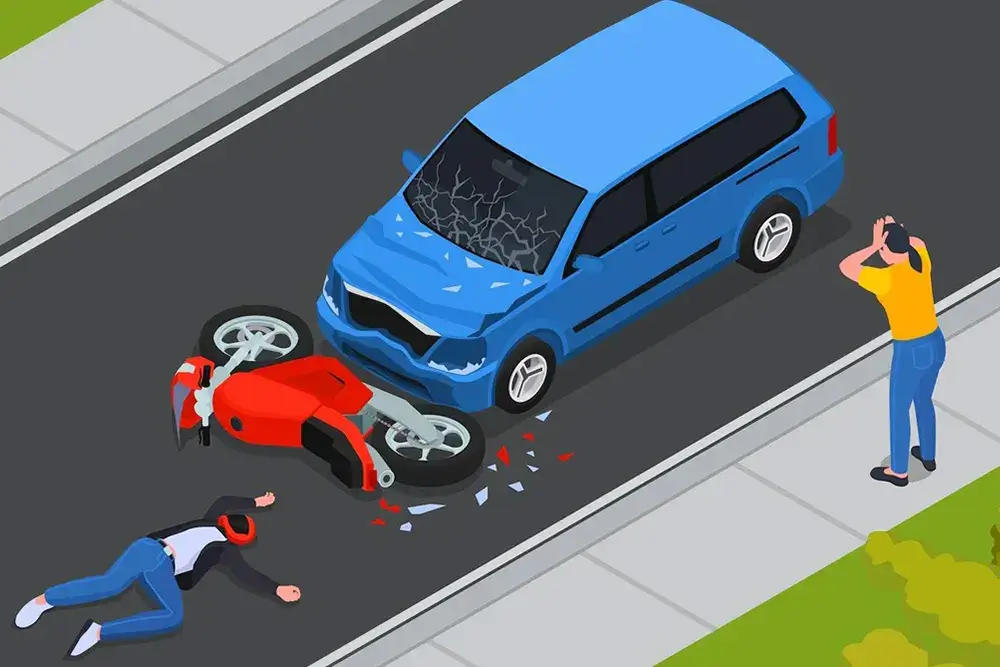
People can better understand how courts decide who is responsible by looking at examples of proximate cause. Now, let’s look at four examples that clearly illustrate the concept.
1. Negligence in Road Accidents
Car accidents are one of the best examples to understand how proximate cause works. Let’s say a driver runs a red light and hits a car that should have had the right of way.
The accident happened because the driver who ran the red light was supposed to follow the rules of the road. This action is seen as the proximate cause of the other driver’s injuries because the accident was a foreseeable outcome of breaking the law.
However, not all related acts are proximate causes.
For example, if a second driver swerves to avoid a crash that’s already happened, but gets distracted later on and hits a parked car three blocks away, it may not be the first driver’s negligence that caused the second accident. Most likely, the courts would conclude that the second accident had nothing to do with the first event.
2. Dangerous Property Conditions
People who own property are responsible for making sure it is safe for guests. For example, if a shop doesn’t clean up a spill on the floor, it puts customers in danger.
In the event that a customer trips and breaks their leg because of the spill, the unattended hazard is the proximate cause of the injury.
Another scenario could involve leaving things in public places. If a store leaves a pallet of goods in an aisle and a customer trips over it while they are not paying attention, both the pallet and the customer may be to blame.
However, the box that was left unattended in a busy area is the main or proximate cause because it was a foreseeable hazard.
3. Failure to Enforce Safety Measures
Businesses are responsible for putting in place safety measures to prevent foreseeable harm. Imagine a crowded nightclub that doesn’t keep track of how many people are allowed inside.
Because there are too many people, someone gets bumped into, falls, and hurts themselves. Even though someone else in the crowd directly caused the fall, the injury was caused by the lack of crowd control.
This is where foreseeability comes into play. If a company knows that too many people will cause jostling and injuries, they could be held responsible. This example shows how important it is to think about and prepare for possible risks in order to keep harm to a minimum.
4. Shared Responsibility in Accidents
When more than one person is responsible for an incident, this is called shared responsibility.
One example is a driver who is going too fast and runs a stop sign, making another car swerve to avoid a collision. As a result, the second driver hits a person walking in a crosswalk.
The second driver injured the person, but the actions of the speeding driver are considered the more proximate cause. This is because the pedestrian’s injury was a likely result of the first driver’s careless actions.