


Key Takeaways
- Falls from heights and struck-by incidents are the most common sources of construction injuries.
- Electrical and equipment-related accidents often cause severe, life-changing harm.
- Preventative measures and understanding workers’ compensation options can protect workers’ health and rights.
Table of Contents
- Falls from Heights
- Struck-By Incidents
- Electrocutions
- Caught-In/Between Accidents
- Overexertion and Repetitive Motion Injuries
- Slips, Trips, and Falls
- Exposure to Harmful Substances
- Equipment-Related Injuries
Construction sites are inherently dangerous environments, presenting numerous hazards to workers daily. Understanding the most frequent types of injuries can help companies, foremen, and employees implement better safety practices and reduce the likelihood of serious incidents. Anyone who suffers from workplace accidents should also be aware of their rights and resources, including access to experienced legal support. If you need a specialist to protect your rights and pursue the compensation you deserve, connect with a knowledgeable professional, such as a https://www.hinden.net/locations/workers-compensation-lawyer-macarthur-park/. Focusing on accident prevention and legal protection ensures workers stay both safe and supported.
Workplace injuries are not only physically devastating but can also have lasting financial and emotional consequences. Workers who experience these injuries often find themselves dealing with expensive medical bills, lost income, and challenges to their quality of life. That is why both workers and employers must understand the common causes of construction site injuries and make use of all available preventive resources.
The following sections break down the most common types of construction injuries and offer advice on how to prevent them. With the right safety training, personal protective equipment, and strategic planning, many incidents can be prevented.
Responsible employers should also remain current on the latest safety regulations and medical research.
Falls from Heights
Falls from scaffolding, ladders, or rooftops remain the leading cause of death in the construction industry, accounting for approximately 38 percent of all construction fatalities according to the Bureau of Labor Statistics.
Workers exposed to these risks are susceptible to various injuries, including broken bones, spinal cord damage, or traumatic brain injuries. Employers can significantly reduce accidents by securing fall protection systems and ensuring workers receive proper safety training.
Regular equipment inspection protects workers and helps construction companies avoid costly liability.
Struck-By Incidents
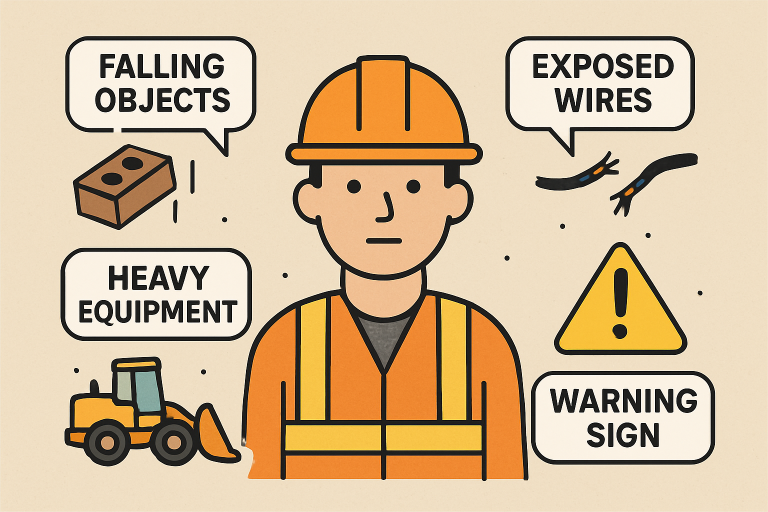
Construction zones are bustling with activity, and it is not uncommon for workers to be struck by moving tools, falling debris, or heavy equipment. Injuries from these incidents can range from minor cuts and bruises to severe concussions or even fatalities. The risk may be mitigated by maintaining organized workspaces, securing materials, and requiring the consistent use of personal protective equipment.
Electrocutions
Contact with live wires, faulty electrical equipment, or improperly grounded power sources can quickly lead to severe burns, nerve injuries, or cardiac arrest. For this reason, contractors must enforce strict electrical safety protocols, conduct regular equipment checks, and provide comprehensive training for all staff working near electrical equipment. Modern lockout/tagout procedures should be followed before anyone works on energized systems.
Caught-In/Between Accidents
Working around moving machinery or unstable structures puts workers at risk of becoming caught in or trapped between heavy equipment and objects. The resulting crush injuries and amputations can be life-altering. The best prevention is to use machine guards, invest in advanced equipment with modern safety features, and strictly follow lockout/tagout and shutdown procedures.
Overexertion and Repetitive Motion Injuries
Lifting, bending, or repeating the same task for hours each day takes a toll on the body over time. Overexertion accounts for about 23 percent of all non-fatal construction injuries, causing muscle strains, joint pain, and chronic movement disorders. Addressing the root causes requires employers to promote ergonomic tools, schedule regular breaks, provide job rotation, and offer ongoing safety education.
Slips, Trips, and Falls
Even when working close to the ground, construction sites present many slip, trip, and fall hazards. Wet floors, scattered tools, and uneven ground are common culprits. To minimize injury rates, sites must be kept clean and organized, and high-risk areas should have warning signs and non-slip mats wherever possible.
Exposure to Harmful Substances
Hazardous materials such as asbestos, lead, and silica dust are often present at construction sites, posing a constant threat of respiratory disease and poisoning. Diligence with personal protective equipment and adherence to both federal and local safety guidelines are critical to protect workers from long-term health problems.
Equipment-Related Injuries
Heavy machinery and power tools account for a significant share of serious injuries, whether due to malfunction or user error. Risks include crush injuries, amputations, and severe lacerations. Only trained workers should operate heavy equipment, and all gear should be inspected and maintained regularly to prevent catastrophic accidents.
Final Thoughts
Prioritizing safety on every construction site can prevent many common injuries and minimize the risk of costly workers’ compensation claims. By investing in training, maintaining up-to-date safety equipment, and knowing where to turn for trusted legal help, workers and employers take important steps toward fostering a safer, healthier industry for everyone.


