


Key Takeaways
- Assault and battery, though often used together, are legally distinct offenses.
- Assault involves the threat or attempt to cause harm, while battery involves actual physical contact.
- Understanding these differences is essential for protecting your rights and obligations under the law.
- Both criminal and civil consequences can result from assault or battery charges.
Table of Contents
- What Is Assault?
- What Is Battery?
- Key Differences Between Assault and Battery
- Real-World Examples
- Legal Consequences
- Possible Legal Defenses
- When To Seek Legal Help
- Conclusion
Confusion between assault and battery is common, and many are unaware that they are two separate legal concepts.
Both crimes are serious and carry distinct legal implications. Learning the precise differences will help you better understand your rights, whether you are a potential defendant or a victim seeking justice.
If you find yourself connected to an assault or battery case, seeking timely legal support, such as from mailletcriminallaw, can be vital to your defense or claim.
This distinction doesn’t just matter in criminal court. Civil lawsuits stemming from assault or battery, such as personal injury suits, can also result in significant financial consequences.
Knowing how courts define and prosecute these offenses is the first step to protecting yourself or asserting your rights.
While many people use the terms interchangeably in everyday conversation, understanding the specific meanings attached to assault and battery can clarify your legal situation. State laws can vary, but the basic legal principles remain largely the same throughout the United States.
It is also important to recognize that evidence and circumstances will shape how each offense is prosecuted or defended. For a deeper explanation of these distinctions, consult a legal resource like FindLaw’s overview on assault and battery.
A simple photorealistic image of two hands: one hand raised in a fist without touching anyone (representing the threat of assault), while the other hand gently rests on another person’s shoulder (representing the physical contact of battery), set against a neutral background.
What Is Assault?
Assault is typically defined as an intentional act that creates a reasonable fear or apprehension of imminent harmful or offensive contact.
Importantly, actual physical contact is not required for an act to be considered assault. The mere threat or attempt to injure another person, if it puts that person in immediate fear for their safety, is sufficient.
For example, if someone raises a fist and threatens to hit another person, they can be charged with assault even if no blow is landed.
Types of Assault
- Simple Assault: Involves minor threats or attempts to harm, usually without a weapon.
- Aggravated Assault: Involves a weapon or the intent to cause severe harm. Penalties can be more severe due to the presence of aggravating factors like use of firearms or assaulting a vulnerable individual.
What Is Battery?
Battery, in legal terms, goes a step further than assault. It is defined as the unlawful and intentional physical contact with another person without consent. This physical contact must be harmful or offensive, even if it causes only minor injury. Unlike assault, battery always requires actual physical touching. For instance, punching, slapping, or even spitting on another person can constitute battery.
Types of Battery
- Simple Battery: Involves minor, unwanted physical contact.
- Aggravated Battery: Entails causing serious bodily injury or using a deadly weapon. Penalties escalate for more severe acts.
Key Differences Between Assault and Battery
The most crucial difference is that assault centers on the threat or attempt of harm without contact, whereas battery concerns actual, unwanted physical contact. Assault can occur independently of battery, and vice versa, but they often happen together.
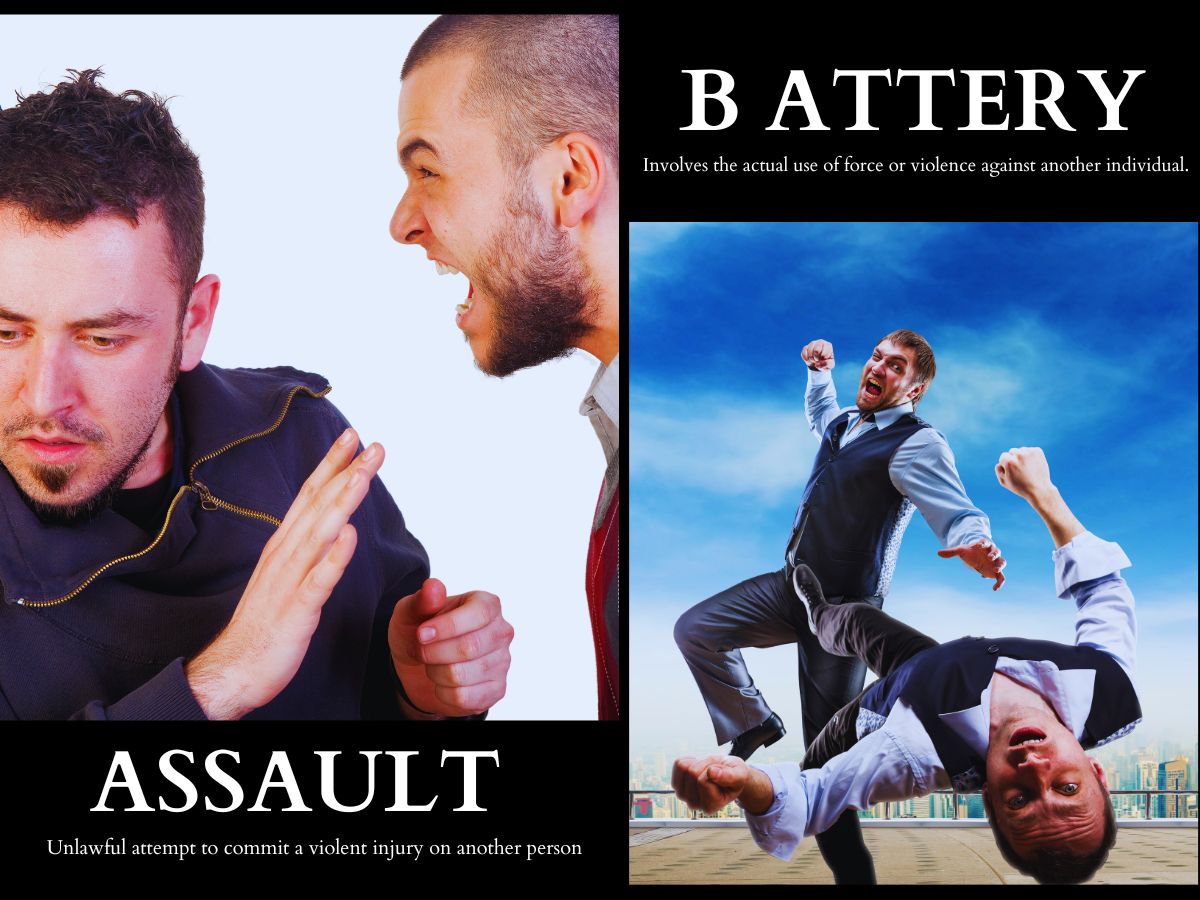
For example, if a person threatens to punch someone (assault) and then follows through by landing the punch (battery), both crimes have occurred.
Real-World Examples
- Assault Only: Waving a weapon menacingly at someone, causing them to fear for their safety, but never physically touching them.
- Battery Only: Secretly touching or hitting someone who had no anticipation of the contact, such as a slap from behind.
- Assault and Battery Together: Threatening to hit someone and then actually striking them.
Legal Consequences
Being charged with assault or battery can impact your life in significant ways, including criminal penalties such as jail time, fines, and a permanent criminal record.
The severity of the penalty typically depends on the seriousness of the incident, prior records, and aggravating circumstances.
Both offenses can also lead to civil liability, meaning victims may sue for damages such as medical bills, lost wages, or pain and suffering. For a comprehensive look at the consequences, see the explanation by Nolo.
Possible Legal Defenses
Defending against charges of assault or battery often involves showing a lack of intent, consent, or self-defense. Defendants may argue that they did not mean to threaten or harm the other party, or that the physical contact was consensual.
In some cases, self-defense can be a legitimate response if the defendant believed they were in imminent danger of harm.
Evidence of mutual combat or the absence of credible threats may also form the basis of a defense.
When To Seek Legal Help
If you are facing charges or believe you have been a victim of assault or battery, consulting an experienced attorney is crucial. Legal guidance ensures your rights are protected, and you can build a strong case whether you are defending or pursuing legal action.
Time limits (statutes of limitations) and specific interpretations of assault and battery laws can also vary by state, making specialized representation important.
Conclusion
Assault and battery are distinct offenses with significant legal consequences. Knowing the difference protects your rights and helps you assert your interests effectively in any dispute.
Always seek qualified legal representation as soon as possible in these situations to ensure you receive the best possible outcome under the law.


