


Customers remember brands that feel clear, consistent, and thoughtful from the moment the order arrives.
Simple packaging details such as branded stickers, custom product labels, thank-you cards, tissue paper, and helpful inserts can make a package feel more professional without requiring expensive custom boxes.
The best packaging protects the product first, then adds small branded touches that make the customer experience feel more complete.
For small businesses, ecommerce sellers, creators, and side hustlers, memorable packaging is not about doing the most. It is about using the right details in the right places.
Why Packaging Matters More Than Many Brands Realize
A customer may buy a product online because of a photo, a recommendation, an ad, or a search result. But the first real physical interaction with the brand often happens when the package arrives.
That moment matters.
The customer sees the mailer or box. They open it. They notice how the product is arranged. They see the label, the wrapping, the note, and any small details inside. Even if they do not study every piece of packaging, they quickly form an opinion about the business.
Does the order feel careful? Does it feel rushed? Does the product look protected? Is the branding clear? Does the package feel like it came from a real company or like something thrown together at the last minute?
Simple packaging details help answer those questions in a positive way.
For small businesses, this is especially important. A large company may be remembered because of its name, budget, or constant advertising. A smaller brand often needs to build trust through the details. Packaging is one of the easiest places to do that because the customer is already paying attention.
The goal is not to create an elaborate unboxing experience that costs more than the product itself. The goal is to make the order feel intentional, organized, and easy to remember.

Start With a Clean, Reliable Package
Before thinking about colors, inserts, or decorative touches, start with the basics. The package must protect the product.
A damaged product creates frustration. A crushed box, leaking item, bent print, scratched surface, or missing accessory can make the customer question the brand immediately. Even if the business fixes the issue, the first impression has already taken a hit.
Good packaging starts with a few practical choices:
- Use a box or mailer that fits the product.
- Add enough protection for fragile or delicate items.
- Keep product labels visible and easy to read.
- Seal the package securely.
- Make the order easy to open.
- Avoid unnecessary material that makes the package feel wasteful.
This foundation matters because presentation only works when the product arrives safely. Tissue paper, stickers, and thank-you cards are helpful, but they cannot make up for packaging that fails at its main job.
Once the protective side is handled, the branded details become much more effective.
Make the First Visual Impression Count
The first thing a customer sees does not need to be expensive. It just needs to feel consistent with the brand.
A plain kraft mailer with a clean sticker can look better than a custom box with cluttered design. A simple white box with a neat label can feel more professional than packaging covered in too many messages. The best visual impression is usually clean, not crowded.
This is where small details can do a lot of work.
A logo sticker on the outside of a mailer tells the customer who the package is from. A consistent label style makes the product easier to recognize. A simple brand color used across tissue paper, cards, and labels can make the whole order feel more connected.
The key is consistency. Customers may not remember every detail, but they do remember patterns. If the brand uses the same logo placement, color palette, label style, and tone across its packaging, the experience becomes easier to recognize over time.
That recognition is what turns ordinary packaging into brand memory.
Use Branded Stickers Without Overdoing It
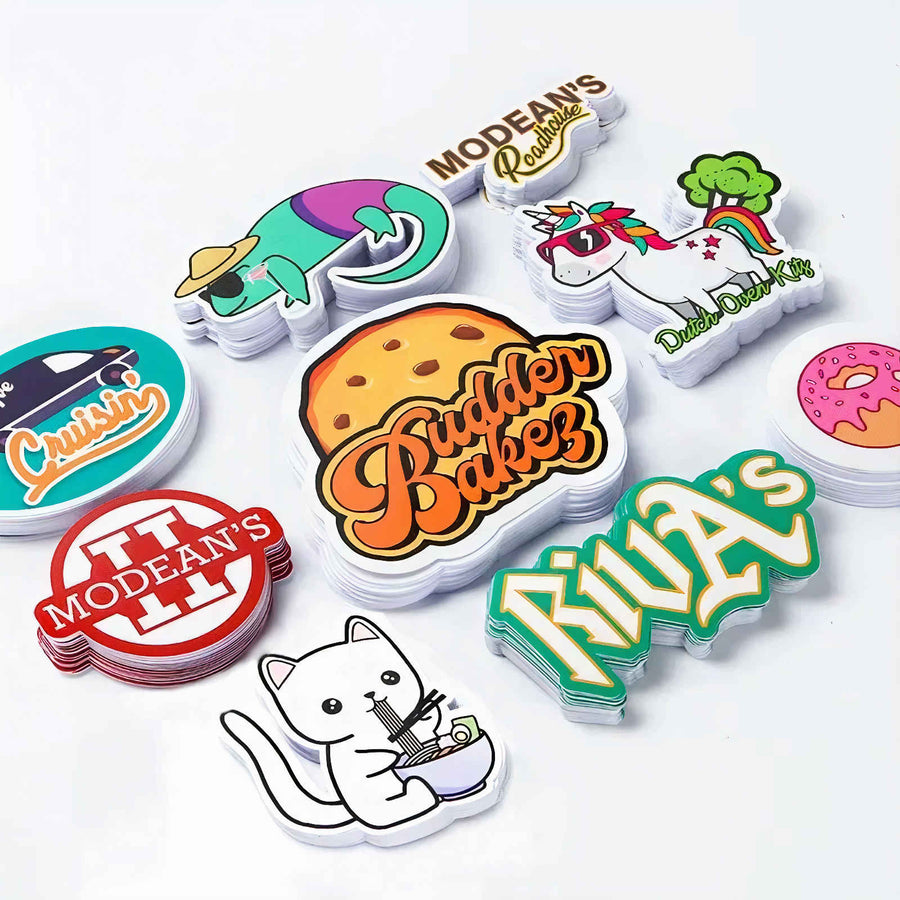
One of the simplest ways to make packaging feel more polished is to use branded stickers.
Stickers are useful because they work across many types of packaging. A business can use them on boxes, mailers, tissue paper, bags, jars, envelopes, inserts, or sample packs. They also allow a smaller brand to add a custom look without ordering large quantities of printed boxes.
A sticker can be used to:
- Seal tissue paper around a product.
- Add a logo to a plain shipping box.
- Close a paper bag or product pouch.
- Mark a seasonal promotion.
- Label a sample item.
- Add personality to a thank-you card.
- Give the customer a small extra item to keep.
The best sticker designs are usually simple. A clean logo, short phrase, brand icon, or small illustration can be enough. The sticker should support the package, not fight for attention with every other element.
It is also worth thinking about whether the customer would want to keep the sticker.
A useful or attractive sticker can end up on a laptop, water bottle, notebook, toolbox, storage bin, or phone case. That gives the brand a longer life after the package is opened.For many small businesses, this is the value of stickers.
They are not only packaging materials. They can also become small reminders of the brand.
Improve Product Labels for a More Professional Look
Product labels are one of the most important packaging details because they combine design with information.
A good label tells the customer what the product is, who made it, and what details matter. It may include a product name, scent, flavor, size, material, ingredients, care instructions, batch information, or usage notes. The exact information depends on the product, but the purpose is always the same: make the item easier to understand and trust.
Well-designed custom product labels can help handmade or small-batch products feel more retail-ready. This matters for items such as candles, jars, bottles, soaps, coffee bags, baked goods, apparel, accessories, skincare products, and gift items.
A strong product label should be:
- Easy to read
- Consistent with the brand
- Clear about what the product is
- Sized correctly for the container or package
- Free of unnecessary clutter
- Durable enough for normal handling
The design does not need to be complex. In fact, simple labels often work better because customers can understand them quickly.
Consistency is also important.
If a business sells multiple products, the labels should look like they belong together. Different colors or product names are fine, but the overall structure should feel related.
This creates a cleaner product line and makes the brand easier to recognize.
Use Roll Labels for Speed and Consistency

As a business grows, packaging needs to be efficient. What works for ten orders may not work for one hundred.
This is where roll labels can be helpful. They are useful for repeated packaging tasks, especially when the same label needs to be applied many times. A business might use roll labels for jars, bottles, bags, envelopes, product boxes, shipping materials, or promotional packaging.
Roll labels can help with:
- Product names
- Flavor or scent variations
- Batch labels
- QR code labels
- Care instruction labels
- Thank-you seals
- Seasonal packaging
- Limited-edition runs
- Sample identification
The advantage is consistency. When labels are easy to apply and stored in a practical format, the packaging process becomes faster and more organized.
This is especially helpful for small teams. A clear labeling system reduces guesswork during packing.
It also helps make each order look the same, even when different people are preparing shipments.
Roll labels are not necessary for every business. If a brand needs many small runs of different designs, other label formats may make more sense. But for repeated tasks, roll labels can make packaging feel more professional while improving workflow.
Add a Thank-You Card That Feels Genuine
A thank-you card is a small detail, but it can make a package feel more personal.
The best thank-you cards sound human. They do not need to be overly emotional or long. A short, sincere note is often enough.
For example:
“Thank you for supporting our small business. We packed your order with care and hope you enjoy it.”
Or:
“Thanks for your order. If anything is not right, please reach out and we will be happy to help.” Or:
“We appreciate your support. Your order helps us keep creating new products.”
A good thank-you card can also include one useful next step. That might be a review request, social media handle, reorder code, customer support email, or QR code. The important thing is to keep the card focused.
Many brands try to put too much on one insert. They thank the customer, ask for a review, promote three products, share a discount code, list social channels, and explain the return policy all on the same card. That can make the message feel crowded.
A better approach is to decide what the card is supposed to do. If the goal is to thank the customer, keep that message clear. If the goal is to help the customer use the product, make the instructions easy to follow. If the goal is to encourage a reorder, make the offer simple.
One card should have one main purpose.
Use Tissue Paper and Wrapping With Intention
Tissue paper can make an order feel more finished, but it should not be added without thought.
The color, texture, and folding style should match the brand. A men’s grooming brand might use black, white, gray, or kraft paper. A handmade gift shop might use soft neutral colors. A creator brand may use brighter colors or custom patterns. A natural product company may choose recycled or uncoated paper.
The right choice depends on the product and customer.
Tissue paper works well when it creates a cleaner opening experience. It can protect the product from surface scratches, keep small items together, and create a sense of care. It also gives brands a natural place to use a sticker seal.
However, it should not become annoying. Too much wrapping can make the customer work too hard to reach the product. The goal is to add polish, not friction.
Simple wrapping works best when it feels neat, easy to open, and consistent from order to order.
Include Packaging Inserts That Help the Customer

A package insert should provide value. If it does not help the customer, it may feel like clutter.
Useful packaging inserts can answer questions, reduce confusion, explain product care, encourage repeat purchases, or make the customer feel more connected to the brand. They are especially helpful for products that require instructions, care, installation, storage, or assembly.
Common insert ideas include:
- Product care cards
- Setup instructions
- QR codes for tutorials
- Review request cards
- Reorder reminders
- Discount cards
- Referral cards
- Warranty information
- Product story cards
- Sample guides
The best inserts are specific. A clothing brand might include washing instructions. A coffee brand might include brewing recommendations.
A skincare brand might include a simple routine card. A car accessory brand might include installation tips. A handmade product brand might explain how the item was made or how to care for it.
Clarity matters. If you include a QR code, tell the customer exactly what it does. “Scan for setup instructions” is much clearer than “Scan here.” If you include a discount code, explain where to use it and whether there are any limits.
A helpful insert can improve the customer experience and reduce support questions at the same time.
Create a More Memorable Unboxing Moment
Unboxing does not need to be dramatic to be effective.
A good unboxing experience simply makes the customer feel like the order was packed with care. The product should be easy to find. The presentation should look organized. The customer should know what to do next if they need help, want to reorder, or want to learn more about the product.
A simple unboxing system might include:
- A correctly sized mailer or box
- Protective material where needed
- Tissue paper or product wrapping
- A branded sticker seal
- A clear product label
- A thank-you card
- One useful packaging insert
That is enough for many businesses.
The mistake is thinking every package needs several layers, multiple cards, custom boxes, ribbons, and extra items. Those details may make sense for certain premium products or gifts, but they are not required for every brand.
A memorable package is one that feels thoughtful and easy to understand. Customers should feel that the business paid attention, not that the packaging was trying too hard.
Avoid Details That Feel Wasteful or Confusing
Packaging can go too far.
Too many inserts, oversized boxes, excessive filler, difficult wrapping, messy confetti, and unnecessary plastic can turn a positive experience into an annoying one. Customers may appreciate presentation, but they also notice waste.
A useful way to evaluate any packaging detail is to ask what job it does.
Does it protect the product?
Does it explain something?
Does it make the brand easier to recognize?
Does it help the customer take the next step? Does it make the order feel more complete?
If the answer is no, the detail may not be needed.
This is especially important for businesses that want to scale. Extra materials cost money. They take time to pack. They can increase shipping weight. They can also create more cleanup for the customer.
Professional packaging is not about adding as many pieces as possible. It is about choosing the pieces that serve the customer and the brand.
Build a Packaging System You Can Repeat

The best packaging process is one that can be repeated consistently.
A small business might start by packing orders by hand in a spare room, garage, office, or studio. That can work well at first. But as orders increase, the process needs to become easier to follow.
A repeatable packaging system should define:
- Which mailer or box is used for each product
- How the product is wrapped
- Where the label is placed
- Where the sticker seal goes
- Which thank-you card is included
- Which insert belongs with each product
- How fragile items are protected
- What changes for seasonal promotions
This kind of system helps maintain consistency. It also makes it easier to train someone else to help with fulfillment.
Customers may not see the checklist behind the package, but they feel the result. Orders look cleaner. Fewer items are missed. Inserts match the products. Labels are placed correctly. The experience feels reliable.That reliability is part of the brand.
Let Packaging Support the Customer Relationship
Good packaging should do more than look nice. It should support the relationship between the business and the customer.
A thank-you card makes the order feel personal. A care card helps the customer use the product correctly. A branded sticker gives them something to keep. A clear label builds trust. A simple insert can guide them toward a review, reorder, or support contact.
Each detail plays a role.
For small brands, this matters because repeat customers are valuable. A customer who remembers the package, likes the product, and has a smooth experience is more likely to return. They are also more likely to recommend the brand to someone else.
Packaging will not replace product quality. It will not fix poor service. But it can strengthen a good product by making the entire experience feel more complete.
Conclusion
Simple packaging details can make a brand more memorable without making the fulfillment process complicated.
The strongest details are usually practical. A clean product label helps the customer understand what they bought. A branded sticker adds recognition. A thank-you card makes the order feel personal. Tissue paper creates a more finished presentation. A useful insert answers questions and guides the customer toward the next step.
For small businesses, ecommerce sellers, creators, and side hustlers, packaging does not need to be expensive to be effective. It needs to protect the product, communicate clearly, and create a consistent experience.
Start with the basics. Choose packaging that keeps the product safe. Add one or two branded details that support the experience. Keep the design clean. Make the process easy to repeat.
Customers remember brands that feel thoughtful. Simple packaging details are one of the easiest ways to create that feeling.


