Urban construction carries risks that most other built environments simply do not. Active streets overhead, aging utility infrastructure below, and neighboring structures on all sides create conditions where ground support failures can cascade quickly. Shoring systems address those risks directly by stabilizing excavations and controlling soil movement.
On high-density sites, choosing the right method is not a technical formality; it is a fundamental safety decision affecting workers, pedestrians, and the surrounding built environment.
Why Urban Sites Demand Specialized Support
City excavations face pressures that open-terrain digs rarely encounter. Surcharge loads from adjacent buildings and heavy traffic constantly push against exposed soil faces. Space restrictions often rule out standard open-cut methods. Every foot of vertical excavation in a dense corridor introduces new variables, and lateral earth pressure does not wait for slow decisions.
Experienced shoring contractors in Los Angeles approach each high-risk site with a project-specific plan rather than a default template. Soil reports, neighboring structure surveys, and load calculations all feed into the selection process.
The same method that performs reliably in granular coastal soil may behave unpredictably in expansive clay or mixed urban fill.
Common Shoring Methods on High-Risk Urban Projects
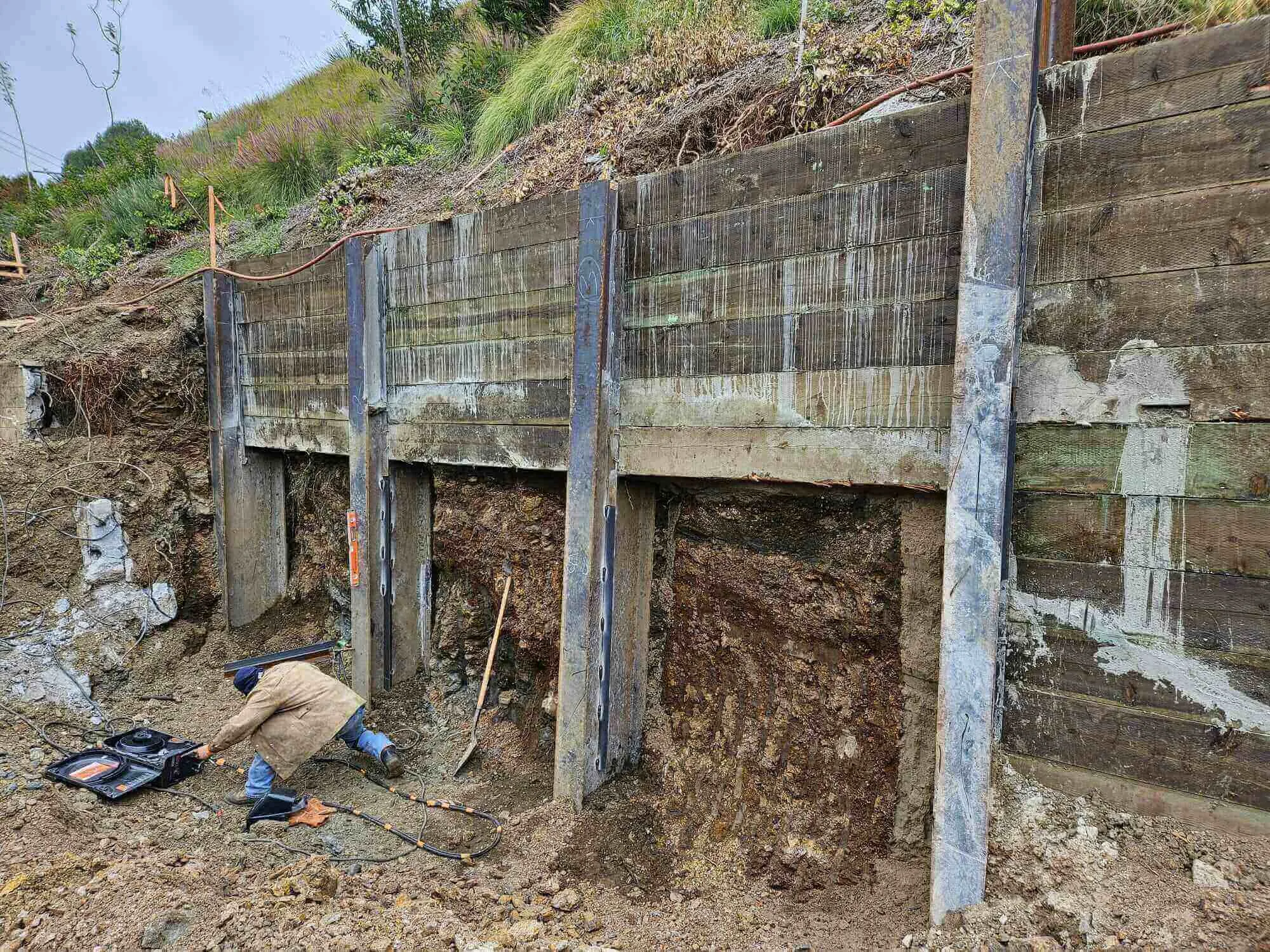
Soldier Pile and Lagging
Steel H-piles are drilled or driven at regular intervals, typically six to eight feet apart. As the excavation deepens, horizontal timber or concrete lagging is placed between piles to hold back the soil face.
This system is widely favored for cohesive soils where the ground can arch between supports. Installation is relatively quick, costs stay manageable, and the method adapts well to irregular site footprints. Its main limitation is permeability; soldier pile walls do not stop groundwater, which restricts their use where the water table is a factor.
Sheet Pile Walls
Interlocking steel sections are driven into the ground to form a continuous, connected wall. Unlike soldier pile systems, sheet piling provides both earth retention and water cutoff in a single installation.
This approach suits waterlogged ground, soft cohesive soils, and sites near utility corridors where lateral movement must be tightly controlled. Sheet pile walls can be extracted after construction or left permanently as part of the foundation system, depending on project requirements.
Soil Nail Walls
Soil nailing reinforces ground that already exists rather than installing a barrier before excavation begins. Steel bars are drilled into the slope at a downward angle and grouted in place as the dig progresses in controlled lifts.
Shotcrete is applied to the exposed face between nails, creating a composite retaining structure. The method works well in stiff, competent soils and confined sites with limited right-of-way. Continuous monitoring during installation remains essential, as conditions can shift between lifts.
Secant and Tangent Pile Walls
Drilled concrete piles are installed in a deliberate pattern to form a continuous or near-continuous wall before excavation begins. Secant walls use overlapping piles for a fully watertight barrier; tangent walls place piles side by side without overlap, which reduces cost while still providing strong lateral support.
Both options are common in deep urban excavations where driven pile vibration would risk damaging adjacent structures. Load capacity is high, and ground movement during construction stays minimal.
Tiebacks and Internal Bracing
Most shoring walls need lateral support to resist increasing earth pressure as depth grows.
Ground anchors, commonly called tiebacks, are drilled and grouted into stable material behind the wall, then stressed against a bearing plate at the face. They keep the interior workspace clear, which matters significantly on tight urban footprints.
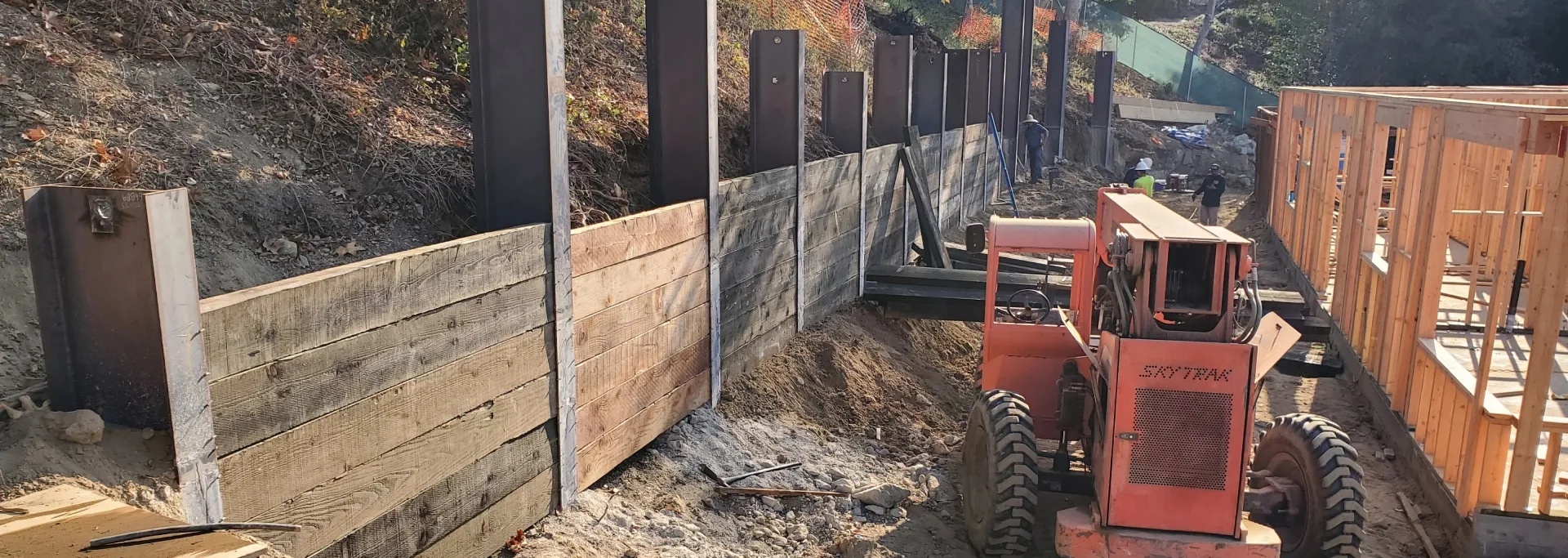 Internal bracing uses struts or raker frames installed inside the excavation itself. This alternative suits smaller or unusually shaped cuts, though the hardware does interfere with below-grade construction activity.
Choosing the Right System
Soil type, excavation depth, groundwater elevation, proximity to structures, and schedule constraints all shape the final recommendation.
Geotechnical data provides the foundation for that decision, but field experience determines how that data gets applied as conditions change during construction.
Conclusion
Urban excavation in high-risk conditions requires more than competent equipment. It requires selecting a shoring system matched precisely to the site’s geotechnical and physical realities. Each method reviewed here serves a defined purpose, and none is universally superior.
Sound judgment, thorough site investigation, and experienced contractor oversight are what turn engineered designs into safe, successful excavations.
The ground does not forgive shortcuts, and urban sites in particular leave very little margin for error.