In modern America, golf has become more and more popular. In fact, according to the National Golf Foundation, 48.1 million Americans played golf in 2025. It’s no surprise that golf has taken off like it has. It keeps people active, lets them see friends, and gives them an excuse to get outside.
Additionally, people like that golf is a low-impact form of exercise, with little chance of injury. However, this may not be as true as you think it is. While you’re not likely to break a bone while playing golf, other injuries do develop over time.
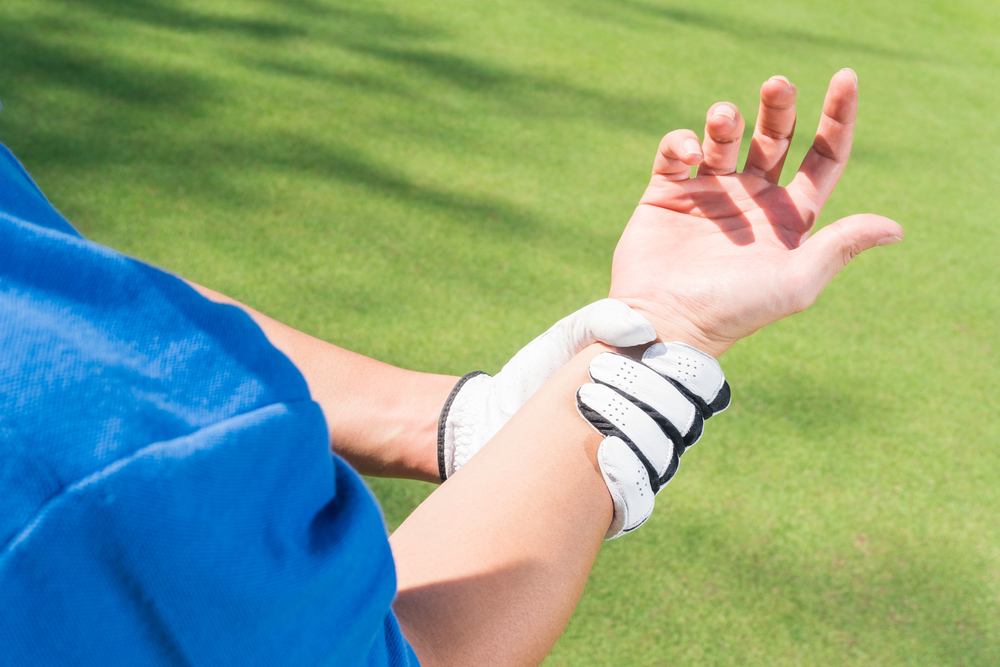
Usually these involve the hand and wrist, and the first sign that something is wrong is pain in these areas.
Why Golf Places Stress on the Hands and Wrists
It’s not surprising that golf places stress on the hands and wrist. Your hands and wrists are used to generate swing speed, control the clubface, and absorb impact when contact is made with the ball.
Additionally, you swing your cub in the same motion over and over again. This repetitive motion is really what places stress on your hands and wrist. Swinging a golf club once will do almost no damage.
However, swinging it hundreds of times in a year can easily end up damaging the tendons, ligaments, muscles or bones in your hands and wrists.
Common Causes of Hand and Wrist Pain in Golfers
It can be very difficult to know the exact cause of your hand and wrist pain. This is because so many different conditions can arise in golfers. Some of the most common include:
- Wrist Tendonitis: This is the inflammation of the tendons in the wrist. This pain will usually be present during or after play and will be localized to the wrist area.
- Golfer’s Wrist: This is caused by impact-related stress. The pain is always on the pinky finger side of the wrist.
- Thumb Injuries: Stress is placed on the lead hand thumb during gripping and impact, leading to pain and swelling in the thumb.
- Carpal Tunnel Syndrome: The repetitive gripping of a golf club can lead to the nerve compression that causes carpal tunnel syndrome. In addition to pain, you may also experience tingling in the hand.
This is by no means a complete list. You will usually need a doctor in order to diagnose exactly what is causing your hand and wrist pain.
Warning Signs Golfers Should Not Ignore
It can be all too easy to ignore pain in the hand or wrist. You may write it off as just getting older or that you’ve played too much golf recently. However, there are some warning signs that should not be ignored. These include:
- Persistent pain lasting more than a few days.
- Swelling that does not improve.
- Numbness or tingling in the fingers.
- Weak grip strength.
- Difficulty performing daily activities.
- Pain that worsens with each round of golf.
If you experience any of the above, you could have a serious condition. You should seek professional medical help to find out what is going on.
How You Can Reduce Your Risk of Injury
Luckily, if you’re not experiencing any pain yet, there are actions you can take to reduce your chance of injury.
First, always make sure to warm up. This includes stretching and doing some light practice swings.
Second, use the right gear. Have a professional measure you so you can use the right grip size. Also, make sure your club is the right weight and flexibility for your skill level.
Finally, avoid overtraining. Gradually increase your practice time and make sure you’re getting adequate rest between rounds of golf.
When to See a Specialist
You should see a hand specialist when any pain does not go away on its own after rest. You should also see one if there is any tingling in your hand or fingers. Either of these can signal real problems.
However, if you’re experiencing any pain at all, it’s a good idea to see a doctor. Early intervention almost always requires less invasive treatment than if you wait.
Additionally, failing to see a specialist when you need to can result in permanent injury. It’s always better to be safe than sorry!