Key Takeaways
- Clean accessible windows regularly to maintain clearer views and make inspection of window components easier.
- Adjust cleaning routines by season to address pollen, salt, leaves, condensation, drafts, and changing weather conditions.
- Use mild cleaning solutions, clean microfiber cloths, soft washers, and a squeegee with an intact blade.
- Clean frames, sills, screens, and tracks along with the glass to reduce accumulated dirt and debris.
- Avoid abrasive materials, excessive cleaning solutions, and careless scraping that could damage glass, films, coatings, or seals.
- Follow safe practices around ladders, upper-floor windows, skylights, and other difficult-to-reach areas.
- Stop exterior cleaning during unsafe conditions such as strong wind, rain, ice, or lightning.
- Watch for cracks, trapped moisture, drafts, damaged frames, or windows that no longer open, close, or lock properly.
- Consider qualified professional help when windows cannot be safely reached or when cleaning reveals potential structural or water-related problems.
Clean windows can make rooms feel brighter, improve the view outside, and help a home look well-cared-for. A routine also makes it easier to notice problems with frames, seals, screens, and locks before they become more difficult to address.
For exterior glass that cannot be safely reached from the ground, Multi-Story Window Cleaning Services can be a practical option.
Window care does not need to be a major project. With mild cleaners, clean tools, and sensible limits on heights and weather conditions, most homeowners can maintain accessible windows as part of normal seasonal upkeep.
Why Window Care Matters
Glass collects dust, pollen, salt spray, mineral residue, insect marks, and bird droppings. Leaving buildup in place for a long time can make it more stubborn to remove, particularly around edges, sills, and screens.
Routine cleaning keeps the work manageable and prevents dirt from being carried into tracks when windows are opened. Windows also affect how daylight moves through a home.
The U.S. Department of Energy notes that natural light can reduce reliance on artificial lighting when windows and shading are used thoughtfully. Clean glass will not change a window’s design, but it can help homeowners get the clearest possible view and make the most of available daylight.
A Seasonal Window Care Schedule
Matching window care to the seasons helps avoid rushed work and gives you repeated opportunities to inspect parts that are easy to overlook.
Spring
- Remove winter grime, road salt, and stuck-on debris from accessible exterior glass.
- Wash screens before opening windows more often.
- Check for loose screens, damaged weatherstripping, and clogged tracks.
- Look for fog or moisture between insulated panes.
Summer
- Clean during a cooler, overcast part of the day when possible.
- Avoid applying cleaning solution to very hot glass, which can dry quickly and leave streaks.
- Inspect upper windows and skylights only from a safe position.
- Use blinds, shades, or curtains to manage glare in bright rooms.
Fall
- Clear leaves, insects, and organic debris from sills and tracks.
- Wash glass before shorter winter days make indoor spaces feel dimmer.
- Check movable windows for drafts and worn weatherstripping.
- Repair or replace torn screens before storing them.
Winter
- Limit exterior work to mild, dry conditions.
- Never place a ladder on ice, snow, mud, or wet ground.
- Watch for condensation, drafts, and deteriorated caulking.
- Focus on interior glass and accessible frames when exterior conditions are unsafe.
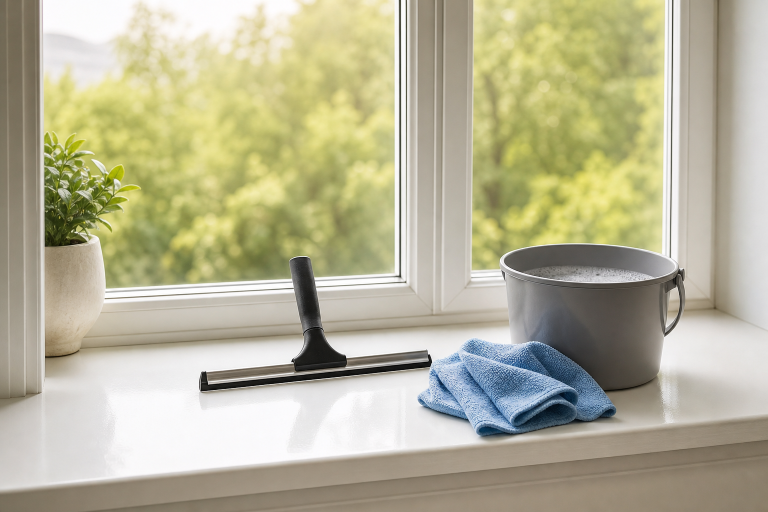
Choose The Right Tools
Most ground-level window cleaning can be handled with a small set of basic supplies:
- Microfiber cloths for wiping frames and drying edges.
- A soft sponge or window washer for applying the solution.
- A squeegee with a clean, flexible rubber blade.
- A bucket of clean water with a small amount of mild cleaner.
- A vacuum with a narrow attachment for tracks and sills.
- Gloves and protective eyewear when dealing with heavy debris.
Avoid abrasive pads, gritty cloths, and worn squeegee blades. They can leave streaks, drag dirt across the pane, or damage delicate surfaces. If a window has tint, film, specialty glass, or a protective coating, follow the manufacturer’s cleaning instructions before using a new product.
A Simple Window Cleaning Method
- Remove loose dirt. Vacuum or dry-wipe the sill, frame, and track first.
- Mix a mild solution. Using too much soap can leave a film on the glass.
- Wash from top to bottom. This helps keep dirty water from crossing cleaned areas.
- Squeegee in steady passes. Slightly overlap each pass for more even results.
- Wipe the blade between passes. A clean edge is less likely to leave lines.
- Dry corners and edges. Use a lint-free microfiber cloth around seals and trim.
- Inspect from different angles. Changing your position helps reveal missed spots.
Test any unfamiliar cleaner on a small area first. Cloudy conditions are often easier for window washing because the solution is less likely to dry before it can be removed.
How To Handle Hard-To-Reach Windows
Second-story windows, skylights, windows above stairwells, and glass near steep rooflines require extra caution. Do not stand on furniture, lean far outside an open window, or use a ladder on uneven ground.
Tilt-in windows can allow some exterior surfaces to be cleaned from indoors, while extension tools may help with low, ground-based access. If ladder use is necessary, follow established ladder safety guidance, keep your body between the rails, and maintain three points of contact while climbing.
Do not walk on a roof to reach a skylight. When safe access is not possible, leaving the job to qualified professionals is the better decision.
Do Not Forget Frames, Screens, And Tracks
The glass is only one part of the window system. Frames, screens, sills, and tracks collect debris that can affect appearance and make moving parts harder to operate.
Frames And Sills
- Vacuum loose grit before wiping surfaces with a damp cloth.
- Dry standing water near joints, corners, and interior trim.
- Check painted wood for peeling paint, soft spots, or swelling.
Screens And Tracks
- Remove screens carefully to avoid bending their frames.
- Brush or rinse screens gently, then let them dry before reinstalling.
- Vacuum insects, leaves, and grit from tracks.
- Do not force a window that sticks, sags, or resists locking.
Common Window Cleaning Mistakes
- Cleaning in direct heat: Solution may dry too quickly and leave residue.
- Using too much cleaner: Excess product can create haze.
- Reusing dirty water: It can spread grit onto clean glass.
- Scraping carelessly: Blades can damage glass, film, seals, or coatings.
- Ignoring the frame: Dirt and moisture often collect where glass meets trim.
- Taking unnecessary risks: A clean window is never worth a fall.
When Cleaning Is Not Enough
Some window issues cannot be corrected with another wash. Photograph the concern and review the warranty or manufacturer information before arranging repairs. Contact a qualified professional for cracked glass, suspected water intrusion, or structural damage.
- Fog or moisture trapped between panes.
- Cracks, chips, or sharp glass edges.
- Drafts around a closed window.
- Water stains on interior trim or walls.
- Windows that will not open, close, or lock properly.
- Soft, swollen, or decaying wood around the sill.
A Practical Window Safety Checklist
- Check the ground before setting up any ladder.
- Keep children and pets away from open windows and cleaning tools.
- Stay clear of overhead electrical lines.
- Stop exterior work during wind, rain, ice, or lightning.
- Wear gloves when handling damaged screens or heavy debris.
- Ask for help when the task requires unstable reaching or unsafe access.
Good window care is regular, gentle, and safety-minded. A seasonal routine can keep glass, frames, screens, and tracks in better condition while helping you spot repair needs early. Work within realistic limits, and enjoy brighter rooms and clearer views without turning a simple chore into a risky project.
Conclusion
Regular window care can help homeowners maintain clearer glass while also providing opportunities to inspect frames, screens, tracks, seals, and other components. A seasonal approach makes it easier to address different types of buildup and notice changes such as drafts, condensation, damaged screens, or deteriorating materials.
Using mild cleaners, clean tools, and non-abrasive methods can support routine maintenance without unnecessarily damaging glass or protective coatings.
Safety should remain a priority, particularly when working around upper-floor windows, skylights, ladders, or difficult exterior access. Homeowners should avoid cleaning in unsafe weather or taking unnecessary risks to reach a window.
When cleaning is no longer enough to address cracks, trapped moisture, water intrusion, structural concerns, or faulty operation, professional evaluation may be appropriate.
A practical routine can keep window maintenance manageable while helping homeowners maintain their home’s appearance, function, and safety.