As you embark on your blanket-making adventure, you might find yourself standing in the yarn aisle, overwhelmed by the rainbow of colors and textures before you. Your mind races with questions: “How much yarn do I need? What if I run out halfway through?”
Fear not, intrepid crafter! This guide will not only teach you how to calculate your yarn needs but also weave in the rich tapestry of yarn’s history and mythology. So grab your needles or hook, and let’s unravel this mystery together!
The Yarn of Fate: Understanding the Basics
Before you dive into calculations, let’s spin a yarn about, well, yarn. Did you know that in Greek mythology, the Fates were three sisters who spun, measured, and cut the thread of life? Much like these cosmic crafters, you too will become a master of yarn destiny as you learn to measure and plan your project.
Factors Affecting Your Yarn Quantity: The Threads of Destiny
Just as the Fates considered many factors when weaving the fabric of existence, you must consider several elements when planning your blanket:
1. Blanket size: Will it be a cozy baby blanket or a majestic bed cover?
2. Yarn weight: From delicate lace to chunky roving, each weight tells a different story.
3. Stitch pattern: Simple or complex, each stitch is a word in your blanket’s tale.
4. Gauge: Your personal tension creates a unique signature in every project.
5. Personal style: Will you add fringe, tassels, or other embellishments?
Yarn Terminology: Speaking the Language of Fiber
To navigate the world of yarn, you’ll need to understand its language. Imagine you’re an explorer in a new land, learning the local dialect:
- Skein: A twisted bundle of yarn, like a sleeping dragon waiting to be awakened.
- Hank: A looped bundle that requires winding, much like a riddle that needs unraveling.
- Ball: Yarn wound into a sphere, ready for your creative touch.
- Yarn weight: The thickness of your yarn, ranging from delicate fairy hair to giant’s beard.
- Yardage: The length of your yarn, measured in yards or meters—your quest’s provisions.
Calculating Your Yarn Requirements: Charting the Course
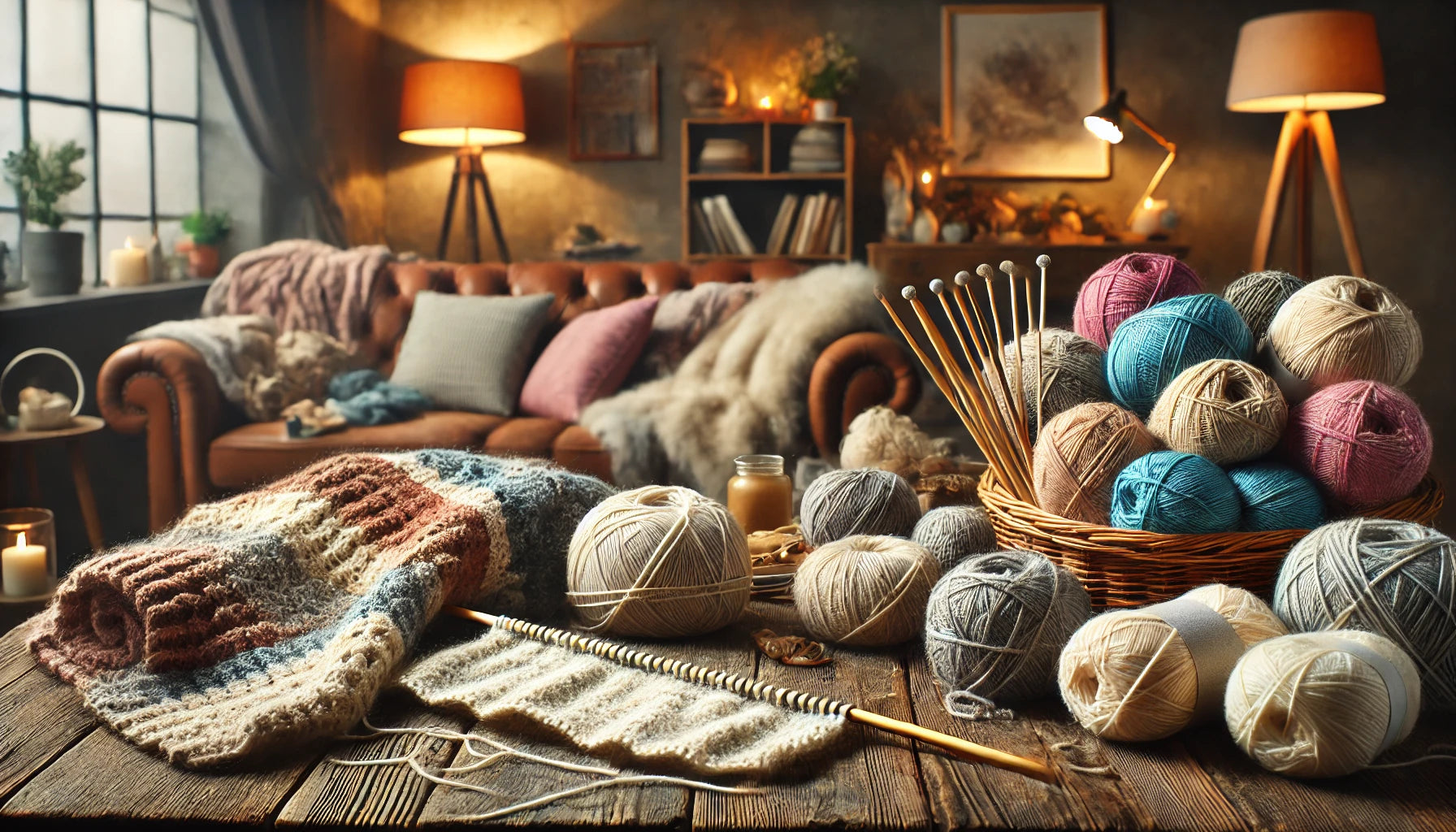
Now that you’re versed in the lore of yarn, it’s time to calculate your needs. Think of this as plotting your course on a grand adventure.
Step 1: Determine Your Blanket Size
First, decide on the dimensions of your blanket. Are you crafting a small throw for chilly evenings or a grand coverlet fit for royalty? Here’s a guide to common sizes:
| Blanket Type | Width (inches) | Length (inches) | Mythological Equivalent |
| Baby | 30-40 | 30-40 | Hercules’ cradle blanket |
| Throw | 50-60 | 60-70 | Merlin’s cozy cape |
| Twin | 65-70 | 90-100 | Sleeping Beauty’s coverlet |
| Full/Queen | 85-90 | 90-100 | Cleopatra’s royal bedspread |
| King | 100-110 | 90-100 | Zeus’ cloud-woven mantle |
Step 2: Choose Your Yarn and Determine Yardage per Skein
As you select your yarn, imagine you’re choosing the very fabric of your story. Each skein is a chapter waiting to be written. Check the label for the yardage—this is the length of your tale.
Step 3: Determine Your Gauge and Stitch Pattern
Create a gauge swatch—think of it as a rough draft of your epic. Measure the number of stitches and rows in a 4×4 inch (10×10 cm) square. This is your unique handwriting in the language of yarn.
Step 4: Calculate Stitches and Rows for Your Blanket
Now, extrapolate your swatch to the full size of your blanket:
- Total stitches = (Blanket width in inches ÷ 4) × Stitches in gauge swatch
- Total rows = (Blanket length in inches ÷ 4) × Rows in gauge swatch
These numbers are the words and lines of your blanket’s story.
Step 5: Estimate Yardage
To estimate the total yardage needed, follow these steps:
1. Calculate the total number of stitches in the blanket: Total stitches × Total rows
2. Multiply this by the average length of yarn per stitch (usually about 1.5 inches or 3.8 cm): (Total stitches × Total rows) × 1.5
3. Convert this to yards: Result from step 2 ÷ 36 (inches in a yard)
This total yardage is the length of your yarn journey, the distance you’ll travel stitch by stitch.
Step 6: Determine Number of Skeins
Divide the total yardage by the yardage per skein, rounding up to the nearest whole number:
Number of skeins = Total yardage needed ÷ Yardage per skein
This is your quest’s inventory, the chapters of your blanket’s epic.
The Weight of Your Choices: Yarn Weight and Its Impact
The weight of your chosen yarn is like selecting the tone of your story. Will it be a light, airy tale or a dense, complex narrative? Here’s how different weights affect your yardage needs:
| Yarn Weight | Stitches per Inch | Approximate Yardage for a 50×60 inch Throw | Mythological Comparison |
| Lace | 8-10 | 3000-3500 yards | Arachne’s finest web |
| Fingering | 7-8 | 2500-3000 yards | Elven cloak threads |
| Sport | 6-7 | 2000-2500 yards | Selkie’s sealskin |
| DK | 5-6 | 1500-2000 yards | Golden Fleece |
| Worsted | 4-5 | 1200-1500 yards | Penelope’s shroud |
| Bulky | 3-4 | 1000-1200 yards | Giant’s hair |
| Super Bulky | 2-3 | 800-1000 yards | Cloud-spun divine robes |
Remember, these are approximate values. Your personal tension and pattern choice may alter these numbers, much like how a bard might embellish a well-known tale.
The Pattern of Your Tale: Adjusting for Different Stitch Patterns
Different stitch patterns consume varying amounts of yarn, much like how different literary styles use words. Here’s how some common patterns compare:
| Stitch Pattern | Relative Yarn Consumption | Storytelling Equivalent |
| Garter Stitch | 100% (baseline) | The straightforward narrative |
| Stockinette Stitch | 90-95% | A smooth, flowing prose |
| Seed Stitch | 110-115% | A textured, detailed description |
| Cable Patterns | 120-130% | Complex plot twists |
| Lace Patterns | 80-90% | Poetic, airy verses |
To adjust your calculations for a specific stitch pattern, multiply your estimated yardage by the relative yarn consumption percentage.
This ensures your yarn tale has the right pacing and detail.

Wisdom from the Yarn Elders: Tips for Accurate Calculations
1. Always make a gauge swatch: This is your story’s outline, crucial for accurate planning.
2. Buy an extra skein: It’s your safety net, like keeping an extra quill and ink nearby.
3. Check dye lots: Ensure color consistency, lest your blanket look like a patchwork of different scrolls.
4. Consider the border: Factor in your story’s framing device.
5. Know your tension: Are you a tight storyteller or a loose, flowing narrator?
Beware the Tangles: Common Pitfalls to Avoid
1. Ignoring gauge: Skipping this step is like starting a journey without a map.
2. Forgetting about wastage: Always account for the yarn that might be lost to the whims of fate.
3. Underestimating pattern complexity: Complex tales require more words—and more yarn.
4. Overlooking yarn substitutions: Changing your yarn is like switching languages mid-story; recalculate!
5. Neglecting borders or edging: Don’t forget the ornate chapter headings of your yarn tome.
The Lore Keepers: Resources for Yarn and Patterns
In your quest for the perfect blanket, these resources will be your wise advisors:
1. Ravelry: A vast library of patterns and a community of fellow yarn adventurers.
2. Loopara: A unique yarn emporium specializing in milk yarn, a material as smooth as the nectar of the gods. Loopara isn’t just a store; it’s a treasure trove of free patterns, each one a map to a new yarn adventure.
Whether you’re a novice taking your first stitches or a seasoned yarn sage, Loopara’s blend of eco-friendly yarns and accessible patterns makes it a valuable ally in your blanket-making quest.
As you explore these resources, remember that each crafter’s journey is unique. The yarn you choose and the patterns you follow are the threads of your own legend.
The Final Stitch: Conclusion
As you stand at the threshold of your blanket-making odyssey, armed with knowledge and calculations, remember that every great story has moments of uncertainty. It’s always wise to err on the side of caution and purchase a little extra yarn.
This ensures you won’t be left stranded at a crucial moment in your tale, and provides you with the means for future plot twists or repairs.
By following the steps outlined in this guide and considering all the factors that influence yarn consumption, you’ve prepared yourself well for the journey ahead. Like the heroes of old who embarked on great quests with careful preparation, you’re now ready to begin your blanket project with confidence.
As you work each stitch, remember that you’re not just making a blanket; you’re weaving a story, creating an heirloom, and participating in an ancient craft that connects you to generations of makers before you.
Your blanket will be more than just a cozy cover; it will be a tangible piece of your own mythology, a comfort to be passed down through the ages.
So take up your needles or hook, brave crafter. The yarn awaits, the pattern beckons, and a world of warmth and creativity lies before you.
May your calculations be true, your tension be even, and your blanket be a masterpiece worthy of legend. Happy crafting, and may the Fates smile upon your yarn!