


The floor is not level, and it is not meant to be
Most garage slabs are poured with a gentle slope toward the big door, so water from melting snow runs out rather than pooling under the car. That slope is good for the floor and awkward for anything standing on it.
Doors that will not stay closed, gaps along the top and cabinets rocking on two corners are often the first signs, and they are why garage storage cabinets need more thought than their boxes suggest, especially before a Canadian winter.
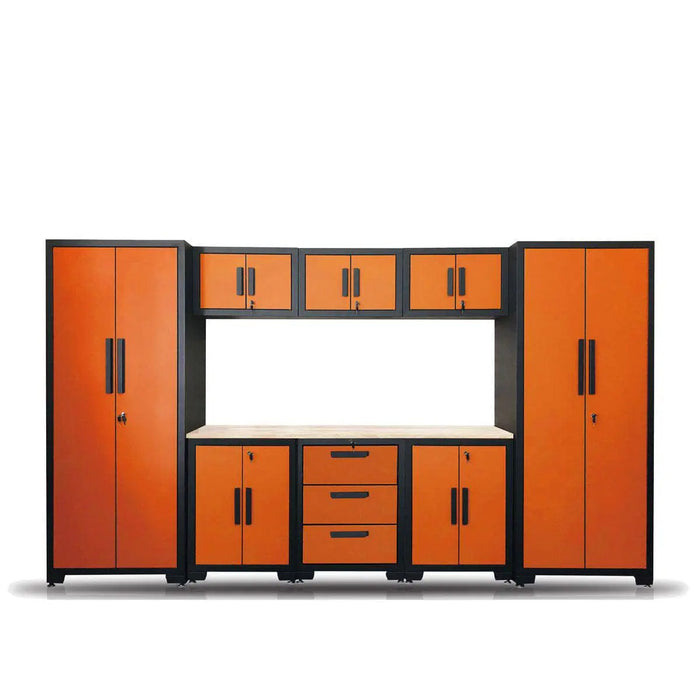
Adjustable feet fix what the slab builds in
A cabinet set on a sloped floor leans slightly, and a lean of even a small fraction of an inch twists the frame. Doors hung on a twisted frame drift open, rub or refuse to latch, and a row of cabinets side by side magnifies the problem at every joint.
Leveling feet let each corner be raised until the cabinet stands true. Checking with a level front to back and side to side, starting from the highest corner, keeps every door in line.
The feet also lift the steel off the concrete, which matters for a reason that has nothing to do with appearance.
Winter brings water in on the car
Every time a car drives in covered in snow, that snow melts into salty water on the slab. Cabinet bases sitting directly on the floor soak in that water for hours, and road salt speeds corrosion wherever a coating has been scratched.
Raising cabinets even an inch or two above the slab lets the water run past underneath and lets the floor dry. It is one of the simplest ways to add years to metal garage cabinets in a climate where salt is on the roads for months.
A rubber mat or a squeegee near the parking spot helps as well. The less standing water the slab holds through January, the less work garage storage cabinets along the walls have to do to stay dry at the base.
Why do tools rust inside a closed cabinet?
A warm car parked in a cold garage releases moisture into the air. When that damp air meets cold steel, water condenses on the surface, the same way a cold drink sweats on a summer day. A closed cabinet keeps dust and splashes off tools, but it can also trap that moisture against them.
Dust is the other reason people close cabinets. Sanding, cutting and sweeping send fine grit into the air, and that grit settles into the moving parts of drills, saws and measuring tools left out on open shelves, where it wears bearings and clogs adjustments.
Small gaps for air movement, a pack of desiccant in drawers holding bare steel tools, and a light coat of oil on anything that sits unused all winter make a closed cabinet work as intended. Powder coated metal garage storage cabinets resist rust on their own surfaces, but the tools inside still need that care.
A wall cabinet hangs on its screws
Floor cabinets rest their weight on the slab. Wall cabinets do not. Everything inside them, plus the cabinet itself, hangs from fasteners that are being pulled downward and away from the wall at the same time.
That load has to go into studs, masonry anchors rated for it, or a mounting rail that spreads it across several studs. Drywall alone cannot hold it, and the failure tends to arrive suddenly when a cabinet is loaded with paint cans or fasteners months after installation.
Wall studs in most Canadian houses sit sixteen inches apart, so a stud finder and a pencil line before drilling show where each cabinet can be fixed. A horizontal rail screwed into several studs lets cabinets be positioned freely along the wall while the load still goes into the framing.
Keeping heavy items low reduces both the risk and the effort of lifting. Wall cabinets suit lighter, less frequently used things, where a fall would do less damage and a reach overhead happens less often.
Storing things by height, not just by category
The most useful layout groups items by how heavy they are and how often they are used, rather than simply by category, with automotive items in one place and garden items in another. Heights that suit the body make a garage easier to work in:
- Floor to knee: heavy cases, bulk fluids, power tools
- Knee to shoulder: everyday tools and fasteners
- Above shoulder: seasonal items and light boxes
- Locked cabinet: chemicals, pesticides and blades
The waist-high zone is prime space in any garage, and it is often wasted on items used only once a year. Moving those up or down frees the middle for tools that come out every weekend.
Flammables do not belong in an ordinary cabinet
Gasoline, thinners and aerosol cans give off vapor, and a standard cabinet does nothing to contain it. Many garages also hold a furnace or water heater, and fuel vapor that collects near an ignition source is a real fire risk.
Flammable liquids are better kept in small approved containers, in a cabinet designed for them, well away from any appliance with a flame or spark. Local fire codes often set limits on how much fuel can be kept inside an attached garage, and they are worth checking.
Lawn equipment adds a seasonal twist. A mower or trimmer put away for the winter with fuel in its tank keeps releasing vapor for months, so running it dry or adding fuel stabilizer and storing it away from the furnace is part of closing up the garage in fall.
Locks are for more than valuables
Garages often hold pesticides, antifreeze, pool chemicals and sharp blades within easy reach of children and pets. A lockable cabinet reserved for those items, with the key kept somewhere other than the garage, greatly reduces a common household hazard.
Many garage storage cabinets include locking doors for exactly this reason, and using them consistently matters more than the lock’s strength.
A garage workbench with storage ties the layout together
A combination set arranges cabinets around a work surface, so the tools needed for a job sit within reach of the bench. That arrangement works when everything shares the same height and alignment, which brings the leveling step back into focus.
A bench with storage beneath and beside it also keeps the floor clear, which matters in winter when the car needs its space and wet boots need somewhere to stand. Laying out the set on paper, with the door track, outlets and the car’s opened doors marked, avoids moving heavy units twice.
TMG Industrial’s nine-piece combo pairs cabinets with a workbench station, and as with any garage storage cabinets with workbench arrangement, the time spent leveling, anchoring and planning before loading is what keeps the doors closing properly for years.