Wplace, the New Trend for the Summer
This summer, a new digital phenomenon has captured the attention of gamers and creatives alike, offering a fresh take on collaboration and digital expression. The platform, known as Wplace, is a captivating online space where millions of users are coming together to create something truly unique.
At its core, Wplace is a massive, shared digital canvas of the World Map, where users can place single pixel art dots to contribute to a larger, global masterpiece. This isn’t just a game; it’s an exercise in mass collaboration, a digital art project (so strong as NFTs a few years ago) that redefines how communities can build and create together on a scale never before imagined.
The allure of Wplace lies in its simplicity, its social dynamics, and the fascinating digital landscape that emerges from the collective efforts of its global user base.
What is Wplace and How Does it Work?
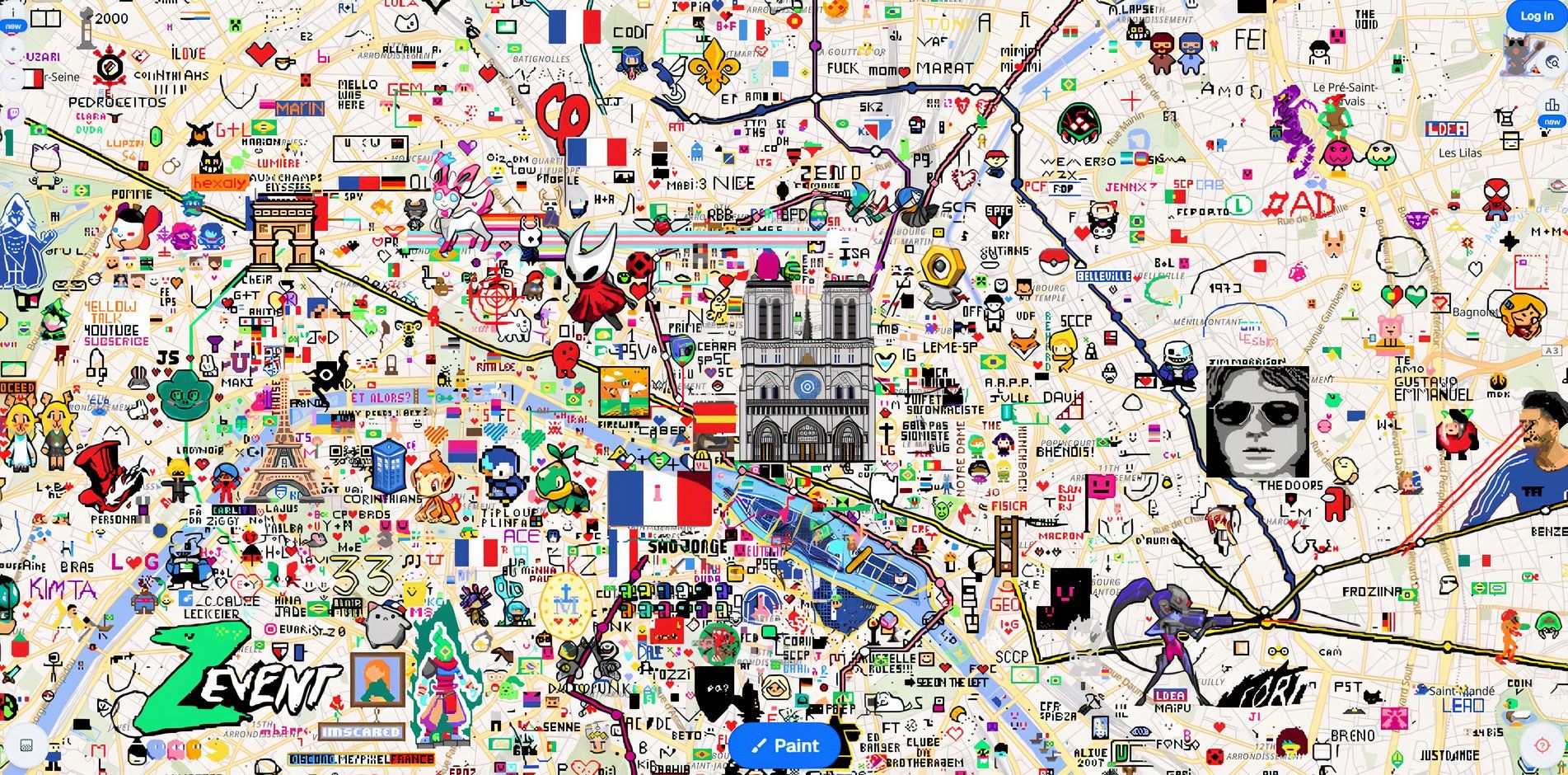
Wplace.live is a collaborative pixel art platform where users can place pixels on a shared digital canvas of the World Map to create artwork together.
The concept is straightforward: every user has the ability to “paint” a single pixel, but there are limitations. Each player has a limited number of “charges” or pixels they can place, and these charges recharge slowly over time.
This mechanic prevents a single user from dominating the canvas and forces a reliance on coordinated effort. The result is a vibrant, ever-changing tapestry of pixel art that reflects the interests, culture, and humor of the different groups contributing to the summer trend.

One of the most active places now on Wplace is the canvas for Los Angeles, California. With enormous contributions that are rich in culture and entertainment from brands and people, it remains the trendiest of all.
The most active place in the world right now is Brazil, which takes up the entirety of the top 10 regions if you set it to “all time.” So far, Brazil has painted an incredible 530,210,191 pixels.
This kind of overwhelming dominance from a single country highlights the unique social dynamics that emerge on Wplace. It’s a digital space where national pride, cultural memes, and inside jokes come to life, pixel by pixel, on a global scale.
This is not just about making a pretty picture; it’s about making a statement, about claiming a piece of the digital world for your team, your country, or your subculture.
The Power of Collaboration and Crowdsourcing
At its heart, Wplace is a masterclass in crowdsourcing. The platform’s true magic is not in the individual pixel, but in the millions of pixels placed in concert. What might seem like a random assortment of dots to an outsider is, in fact, a carefully orchestrated work of collaboration. Users often join alliances or form their own to protect their artwork, build new creations, or even “grief” the works of rival groups.
This social element is what elevates Wplace from a simple art project to a compelling social experiment. It’s a microcosm of the real world, complete with alliances, rivalries, and a constant struggle for control over territory.
The platform’s mechanics encourage this kind of social engineering, as a single person’s effort is largely insignificant. It’s only through organized, dedicated mass collaboration that large, recognizable images—like a country’s flag, a beloved cartoon character, or a detailed landscape—can be created and maintained.
The alliances on Wplace function like digital guilds or factions, with members coordinating their efforts through external channels like Discord or social media. They strategize, plan their designs, and defend their territories against other groups who might try to overwrite their work.
The result is a dynamic, ongoing saga of digital conquest and creation that keeps gamers and artists engaged for hours on end. Especially that Wplace streams live on Twitch so their users can check out videos, sign up to chat, and join their community.

The Microtransaction Dilemma
The flip side of all of this functionality is that Wplace also has microtransactions. You can purchase digital currency to unlock more features, like a profile picture or flags. This can be a point of contention for some, as it introduces a “pay-to-win” element to a platform that is ostensibly about free expression and community effort.
However, the developers have been careful to balance this, ensuring that while microtransactions can offer certain cosmetic or convenience-based advantages, they do not fundamentally alter the core gameplay loop.
But you don’t necessarily have to spend any money to enjoy what Wplace has to offer, especially if all you want to do is admire everyone else’s handiwork. The real currency of Wplace is time, patience, and a willingness to collaborate.
The most impressive works are not created by a single person with a fat wallet, but by dedicated communities who put in the hours, pixel by pixel, to bring their vision to life.
The ability to simply spectate, to zoom out and witness the ever-evolving pixel art of the entire World Map, is an experience in itself—a testament to the incredible creative power of human beings when they work together.
The New Social Frontier
Beyond the gamers and artists, Wplace is attracting a broader audience, drawn in by the platform’s unique blend of creativity and social interaction.
It’s a new kind of social network, one where communication is nonverbal and driven by a shared, visual goal.
Instead of likes, shares, or comments, the interaction is the act of placing a pixel next to a thousand others, a small but meaningful contribution to a larger whole.
This non-traditional social model has proven to be incredibly compelling. It taps into a primal human need for community and creation. The feeling of being a part of something bigger, of contributing to a piece of pixel art that might be seen by millions, is a powerful motivator.
This is why it has become the new trend for the summer—it’s a digital escape that offers a genuine sense of purpose and belonging, without the toxicity and endless noise of traditional social media platforms.
The Future of Wplace and Crowdsourced Art
The success of Wplace raises fascinating questions about the future of online collaboration and crowdsourcing.
Could this model be applied to other areas? What if a similar platform was used to create a crowdsourced piece of music, a collaborative story, or even a community-driven video game? The potential for Wplace to evolve into a more complex, multi-faceted platform is immense.
As it stands, it’s a living, breathing testament to the power of a simple idea executed on a grand scale. The world map, once a static representation of our planet, has become a dynamic canvas, a battleground for digital tribes, and a home for some of the most impressive pixel art you will ever see.
The story of Wplace is still being written, one pixel at a time. As new users join, new alliances form, and new pieces of art emerge and are overwritten, the platform continues to evolve.
It is a reminder that in the digital age, a simple tool and a shared purpose can bring people together in unexpected and beautiful ways.

FAQ on Wplace
Q1: What are the main rules of Wplace?
A: The main rules are to avoid painting over other artworks with random colors (griefing), no inappropriate or hateful content, no bots, and no using multiple accounts. However, it is allowed to paint over artworks to complement them or to create a new drawing.
Q2: How do you get more pixels on Wplace?
A: You start with a certain number of pixels, and you recharge one pixel every 30 seconds. Your maximum pixel charge also increases as you level up by painting more. You can also use microtransactions to purchase additional charges.
Q3: Is Wplace free to play?
A: Yes, Wplace is free to play. You do not need to spend any money to place pixels and contribute to the artwork. Microtransactions are available for cosmetic and convenience-based features but are not required to enjoy the platform.
Q4: Can I create my own alliance on Wplace?
A: Yes, the platform allows you to join existing alliances or form your own with other users. This is a key feature for coordinating collaboration and creating larger, more complex works of pixel art.
Q5: How does Wplace compare to Reddit’s r/Place?
A: Wplace is very similar to Reddit’s r/Place event, but with a few key differences. Wplace is an ongoing, permanent platform on a world map, whereas r/Place was a temporary event. Wplace also has more robust features like alliances and microtransactions, which create a different social and economic dynamic.
Conclusion
The rise of Wplace as a summer trend is a fascinating case study in modern digital culture. It demonstrates a powerful shift in how communities, particularly gamers, engage in online collaboration. The platform’s success is rooted in its simple yet profound concept: turning a global map into a shared canvas for pixel art.
This approach, reminiscent of the viral Reddit r/Place event, taps into a primal human desire for collective creation and community building.
Through allowing users to form alliances and engage in mass collaboration, Wplace creates a dynamic environment that fosters creativity, competition, and a unique form of digital storytelling. The fact that a single country, Brazil, has dominated a significant portion of the canvas, highlights how the platform can become a stage for national pride and cultural expression.
While the presence of microtransactions introduces a commercial element, the core appeal of Wplace remains its accessibility and the power of collective effort, making it a trend that is not only engaging but also a compelling social experiment.
As the summer progresses, it will be interesting to see how the canvas evolves and what new stories and rivalries emerge from this unique form of crowdsourcing.