The first sign of a frozen pipe is not always a dramatic split or water across the floor. It may be a kitchen tap that barely runs on a cold morning, while the bathroom upstairs works normally. The difference matters. A local restriction, a closed valve and a problem with the wider water supply can look similar until someone checks the pattern.
Barrie homeowners cannot control the weather, but they can learn where their plumbing is exposed, reduce avoidable cold spots and prepare for a loss of water. Winter preparation works best before the house is left empty or a prolonged cold spell arrives. A short walk through the property can reveal practical tasks that are easy to overlook during warmer months.
Understand where freezing starts
Water in a pipe can freeze when surrounding conditions stay cold enough. The risk depends on the pipe’s exposure and the building around it, not simply the temperature reported outdoors. A heated room may still have cold air reaching a supply line through a gap behind a cabinet or beside a foundation penetration.
Exposed pipework in an unheated garage, a crawl space or an exterior wall deserves attention. So do pipes in a basement area separated from the home’s heat by a closed door or new partition. A renovation can change how warmth reaches an old pipe route without moving the pipe itself.
Ice can restrict flow and create conditions that damage the pipe. A frozen line may leak as it thaws, so restoring water movement is not the end of the inspection. Someone needs to check the affected area for escaping water and assess any damage before normal use resumes.
Walk the house before the weather changes
Follow accessible water lines and look for draughts, missing insulation or dampness. Do not disturb suspect materials or open walls just to complete a seasonal check. If the route disappears into an exterior wall, note where and ask about it when arranging maintenance.
Check rooms that are rarely used. A spare bathroom, a utility cupboard or an addition can receive less heat than the rest of the house. Make sure furniture, storage boxes and closed vents are not unintentionally limiting normal heating around vulnerable plumbing. Keep combustion-air and ventilation openings clear rather than sealing them to remove a draught.
A previously frozen section is useful evidence. Record when it happened, what the weather was like and what was changed afterward. Repeated freezing in the same place deserves investigation of the route and building conditions, not just a plan to thaw it again next winter.
Use insulation as part of the solution
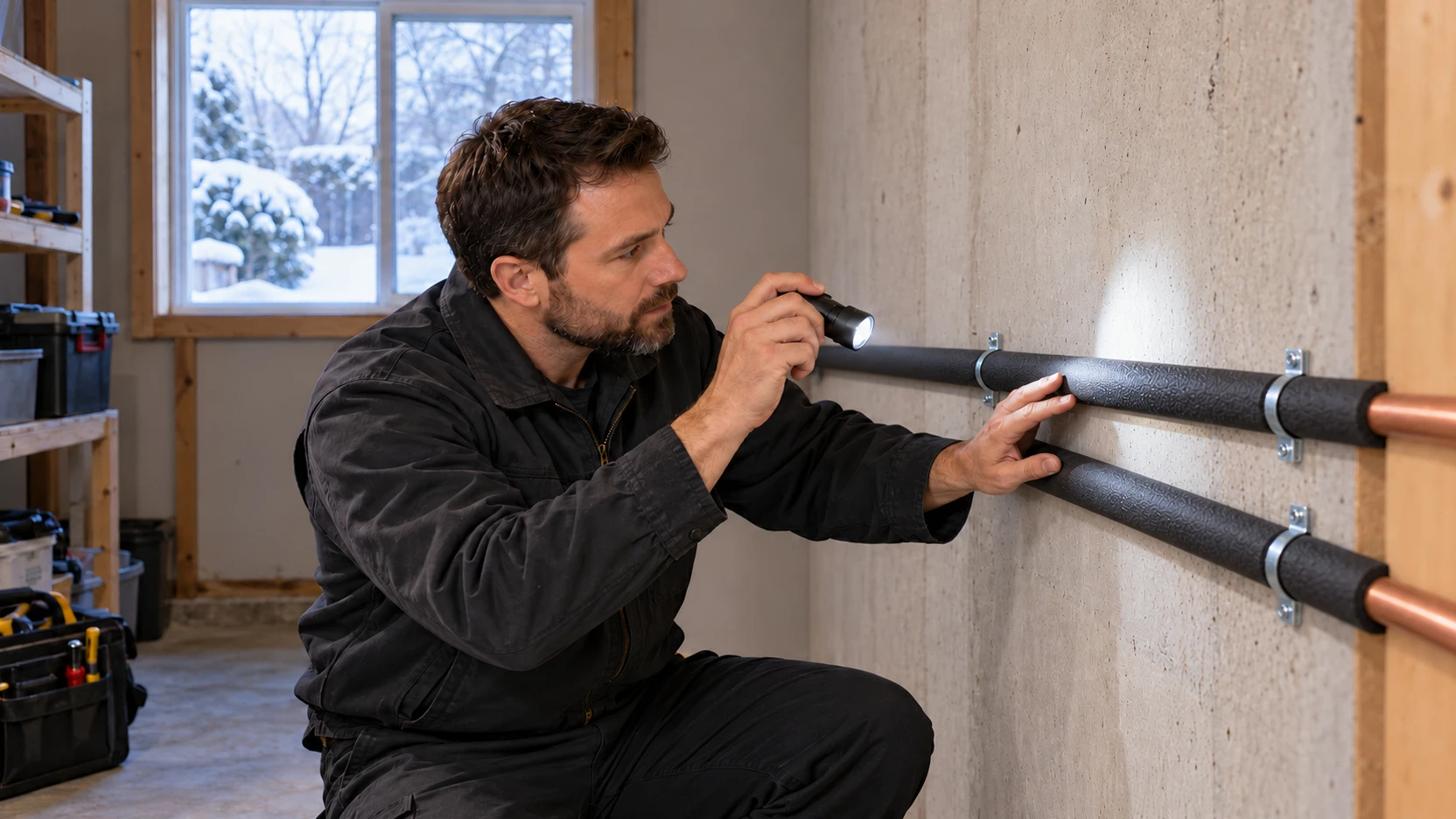
Pipe insulation can reduce heat loss, but it cannot create heat in an unheated space. Choose material suited to the pipe and location, and fit it neatly around accessible lengths and bends. A loose sleeve with large gaps provides incomplete coverage.
Where pipework sits near an opening in the building envelope, the source of cold air may also need attention. Ask the appropriate contractor how to address that gap without interfering with ventilation, fire separation or other building requirements. Adding insulation blindly around a pipe is not a substitute for understanding the wall assembly.
If a professional proposes electrical heat tracing, it needs to be suitable for the installation and used according to its instructions. Do not improvise with extension cords, ordinary heating pads or a portable heater placed against plumbing. A seasonal solution should remain safe when nobody is standing beside it.
Prepare outdoor taps and garden hoses
Disconnect garden hoses before freezing weather and store them where they will not trap water at the tap. Check the arrangement serving each outdoor outlet. Some have an indoor isolation valve and a way to drain the exterior section; other designs operate differently.
Follow the manufacturer’s winterizing instructions and ask for help if the arrangement is unclear. An outdoor tap described as frost-resistant can still be affected by installation conditions or an attached hose. Avoid assuming its label means no preparation is needed.
Include irrigation connections, outbuildings and seasonal additions in the discussion. A cottage-style room or garage sink may not have the same protection as plumbing inside the heated house. Write down the winterizing procedure so the person looking after the property does not have to guess which valve controls which outlet.
Make the plan understandable to someone else
Leave clear notes for anyone checking the property while you are away. Identify the main water shut-off, the heating controls and the contact to use if water stops or a leak appears. Explain which rooms or pipe routes have caused trouble before. A person visiting briefly may not know that an addition is normally kept heated or that a particular cupboard contains a supply line.
Keep those notes with the relevant contractor and utility contact details, rather than relying on a phone that another household member cannot unlock. Review the plan after alterations to the heating or plumbing. Clear instructions are particularly useful when a different person takes over the checks halfway through an absence.
Recognize a possible frozen line
A tap that slows to a trickle or stops during cold weather can indicate a frozen supply line, especially when nearby fixtures behave differently. Check whether the issue affects one outlet, one part of the house or the whole property. If neighbours also lack water, the utility may need to investigate the wider supply.
Avoid repeatedly operating appliances that need a reliable water supply while the cause is uncertain. Look from a safe position for visible bulges, frost or leaks, but do not treat the absence of those signs as proof that concealed pipework is intact.
Call for advice when the affected section is inaccessible or the source is uncertain. Explain which fixtures work, when the change started and whether the home has had freezing problems before. That information can help distinguish a plumbing emergency from a service interruption requiring a different response.
Respond safely to a frozen or burst pipe
Never use a blowtorch, open flame or other direct high heat to thaw a pipe. Do not attempt a repair in standing water or beside wet electrical equipment. If there is an immediate electrical hazard, stay clear and seek emergency assistance rather than entering to reach a valve.
If a pipe bursts and the main shut-off is safely accessible, stop the water supply and arrange urgent help. Keep the number for an Emergency Plumber Barrie households can contact before an incident, so finding assistance is not another task during a leak. Sureflow’s local service information can be kept with the home’s other emergency contacts; availability and the response arrangements should be confirmed when calling.
When freezing is suspected without a visible burst, contact a plumber for instructions suited to the pipe’s location and condition. Safe access, pipe material and the possibility of a concealed leak affect the response. Arrange for the situation to be monitored safely until the unresolved freeze or active leak has been assessed.
Find the main shut-off in advance
Locate the valve controlling water entering the home and make sure responsible adults know where it is. Keep the route accessible. Storage piled around the water entry can turn a simple precaution into a delay when water is escaping elsewhere.
A valve that looks corroded or will not move should be assessed rather than forced. Ask a plumber to explain its operation and whether maintenance is needed. Know which valves are homeowner-operated, and leave utility-controlled equipment alone.
If you expect to be away, arrange suitable supervision of the property and discuss heating and water precautions with a professional. Follow your insurer’s requirements for an unoccupied home. Simply turning the heat down or assuming a neighbour will notice a leak is not a complete winter plan.
Do not overlook winter drainage problems
A winter backup is not automatically a frozen drain. Grease, debris and an existing restriction can still cause trouble when the house is warm. Seasonal guests and heavier kitchen use may make a recurring problem more noticeable without explaining its underlying cause.
The drain cleaning Barrie households arrange should match the symptoms and pipework. Sureflow’s local overview can help frame a service enquiry about recurring blockages, several fixtures draining slowly or water returning through a basement drain. Describe what happens and mention any chemicals already used rather than requesting a particular machine before the system is assessed.
Keep fats and food scraps out of the sink, clean accessible strainers and stop using affected fixtures if wastewater backs up. Check that discharge arrangements for equipment such as a sump pump remain suitable for winter conditions, with professional advice where needed. Do not alter an outlet or direct water toward a neighbour’s property as an improvised fix.
Arrange preparation before the next cold spell
Choose a plumbing company Barrie homeowners can discuss recurring faults with, rather than waiting for another emergency to repeat the same temporary fix. A useful maintenance conversation covers previously frozen lines, outdoor shut-offs, existing leaks and any changes made during renovations. Ask which work addresses the cause and which measures only reduce short-term exposure.
Keep a simple winter checklist with the property records. Disconnect hoses, review vulnerable pipe routes, maintain normal heating, keep the main shut-off accessible and record the appropriate service contacts. Have someone check the home during absences as required by your arrangements and insurance.
After any repair, note what was found and what should be monitored. Winter protection becomes more dependable when each year’s experience improves the plan, rather than leaving the next person to rediscover the same cold spot or unreliable valve.