Electrical fires can happen without much warning, and the damage can go far beyond what you see at first. Faulty wiring, overloaded circuits, damaged outlets, and malfunctioning appliances can all create enough heat or sparks to start a fire. Once the flames are out, homeowners may still have to deal with smoke, soot, water, damaged wiring, and hidden structural problems.
According to the U.S. Fire Administration, an estimated 26,400 residential building fires caused by electrical malfunctions were reported in the United States in 2024. These fires resulted in 255 deaths, 800 injuries, and about $1.56 billion in property losses. That’s a good reminder that electrical fire damage is serious and shouldn’t be treated like a simple cleanup job.
What Causes Electrical Fires?
Electrical fires usually begin when an electrical component becomes too hot, creates a spark, or fails in some way. The problem may come from the wiring inside a wall, an overloaded outlet, a damaged cord, or an appliance that has developed an electrical fault.
Honestly, some warning signs are easy to ignore until there’s suddenly a much bigger problem.
Overloaded Circuits
Plugging too many devices into one circuit can cause excessive electrical demand and heat. This is especially risky when people rely heavily on extension cords or power strips for several high-powered devices. Frequently tripped breakers, warm outlets, flickering lights, or a burning smell can all be reasons to have the electrical system checked.
Faulty or Damaged Wiring
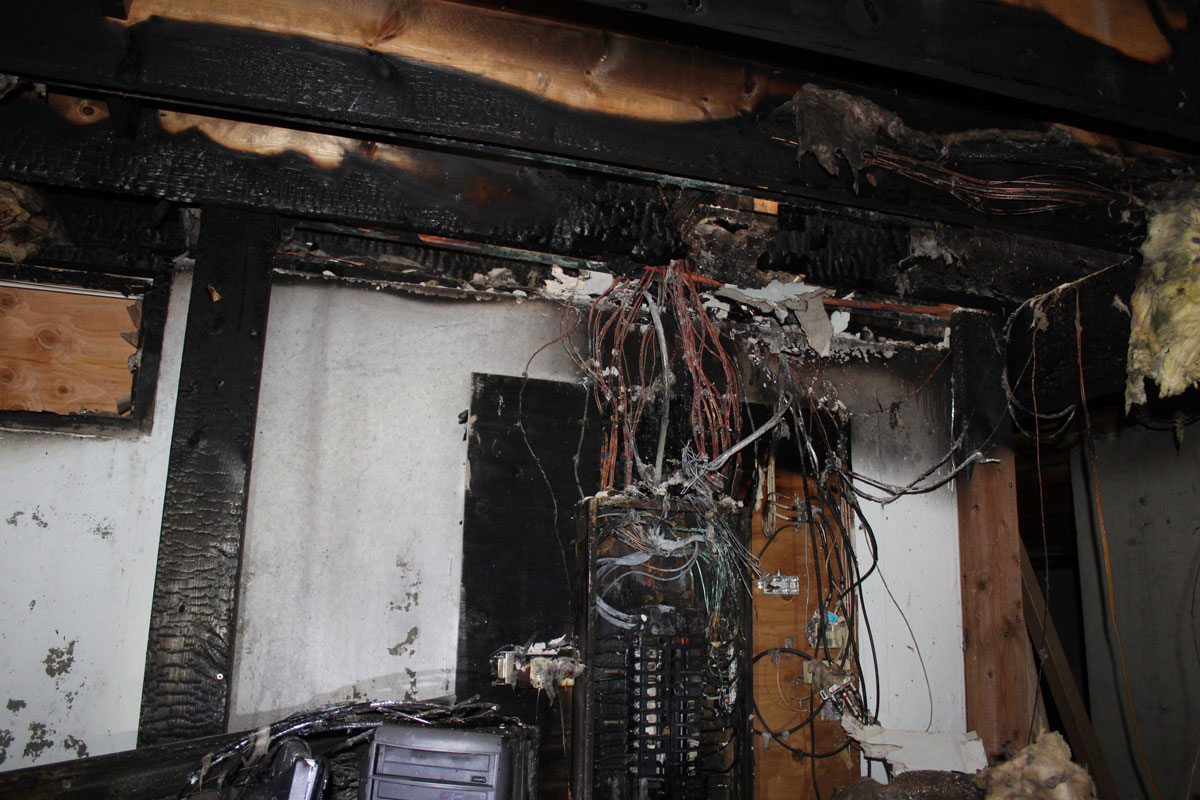
Old, loose, frayed, or improperly installed wiring can increase the risk of an electrical fire. Damaged insulation may expose wires and allow electrical arcing or overheating to occur. Because much of a home’s wiring is hidden behind walls and ceilings, these problems can be difficult to spot without a proper inspection.
Faulty Appliances and Outlets
Appliances with damaged cords, loose connections, or failing internal parts can also become fire hazards. The U.S. Fire Administration recommends plugging major appliances directly into wall outlets instead of using extension cords because extension cords can overheat and start fires. If an outlet feels hot, looks burned, sparks, or makes unusual sounds, stop using it and have it inspected.
What Does Electrical Fire Damage Include?
The damage from an electrical fire isn’t limited to the area where the flames started. Heat can damage nearby materials, while smoke and soot can spread into other rooms through doors, ventilation systems, and gaps in walls. Firefighters may also use large amounts of water to put out the flames, creating another layer of damage.
Smoke and Soot Damage
Smoke can travel through a home even when the fire itself stays in one room. Fine soot particles may settle on walls, ceilings, furniture, electronics, fabrics, and other belongings. These residues can also leave behind strong odors, so simply opening the windows usually isn’t enough to fully clean the property.
Hidden Electrical Damage
An electrical fire can damage wiring and components that aren’t immediately visible. Heat can affect wires, outlets, insulation, and other materials behind walls or above ceilings. That’s why damaged electrical systems should be evaluated by a qualified professional before power is restored or repairs continue.
Water and Structural Damage
Water used to extinguish an electrical fire can soak drywall, flooring, insulation, ceilings, and other parts of the home. If moisture remains trapped, it can contribute to additional property damage and mold growth. A proper restoration process should identify wet materials, remove excess water, and thoroughly dry affected areas.
What Should You Do After an Electrical Fire?
Safety should come first after an electrical fire. Even if the flames have been extinguished, the property may still contain damaged wiring, unstable materials, smoke, soot, or standing water. Don’t rush back inside or start cleaning until the property has been cleared as safe by the appropriate authorities and professionals.
Avoid Touching Damaged Electrical Systems
Don’t turn damaged electrical equipment back on or try to repair burned wiring yourself. A qualified electrician should inspect the electrical system and determine what can safely remain and what needs to be replaced. You should also avoid touching outlets, appliances, wires, or electrical panels that show signs of burning or heat damage.
Document the Damage
Take photos and videos of the affected areas when it is safe to do so. Document damaged walls, ceilings, flooring, appliances, furniture, and personal belongings for your insurance claim. Keep receipts and records related to emergency services, temporary repairs, cleaning, and restoration.
Contact a Fire Damage Restoration Professional
A professional fire damage restoration company can help address the different types of damage left behind after an electrical fire. The process may include water removal, drying, smoke and soot cleanup, odor control, damaged material removal, and repairs. Getting the property assessed early can also help prevent small problems from becoming more expensive later.
How Is Electrical Fire Damage Restored?

Electrical fire restoration usually starts with a detailed inspection of the property. Professionals look for visible fire damage as well as smoke, soot, water, moisture, and structural damage that may be less obvious. The goal is to understand the full scope of the problem before cleanup and repairs begin.
Inspection and Safety Assessment
The first step is determining whether the property is safe to enter and work in. Electrical components should be assessed by an appropriate qualified professional, while restoration specialists can identify fire, smoke, soot, and water damage. From there, the restoration plan can focus on cleaning, drying, repairing, or replacing affected materials.
Smoke, Soot, and Odor Cleanup
Smoke cleanup involves more than wiping black marks from a wall. Soot can settle on many surfaces and may continue to cause problems if it’s left untreated. Professional cleaning and deodorization methods can help remove smoke residue and reduce persistent odors.
Repairs and Reconstruction
Some materials may be cleaned and restored, while others may need to be removed and replaced. Damaged drywall, flooring, insulation, ceilings, and other building materials may require repair or reconstruction. The final goal is to return the property to a safe, clean, and usable condition.
Conclusion
Electrical fire damage can go far beyond burned walls or damaged appliances. Smoke, soot, water, heat, and damaged wiring can create hidden problems that aren’t always easy to spot. That’s why it’s important to have the property properly inspected after an electrical fire.
If your home has been affected, don’t assume everything is safe just because the flames are out. Professional fire and smoke damage restoration can help identify what needs to be cleaned, dried, repaired, or replaced. Spartan Restoration Inc. can help restore your property and get your home back to a safe and comfortable condition.