Polished concrete is a practical flooring choice for commercial properties because it offers a durable surface with a clean, modern appearance.
However, in busy environments such as retail stores, warehouses, offices, and showrooms, constant foot traffic and daily operations can gradually affect its finish. With the right care, businesses can preserve the appearance of their floors and get more value from their investment in concrete polishing in Perth.
Maintaining polished concrete is not simply about keeping the surface clean. It involves understanding how the floor is used, choosing suitable cleaning methods, and protecting the finish from avoidable wear.
Why High-Traffic Areas Need a Different Maintenance Approach
A polished concrete floor in a private residence experiences different demands from one installed in a busy commercial building. In retail spaces, customers continuously walk across the surface, while warehouses may expose floors to trolleys, pallet jacks, and other equipment.
These conditions can gradually affect the floor’s appearance. Fine dust and grit may cause surface abrasion, while spills and unsuitable cleaning products can leave marks or residue.
The level of care required depends on several factors:
- Daily foot traffic: Areas with frequent pedestrian movement generally need more regular cleaning.
- Type of business: Warehouses, restaurants, retail stores and offices expose floors to different types of dirt and contaminants.
- Equipment movement: Heavy machinery, trolleys, and furniture can place additional stress on the surface.
- Existing finish: The appearance and performance of a polished concrete floor depend partly on its original condition and finishing treatment.
Understanding these factors helps businesses develop a maintenance routine that suits their actual operating conditions.
Establish a Cleaning Routine Based on Floor Usage
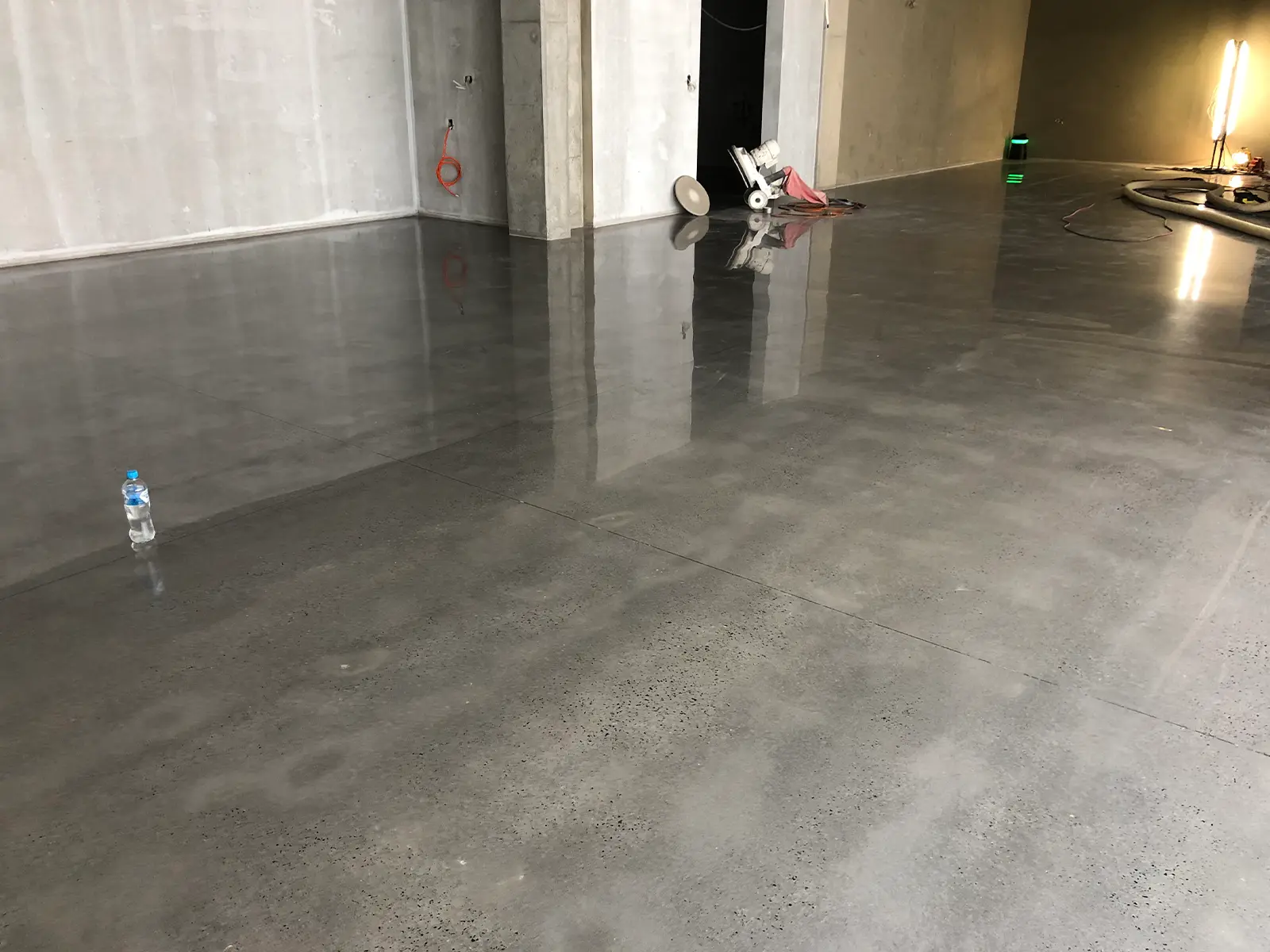
A consistent cleaning schedule is more effective than relying on occasional intensive cleaning. Rather than applying the same routine throughout an entire building, businesses should consider how different areas are used.
Daily care
High-traffic entrances, reception areas and main walkways may need attention several times throughout the day. Remove loose dirt and dust using a suitable dust mop or soft-bristled equipment.
This is particularly important around entrances, where sand, grit and other particles can be carried inside on footwear.
Weekly cleaning
Depending on traffic levels, schedule more thorough cleaning to remove accumulated dirt and surface residue. Use a cleaning solution suitable for polished concrete and follow the manufacturer’s dilution instructions.
Avoid leaving excess water on the floor. Use appropriate equipment to clean the surface without spreading dirty water across larger areas.
Periodic assessment
Regularly inspect areas that experience heavy use, including entrances, corridors, loading zones, and spaces around machinery. Look for changes in appearance, uneven gloss, persistent marks, or areas that no longer respond to routine cleaning.
These observations help determine whether the floor needs a change in its maintenance routine or professional attention.
Choose Cleaning Products That Suit Polished Concrete
Using unsuitable cleaning products can affect the appearance of polished concrete. Harsh chemicals, highly acidic solutions, and abrasive cleaning materials may damage the finish or leave residues that make the floor appear dull.
For routine cleaning:
- Choose a pH-neutral cleaner recommended for polished concrete.
- Follow the correct dilution instructions.
- Avoid abrasive pads and aggressive scrubbing tools.
- Do not use acidic household cleaners unless specifically approved for the surface.
- Test unfamiliar products on a small, inconspicuous area before wider application.
It is also important to avoid excessive detergent. Too much cleaning solution can leave a film on the surface, making it look cloudy or streaky even after cleaning.
Reduce Dirt and Grit Entering the Building
Preventing contaminants from reaching the floor is an important part of long-term maintenance.
Entrances are often the first areas to show signs of wear because they collect dirt brought in from outside. Installing suitable entrance mats can help capture loose particles before they spread throughout the building.
Businesses can also consider:
- Placing appropriate mats at frequently used entry points.
- Keeping external walkways reasonably clear of loose dirt and debris.
- Cleaning entrance areas more frequently during wet or dusty conditions.
- Maintaining designated routes for pedestrian and equipment movement.
These measures reduce the amount of abrasive material travelling across the polished surface.
Protect the Floor from Heavy Equipment and Furniture
Polished concrete is durable, but repeated impact, dragging and concentrated loads can still affect its appearance.
Commercial spaces that use trolleys, display units, office furniture or warehouse equipment should take precautions when moving these items.
Use suitable protective wheels or floor-safe attachments where appropriate. Lift furniture instead of dragging it, and avoid moving heavy equipment across the surface without checking that its wheels or contact points are clean and suitable.
Where machinery operates regularly, establish designated movement routes and inspect these areas for changes in the floor’s finish.
These precautions are particularly useful in warehouses, workshops and retail environments where equipment movement is part of everyday operations.
Address Spills Before They Become Persistent Marks
Spills should be dealt with promptly, especially in commercial environments where liquids, oils and food substances may come into contact with the floor.
Use an appropriate absorbent material to remove the spill, then clean the affected area with a product suitable for polished concrete. Avoid spreading the substance across the surrounding surface.
For businesses that handle oils, grease, or chemicals, staff should understand the correct cleaning procedure for each type of spill. Certain substances may require specific cleaning products or professional assessment.
If a mark remains after appropriate cleaning, repeated scrubbing with stronger chemicals is not necessarily the right solution. The problem may involve the surface finish rather than ordinary dirt.
Recognise When Cleaning Is No Longer Enough
Routine maintenance helps preserve a polished concrete floor, but it cannot correct every change in the surface.
Over time, some commercial floors may develop areas with reduced sheen, visible wear, or an inconsistent appearance. These changes can be more noticeable along main walkways and around frequently used entrances.
It is important to distinguish between removable surface residue and deterioration of the polished finish.
For example:
- A cloudy appearance may be caused by cleaning product residue.
- Persistent dull patches may indicate changes to the surface finish.
- Visible scratches may require professional surface treatment.
- Uneven gloss may suggest that different sections of the floor have experienced different levels of wear.
When these issues continue despite suitable cleaning, a professional assessment can help establish whether the floor needs further treatment.
How Professional Concrete Polishing Helps Restore the Floor’s Appearance
When routine care is no longer sufficient, professional concrete polishing can help improve the appearance of worn surfaces.
The appropriate treatment depends on the existing condition of the concrete, the type of finish, and the issues affecting the floor. A professional assessment helps determine the work required rather than relying on a one-size-fits-all approach.
Nanoworx provides concrete polishing services for surfaces that need professional attention. The objective is to achieve a consistent finish suited to the property’s requirements and the way the space is used.
For property owners managing different surface materials, it is also important to recognise that concrete and natural stone require different restoration approaches. Marble, travertine and other natural stone surfaces may need specialist stone restoration techniques suited to their individual characteristics.
Maintain the Finish After Professional Treatment
Once a polished concrete floor has received professional treatment, following an appropriate care routine helps preserve its appearance.
Businesses should establish cleaning procedures that reflect the level of traffic and activity within the premises. Staff responsible for cleaning should understand which products are suitable, how to handle spills, and which equipment should be avoided.
It is also useful to keep a record of recurring problem areas. This makes it easier to identify whether certain sections need more frequent cleaning or additional protection.
Rather than waiting until the floor looks noticeably worn, periodic professional assessments can help businesses make informed decisions about ongoing maintenance.
Keep Your Commercial Concrete Floors Looking Their Best with Nanoworx
High-traffic environments place ongoing demands on polished concrete floors. While regular cleaning and sensible preventative measures help maintain their appearance, professional attention may be needed when the finish begins to show signs of wear.
Nanoworx provides professional concrete polishing and surface restoration services in Perth, helping property owners and businesses maintain the appearance of their concrete surfaces.
If your commercial concrete floors have become dull, uneven, or visibly worn, contact Nanoworx to discuss the condition of your surface and the most suitable treatment.