


Types and Stages of Modern Orthodontic Treatments
Orthodontic treatment is a sophisticated process designed to correct malocclusion, which refers to misalignments of the teeth and jaws. This journey typically involves several distinct stages, each crucial for achieving a stable, healthy, and aesthetically pleasing smile.
Modern orthodontics leverages advanced technologies, from facial-driven smile design and digital impressions that create precise 3D models of your mouth to sophisticated archwires that apply gentle, consistent pressure.
The underlying principle involves controlled bone remodeling, where bone tissue is selectively removed and added to allow teeth to move into their desired positions.
Active Orthodontic Treatments and Tooth Alignment
The initial phase of orthodontic treatment focuses on actively moving teeth into their correct alignment. This is where the visible transformation occurs. We utilize various appliances tailored to individual needs:
- Clear Aligners: These custom-made, transparent trays gradually shift teeth into position. They are popular for their discreet appearance and removability.
- Traditional Braces: Comprising metal brackets bonded to the teeth and connected by archwires, these remain a highly effective option for complex cases.
- Ceramic Brackets: Similar to traditional braces but made from clear or tooth-colored materials, offering a more aesthetic alternative.
- Palatal Expanders: Used to widen the upper jaw, often in younger patients, to correct crossbites or create space for crowded teeth.
- Jaw Alignment Appliances: In some cases, specific devices are used to correct discrepancies in jaw growth and position, particularly in growing adolescents.
Throughout this active phase, regular adjustments are made to ensure continuous, controlled tooth movement. This stage can last anywhere from several months to a few years, depending on the complexity of the case.
Retention Phase in Orthodontic Treatments
Once the active tooth movement is complete, and your teeth are in their ideal positions, the retention phase begins. This is arguably the most critical, yet often underestimated, stage of orthodontic treatment.
The goal here is to stabilize your teeth in their new positions while the surrounding bone and periodontal ligaments (the tissues that hold your teeth in place) adapt and consolidate.
Without retention, teeth have a natural tendency to shift back towards their original positions, a phenomenon known as relapse. This is because the bone around the teeth needs time to mature and harden in the new configuration. The periodontal ligaments, which have been stretched and compressed during tooth movement, also need time to reorganize and stabilize.
Wearing a retainer consistently, as prescribed by your orthodontist, is paramount for relapse prevention. It ensures the long-term stability of your treatment results, protecting your investment and preserving your beautiful smile for a lifetime. This commitment to retention is what truly solidifies the success of your orthodontic journey.
Understanding Post-Treatment Retainer Types
After the active phase of orthodontic treatment concludes, your orthodontist will prescribe a retainer. This appliance is essential for maintaining the newly achieved alignment of your teeth.
There are several types of retainers, each with unique characteristics, benefits, and care requirements. The selection of the appropriate retainer depends on various factors, including the type of orthodontic correction performed, your oral hygiene habits, and your orthodontist’s recommendation.

Understanding the differences between these appliances is the first step in ensuring their proper care and, consequently, the longevity of your straight smile. Generally, retainers fall into two main categories: removable and fixed.
Removable Clear and Hawley Appliances
Removable retainers offer the flexibility of being taken out for eating, brushing, and flossing. This category includes two widely used types:
- Essix Retainers (Clear Retainers): These are custom-made from thin, transparent thermoplastic polymers that fit snugly over your teeth. They are virtually invisible, making them a popular choice for aesthetics. While discreet, they can be prone to wear and tear, and their material can stain or warp if not cared for properly.
- Hawley Retainers: These consist of a custom-fitted acrylic base that rests against the roof of your mouth or along the inside of your lower teeth, connected by a metal labial bow that wraps around the front of your teeth. Hawley retainers are durable and adjustable, allowing for minor modifications if needed. The acrylic resin and wire components are generally robust, but the acrylic can crack if dropped, and the wire can bend if mishandled.
Both types require diligent daily cleaning and proper storage to prevent bacterial buildup and damage.
Permanent Bonded Lingual Retainers
Permanent, or fixed, retainers offer continuous stability as they are bonded directly to the back surfaces of your teeth. These typically consist of a thin, braided lingual wire custom-fitted to the inside of your lower (and sometimes upper) front teeth, most commonly the lower incisors. The wire is secured in place with composite bonding material.
The primary advantage of a fixed retainer is that it works 24/7, eliminating concerns about patient compliance. It ensures continuous stability, preventing any subtle shifts in tooth position. However, their fixed nature means they require specific cleaning techniques. Food particles and plaque can easily accumulate around the wire and bonding material, necessitating meticulous interdental cleaning using floss threaders or interdental brushes to prevent plaque buildup, gum inflammation, and potential cavities.
| Feature | Removable Retainers (Essix/Hawley) | Fixed Retainers (Bonded Lingual) |
|---|---|---|
| Visibility | Clear (Essix) are nearly invisible; Hawley has a wire. | Completely hidden on the tongue side of teeth. |
| Compliance | Requires patient discipline to wear as prescribed. | No compliance needed; always in place. |
| Cleaning | Taken out for cleaning; relatively easy to clean. | Requires special tools (floss threaders) for cleaning. |
| Durability | Can be lost, broken, or warped; may need replacement. | Durable, but bonding can break; wire can bend. |
| Cost | Generally lower initial cost; replacement costs add up. | Higher initial cost; less frequent replacement. |
| Diet | Removed for eating; no food restrictions. | Requires care with hard/sticky foods to prevent damage. |
| Oral Hygiene | Easier to brush and floss teeth normally. | Can make flossing challenging without proper tools. |
Daily Cleaning and Maintenance Protocols
Maintaining impeccable hygiene for your retainer is just as crucial as caring for your natural teeth. Neglecting retainer cleaning can lead to a host of problems, including bacterial biofilm accumulation, unpleasant odors, and even an increased risk of oral health issues.
Studies show that poor retainer hygiene can increase the risks of bacterial infections and bad breath by up to 70%. Furthermore, nearly 80% of retainer wearers who skip regular cleaning end up with significant tartar buildup.
Essential Daily Cleaning Routines
For removable retainers, a consistent daily cleaning routine is non-negotiable. Biofilm, a sticky film of bacteria, can form on a retainer in as little as 12 hours, and plaque can harden into tartar in just 24 to 48 hours if not cleaned off.
Here’s how we recommend you care for your removable retainers every day:
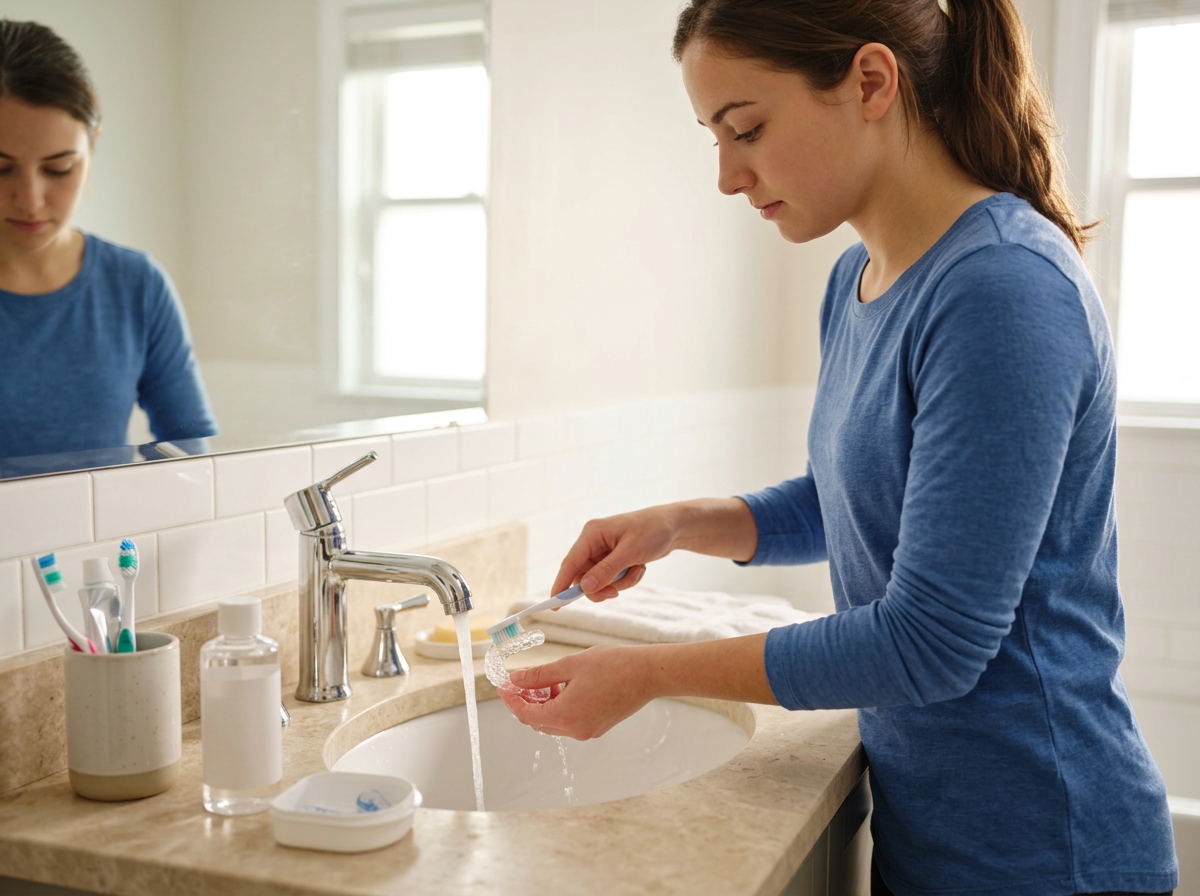
- Immediate Rinse: As soon as you remove your retainer, rinse it thoroughly under cool or lukewarm water. This helps to wash away saliva, food particles, and loose plaque before they dry and adhere to the surface. Avoid hot water, as it can warp plastic retainers.
- Gentle Brushing: Using a soft-bristled toothbrush (ideally one dedicated solely to your retainer) and a mild, unscented liquid soap (like dish soap), gently brush all surfaces of your retainer. This includes the inside and outside, as well as any grooves or crevices. Avoid using abrasive toothpastes, as these can scratch the retainer material, creating microscopic nooks where bacteria can hide and stains can accumulate.
- Thorough Rinsing: After brushing, rinse your retainer meticulously under cool water to remove all traces of soap. Inspect it to ensure there’s no cloudy residue.
- Oral Hygiene First: Always brush and floss your teeth thoroughly before reinserting your retainer. This prevents trapping food particles and bacteria against your teeth and gums, which could lead to cavities or gum disease.
For fixed retainers, daily cleaning involves a slightly different approach:
- Flossing with Threaders: Use a floss threader to guide dental floss under the wire and between each tooth. This allows you to clean the tooth surfaces and gum line effectively.
- Interdental Brushes: Small interdental brushes can be very effective for cleaning around the wire and under the bonding material, removing trapped food and plaque.
- Water Flosser: A water flosser can also be a valuable tool for flushing out debris and plaque around the fixed wire, providing a thorough clean in hard-to-reach areas.
Deep Cleaning and Tartar Removal Solutions
While daily brushing is crucial, periodic deep cleaning can help tackle stubborn buildup, stains, and odors.
- Effervescent Tablets: Specialized retainer or denture cleaning tablets are excellent for deep cleaning. Soaking your retainer in cool water with these effervescent tablets can kill 99% of odor-causing bacteria in about 10 minutes. We recommend using these once or twice a week. Always follow the product instructions carefully.
- Ultrasonic Cleaners: For an even more thorough clean, an ultrasonic cleaner can be a fantastic investment. These devices use high-frequency sound waves to create tiny bubbles that dislodge debris and bacteria from every crevice of your retainer. An ultrasonic cleaner can remove 98% more plaque than just brushing, and using one can cut down on how often you need to replace your retainer by up to 40%. The ultrasonic retainer cleaner market is projected to hit $520 million globally by 2032, highlighting their growing popularity and effectiveness.
- Vinegar Soak (with caution): For mineral deposits or white buildup, some sources suggest a short soak in a solution of equal parts white vinegar and lukewarm water (15-20 minutes). However, we advise caution with this method, especially for clear plastic retainers, as prolonged or frequent exposure to vinegar can potentially erode acrylic or dull the plastic over time. Always rinse thoroughly afterward. If stubborn crust persists, it’s best to consult your orthodontist rather than attempting to scrape it off, which can damage the appliance.
Consistent daily care combined with occasional deep cleaning will keep your retainer fresh, hygienic, and effective in preserving your beautiful smile.
Critical Retainer Care Mistakes and Storage Habits
The effectiveness and lifespan of your retainer are heavily influenced by how you handle and store it. Unfortunately, many common mistakes can lead to damage, loss, or hygiene issues, ultimately compromising your orthodontic results.
In the U.S. alone, retainer replacements due to poor cleaning contribute to over $500 million in related orthodontic costs each year.
Additionally, poor cleaning habits contribute to 30% of retainers needing replacement within just six months, costing users anywhere from $200 to $400 a pop. Avoiding these pitfalls is essential for protecting your investment.
Safe Storage and Handling Practices
Proper storage is key to preventing damage, loss, and contamination of your retainer.
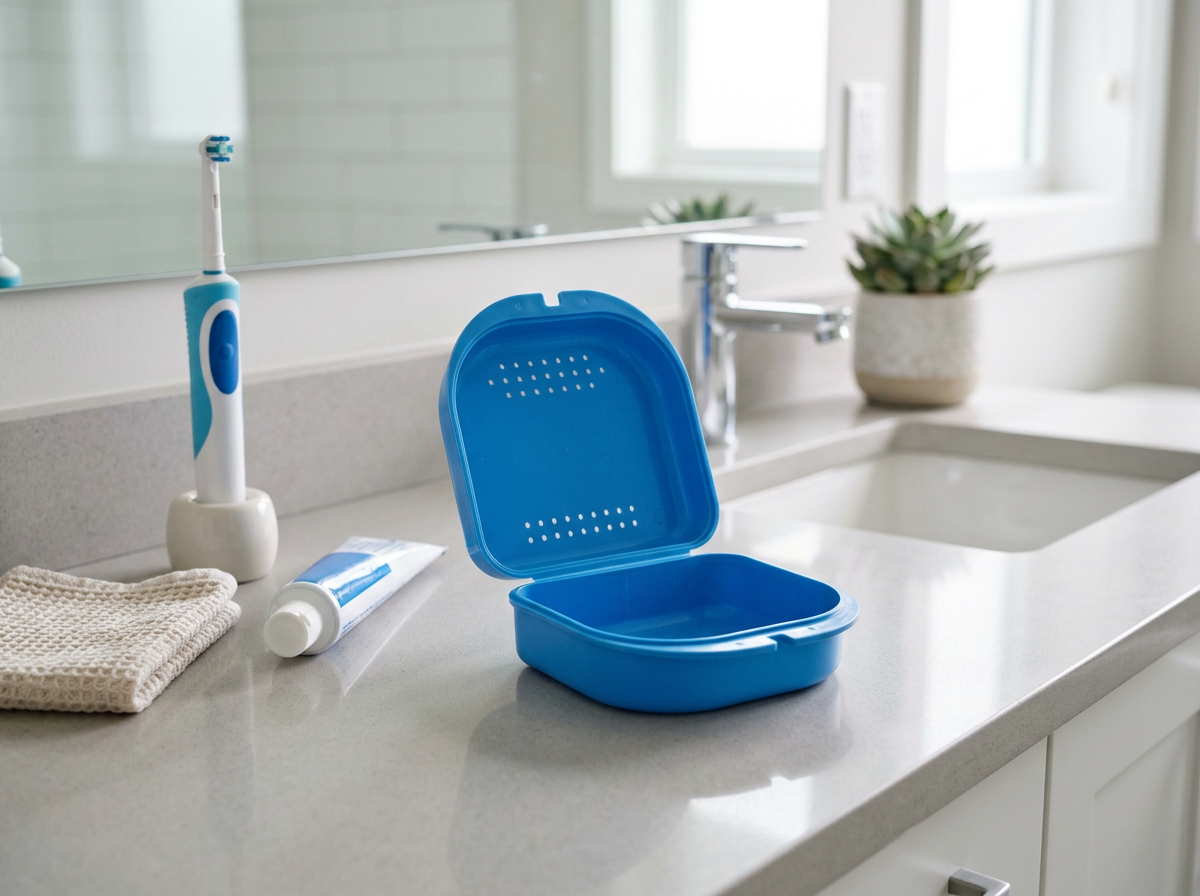
- Always Use a Protective Case: Whenever your retainer is not in your mouth, it should be in its designated protective case. This shields it from physical damage, keeps it clean, and prevents it from being misplaced.
- Ensure Airflow Ventilation: For removable retainers, choose a case that allows for some airflow, especially if the retainer is still slightly damp. This helps prevent the growth of mold and bacteria. After cleaning your case, allow it to air-dry completely before placing your retainer inside.
- Avoid Napkin Entrapment: One of the most common ways retainers get lost or accidentally thrown away is by being wrapped in a napkin during meals. It’s a classic mistake – don’t let your retainer become pizza leftovers! Always place it directly into its case.
- Keep Away from Heat: Heat is the arch-enemy of thermoplastic retainers. Exposure to hot water, direct sunlight (like on a car dashboard), or even leaving it too close to a heat source can cause plastic retainers to warp and lose their custom fit. Once warped, a retainer is no longer effective and will need to be replaced.
- Pet Damage Prevention: Pets, especially dogs, are often attracted to the smell of saliva on retainers and can easily chew and destroy them. Always keep your retainer case in a secure location, out of reach of curious paws.
- Travel Hygiene: When traveling, ensure your retainer and case are packed securely. Consider carrying a small travel-sized cleaning solution or extra effervescent tablets.
Here’s a quick guide to crucial retainer care:
Managing Wear, Fit Issues, and Damage
Even with the best care, issues can arise. Knowing how to respond is important:
- Tight Fit: If your removable retainer feels unusually tight when you put it in, it often indicates that your teeth have shifted slightly. This can happen if you haven’t worn it consistently. If the tightness is mild and subsides quickly, resume consistent wear. However, if it’s painful or doesn’t improve, contact your orthodontist. Do not force a retainer that is severely tight, as this can damage your teeth or the retainer itself.
- Cracked Plastic or Broken Wires: Retainers can break or crack if dropped, stepped on, or subjected to excessive force. For Hawley retainers, the metal wire can bend or break. A damaged retainer may not effectively hold your teeth in place and can even cause irritation to your mouth. If your retainer is cracked, broken, or has a bent wire, do not attempt to repair it yourself. Contact your orthodontist immediately for assessment and professional adjustment or replacement.
- Loose or Ill-fitting Retainer: A retainer that feels loose or doesn’t fit snugly is no longer doing its job. This could be due to tooth shifting or the retainer itself becoming stretched or warped. A loose retainer provides no retention and should be addressed promptly by your orthodontist.
- Lost Retainer: Losing a retainer is a common and frustrating occurrence. If you lose your retainer, contact your orthodontist as soon as possible. The longer you wait, the more likely your teeth are to shift, potentially requiring a new retainer or even further orthodontic treatment.
Your retainer is an extension of your orthodontic treatment. Protecting it through proper handling, storage, and prompt attention to any issues is vital for preserving your beautifully aligned smile.
Frequently Asked Questions About Retainer Care
Even with a comprehensive guide, specific questions often arise regarding retainer care and usage. We’ve compiled some of the most common inquiries to provide clear and concise answers.
How long do you need to wear a retainer after braces?
The duration of retainer wear is a question we hear frequently, and the answer is crucial for long-term stability. Orthodontists generally recommend an initial period of full-time wear, typically for 4 to 6 months, immediately after your braces are removed. This allows your periodontal ligaments and surrounding bone to stabilize in their new positions.
Following this initial phase, most patients transition to nighttime retention, meaning you wear your retainer only while you sleep. The consensus among orthodontic professionals is that retainers should be worn nightly for the rest of your life.
This might sound like a long commitment, but it’s essential because teeth can continue to shift throughout life due to natural age-related changes, bite forces, and even habits. Consistent nighttime wear is the best way to ensure your smile remains perfectly aligned for decades to come.
Can you eat or drink while wearing a clear retainer?
For removable clear retainers (Essix or Vivera), we strongly advise against eating or drinking anything other than plain water while wearing them. Here’s why:
- Staining: Beverages like coffee, tea, red wine, and dark sodas can easily stain your clear retainer, making it discolored and noticeable.
- Sugar Entrapment: Sugary drinks and foods can get trapped between your retainer and your teeth. This creates a perfect environment for bacteria to thrive, leading to enamel demineralization, cavities, and bad breath.
- Damage: Chewing food with your retainer in can cause it to crack, warp, or break. Even hard candies or crunchy snacks can compromise its integrity.
- Hygiene: Food particles can get lodged in the retainer, making it difficult to clean and potentially causing odors.
Always remove your clear retainer before eating or drinking anything other than water. If you must drink something other than water, remove your retainer, rinse your mouth, and then reinsert it once you’re done.
What should you do if your retainer no longer fits?
Discovering your retainer no longer fits can be alarming, but your response is key.
- Mild Tightness: If your removable retainer feels slightly tighter than usual, it often means your teeth have shifted a little since your last consistent wear. Try to wear it as much as possible, ideally full-time for a few days, to see if your teeth can gently move back into place. If the tightness subsides and the retainer fits comfortably again, resume your prescribed wear schedule.
- Severe Misalignment or Pain: If the retainer is very tight, causes pain, or simply cannot be seated properly without excessive force, do not try to force it. Forcing an ill-fitting retainer can damage your teeth or the retainer itself.
- Orthodontic Assessment: In cases of severe tightness, a visibly warped or broken retainer, or if you suspect significant tooth shifting, contact your orthodontist immediately. They can perform an orthodontic assessment to determine the extent of the tooth movement and whether a new retainer is needed. Sometimes, minor adjustments can be made to existing retainers, but often, a new impression will be taken to fabricate a replacement that fits your current tooth position. Acting quickly can prevent further shifting and avoid the need for more extensive orthodontic treatment.
Conclusion
The journey to a perfect smile is a significant investment in both time and resources. While the active phase of orthodontic treatment achieves the desired tooth alignment, it is the consistent and diligent care of your retainer that truly safeguards this achievement.
By understanding the different types of retainers, adhering to essential daily cleaning routines, practicing smart storage habits, and knowing how to address common issues, you empower yourself to preserve your beautiful smile.
Your retainer is not merely an afterthought; it is an indispensable tool in your long-term oral health strategy. Embracing lifelong retention ensures that the effort, expense, and commitment you’ve poured into your orthodontic treatment yield lasting results.
Protect your investment, maintain your oral health, and enjoy the confidence that comes with a perfectly aligned smile for years to come.