


A house can have carefully chosen lighting in the kitchen and sitting room while the places used for everyday chores remain awkward. Dark utility shelves, a poorly lit coat cupboard or a landing switch in the wrong place can be more irritating than an unfashionable pendant.
These spaces deserve attention because their lighting has a practical job. The aim is to make ordinary tasks easier without filling every small room with ceiling fittings. Begin by looking at where light is missing and what prevents it reaching the surface you use.
Make the utility room easier to work in
Standing at a washing machine or laundry counter often puts your body between the main ceiling light and the task. Wall cupboards can deepen the shadow. Consider whether a local light over the working surface would be more useful than a brighter centre fitting.
The indoor ranges at LightHub Direct include ceiling and under-cabinet lighting. These offer different ways to illuminate an appliance area or counter, subject to the installation conditions and the manufacturer’s instructions.
Plan access for maintenance before adding cupboards. A driver or connection hidden behind a fixed appliance can be awkward to reach later. Share the cabinet layout with the electrician while changes are still possible.
Look inside storage rather than only at the doorway
A lit floor does little to help you read labels on shelves. In a deep cupboard, the top shelf can block light from reaching the lower ones. Review the view into the storage with the door fully open and with the usual contents in place.
A suitable local fitting may help, but its position needs care. Keep it away from items that could press against it and follow all required clearances. Do not assume any light can be fitted inside a confined cupboard.
When considering a LightHub Direct fitting, check the physical size and installation requirements as well as the output. The best position on paper may be occupied by a shelf bracket or a door hinge in the finished space.
Make hallways comfortable after dark
Hall lighting should help someone enter, find their belongings and move through the house. A bright fitting directly in the view from an adjoining bedroom can make that simple task uncomfortable at night.
Think about sightlines. A ceiling fitting may be visible from the stairs, while a wall light may shine directly into someone’s eyes as they turn a corner. Assess proposed positions from those approaches rather than only from the middle of the room.
LightHub Direct offers wall and ceiling options, giving scope to choose a format that suits the route. Consider independent switching where a long hallway serves rooms with different routines. Controls should be easy for residents and visitors to find.
Give the back door its own lighting decision
The area around a back door can involve steps, keys, wet shoes and bags. Interior light through the doorway may be blocked when the door closes. An external fitting needs to suit its actual exposure and mounting position.
An IP rating describes protection against ingress under specified conditions. It does not by itself confirm that every part of an installation is suitable outdoors. Cable entries, connections and the manufacturer’s stated use also need checking.
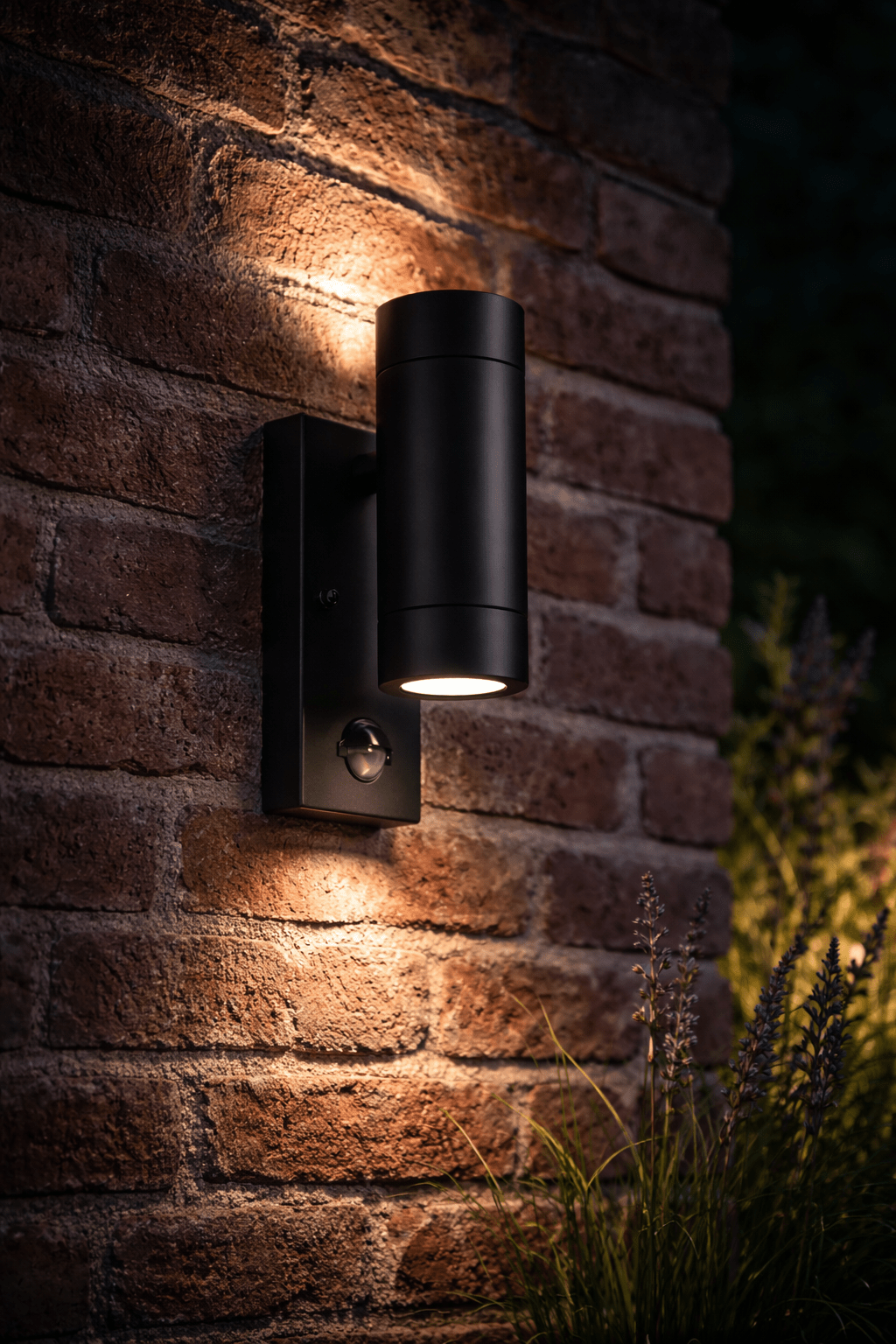
When browsing outdoor lighting at LightHub Direct, describe the location accurately to the installer. A covered porch and an exposed wall are different environments. Consider neighbouring windows and avoid directing unnecessary light beyond the area you need to see.
Use automatic switching where it helps the task
A sensor can be convenient when carrying laundry or returning with shopping. Its usefulness depends on whether it detects the approach in time and keeps the light on for the activity.
Do not apply the same timeout everywhere. Putting away a basket of clothes takes longer than walking through a passage. A person standing still at a cupboard may also need a different arrangement from someone moving along a hallway.
Check the control options on any LightHub Direct sensor fitting and discuss manual operation where appropriate. Automatic lighting should suit the household’s habits rather than require everyone to keep moving to remain visible.
Review the route through a normal evening
Walk through the house after daylight has gone. Carry the items you would normally carry and use the storage as usual. Notice where you have to reach into darkness or return to another room to find a switch.
Use those observations to make a short priority list. Improving one troublesome utility surface or doorway may be more useful than replacing every fitting in a hallway.
Give the electrician the tasks and positions involved so the proposed changes address the problem you actually experience.


