


Clubs World Cup, what every man needs to know
For years, the Clubs World Cup has existed as a relatively niche competition, often viewed as a brief interlude in the club calendar, featuring the champions of each continent. It was a nice-to-have trophy, certainly, but it rarely commanded the global attention or prestige of the UEFA Champions League or the Copa Libertadores. However, that perception is about to change, dramatically.
The Clubs World Cup 2025 is set to revolutionise the landscape of club soccer, transforming into a gargantuan, quadrennial spectacle designed to truly crown the world’s best club side.
This is no longer just another trophy; it’s a monumental event that every football enthusiast needs to understand.
The Evolution of a Global Showdown: A Brief History

To truly appreciate the magnitude of the new Clubs World Cup, it’s worth a brief look at its journey. The idea of a global club competition dates back to the early 20th century, with various attempts like the Sir Thomas Lipton Trophy.
More formally, the Intercontinental Cup emerged in 1960, pitting the champions of Europe against those of South America. While prestigious, it lacked global representation.
FIFA eventually stepped in, launching the FIFA Club World Championship in 2000. After a brief hiatus due to financial issues, it returned as the Clubs World Cup in 2005, played annually, typically featuring seven teams.
This format saw European and South American clubs largely dominate, with the tournament often considered a warm-up for the new season or a festive end-of-year affair.
While it offered moments of brilliance and allowed fans to see their continental champions test themselves against the world, it never quite reached the pinnacle of global attention that FIFA envisioned.
The shift to the Clubs World Cup 2025 marks a deliberate and significant departure from this history. FIFA aims to create a competition that mirrors the scale and excitement of the national team World Cup, truly elevating club football to an unprecedented global stage.
Clubs World Cup 2025: The New Format Explained
Gone are the days of a short, seven-team knock-out. The Clubs World Cup 2025 is a complete overhaul, designed for maximum spectacle and competition. Taking place in the United States from June 14 to July 13, 2025, this revamped tournament will feature 32 teams competing for the coveted title.
The format will closely resemble the beloved FIFA World Cup for national teams:
- 32 Teams: A massive expansion from the previous format, drawing teams from all six continental confederations.
- Eight Groups of Four: The teams will be divided into eight groups (A-H), each consisting of four clubs.
- Round-Robin Group Stage: Each team will play the other three teams in its group once.
- Top Two Advance: The top two teams from each group will progress to the knockout stages.
- Knockout Stages: This will feature a traditional single-elimination bracket, starting with the Round of 16, followed by Quarter-finals, Semi-finals, and culminating in the grand Final. Crucially, unlike the national team World Cup, there will be no third-place play-off.
This expanded format promises a month of intense, high-stakes soccer, offering far more matches and a greater diversity of competitive matchups. It’s a true test of endurance, tactical prowess, and squad depth, demanding peak performance from the world’s elite clubs.
The Global Line-Up: Which Teams Are In?
One of the most exciting aspects of the Clubs World Cup 2025 is the diverse roster of teams participating. Qualification was primarily determined by winning a continental club competition (like the UEFA Champions League, Copa Libertadores, etc.) in one of the four most recent seasons (2021-2024), or FIFA’s four-year ranking system for confederations with more than four slots.

Here’s a breakdown of the confederational representation and some of the key teams you can expect to see:
- UEFA (Europe) – 12 Slots: This includes the winners of the Champions League from 2021-2024 (Chelsea, Real Madrid, Manchester City, and the 2024 winner) plus the highest-ranked eligible teams in UEFA’s four-year club ranking. Expect powerhouses like Bayern Munich, Paris Saint-Germain, Inter Milan, Porto, Benfica, Borussia Dortmund, Juventus, Atlético Madrid, and FC Red Bull Salzburg.
- CONMEBOL (South America) – 6 Slots: Winners of the Copa Libertadores from 2021-2024 (Palmeiras, Flamengo, Fluminense, and the 2024 winner) along with top-ranked eligible teams in their four-year ranking, such as River Plate and Boca Juniors.
- AFC (Asia) – 4 Slots: Champions League winners from Asia (Al-Hilal, Urawa Red Diamonds, Al Ain, and the 2024 winner, or top-ranked team).
- CAF (Africa) – 4 Slots: Champions League winners from Africa (Al Ahly, Wydad AC, and the 2024 winner, or top-ranked teams like Espérance de Tunis and Mamelodi Sundowns).
- CONCACAF (North, Central America & Caribbean) – 4 Slots: Champions League winners from this region (Monterrey, Seattle Sounders FC, Pachuca, and LAFC).
- OFC (Oceania) – 1 Slot: The best-ranked eligible team from the OFC Champions League, which is Auckland City FC.
- Host Nation (USA) – 1 Slot: Inter Miami CF, having controversially earned a spot as a representative of the host nation.
This unprecedented mix of global club titans and emerging forces guarantees fascinating matchups and a true test of footballing philosophies from around the world. The likes of Real Madrid and Manchester City, accustomed to European dominance, will now face the top clubs from South America, Africa, Asia, and North America, promising fresh rivalries and unexpected outcomes.
The Draw: How the Groups Were Formed
The draw for the Clubs World Cup 2025 was a pivotal moment, setting the stage for the group stage battles. FIFA meticulously compiled draw pots, with teams ranked within each confederation based on FIFA’s club ranking system to ensure a fair and balanced competition.
The process aimed to avoid too many teams from the same confederation or country being drawn into the same group, creating diverse and globally representative matchups. For example, a maximum of two teams from any single country are allowed in the tournament, a rule which notably affected clubs like Liverpool and Barcelona in Europe, despite their strong European showings.
Here are the confirmed groups for the Clubs World Cup 2025:
- Group A: Palmeiras, Porto, Al Ahly, Inter Miami
- Group B: Paris Saint-Germain, Atletico Madrid, Botafogo, Seattle Sounders
- Group C: Bayern Munich, Auckland City, Boca Juniors, Benfica
- Group D: Flamengo, ES Tunis, Chelsea, LAFC
- Group E: River Plate, Urawa Red Diamonds, Monterrey, Inter Milan
- Group F: Fluminense, Borussia Dortmund, Ulsan HD FC, Mamelodi Sundowns
- Group G: Manchester City, Wydad AC, Al Ain, Juventus
- Group H: Real Madrid, Al Hilal, Pachuca, FC Salzburg
These groups promise intriguing narratives. Group A, for instance, pits South American giants Palmeiras against European stalwarts Porto, African champions Al Ahly, and the rising force of Inter Miami. Every group is packed with quality, ensuring that every match in the group stage will have significant implications for progression to the knockouts.
The Clubs World Cup 2025 Schedule: Don’t Miss a Kick!
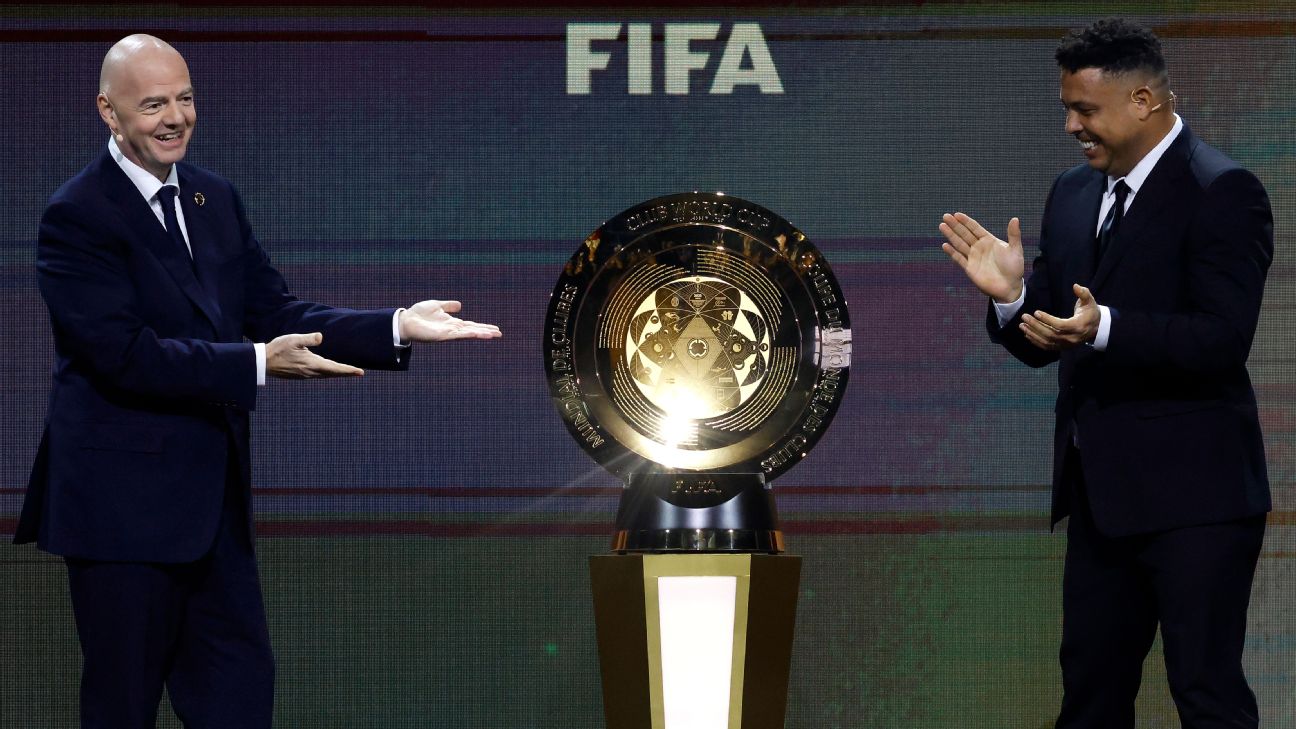
The schedule for the Clubs World Cup 2025 is packed with action, running for nearly a month across various venues in the United States. Fans will have ample opportunities to witness top-tier soccer live or catch it on their screens.
The tournament begins on June 14, with the group stage running until June 26. The knockout rounds commence on June 28, leading up to the grand final on July 13.
Here’s a general breakdown of the schedule:
- Group Stage: June 14 to June 26
- Round of 16: June 28 to July 1
- Quarter-finals: July 4 and July 5
- Semi-finals: July 8 and July 9
- Final: July 13
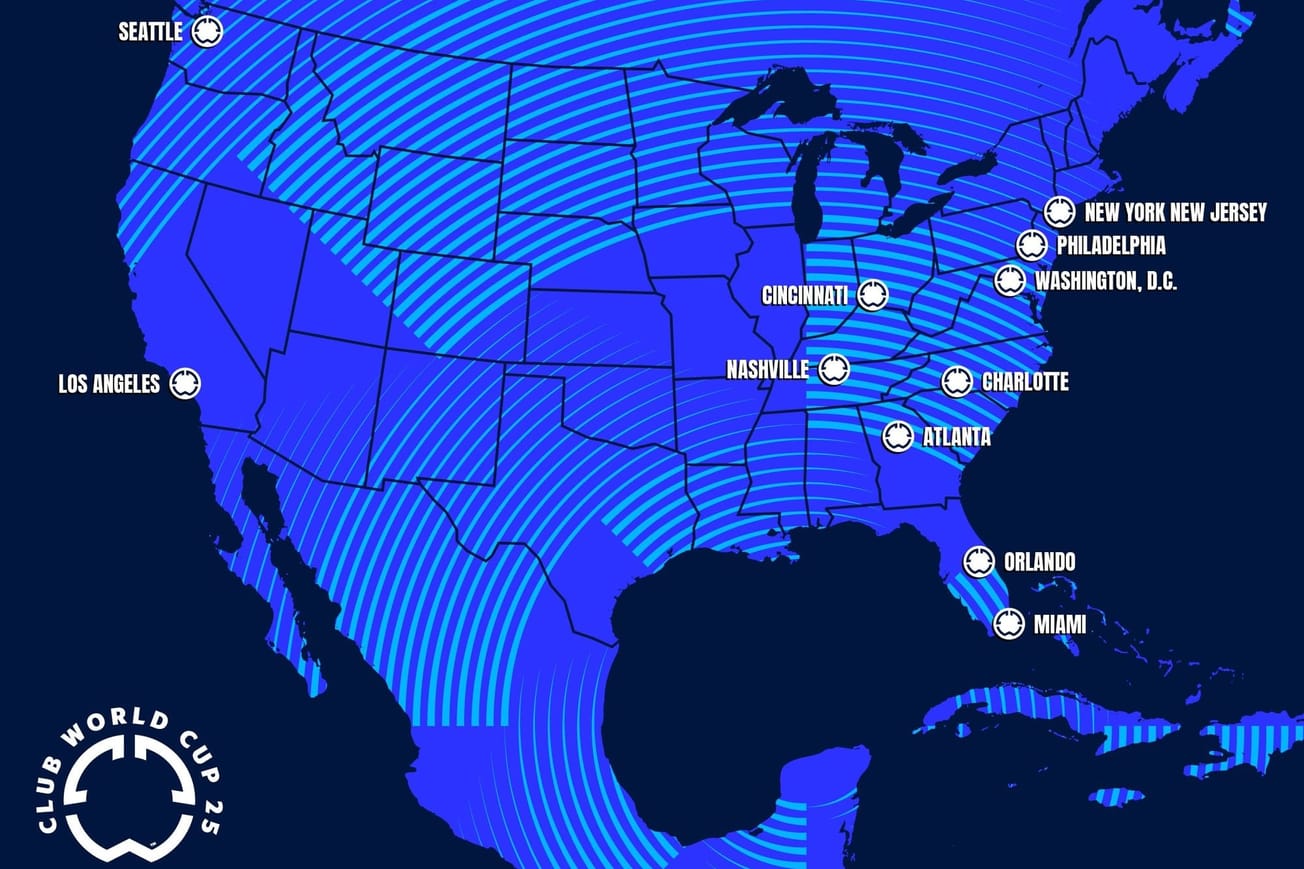
Matches are being played across 12 venues in 11 cities across the USA, including iconic stadiums in Miami, Seattle, Philadelphia, and New York/New Jersey (East Rutherford). This broad geographical spread not only allows for a wider audience to experience the tournament but also serves as a significant prelude to the 2026 FIFA World Cup, which will also be hosted in North America.
Securing Your Spot: Tickets for the Clubs World Cup 2025
For fans eager to witness this historic event live, securing tickets is a priority. Given the calibre of teams and the expanded format, demand is expected to be high. Tickets are available through official channels and authorised ticketing partners.
- Early Access: Keep an eye on official FIFA and host city announcements for pre-sale opportunities or fan registration periods. These often provide the best chance to secure tickets at face value.
- Official Ticketing Platforms: Major sports ticketing platforms are likely to be the primary outlets for general sale. It’s crucial to use only official or authorised resale sites to avoid counterfeit tickets or inflated prices.
- Hospitality Packages: For a premium experience, hospitality packages are usually offered, providing excellent seating, catering, and exclusive access.
- Venue-Specific Sales: Some individual stadiums hosting matches may also have their own ticket allocation or hospitality options.
- Prices will vary significantly based on the match (group stage vs. knockout, early rounds vs. final), seat location, and demand. For example, group stage matches might be more accessible, while quarter-finals, semi-finals, and the final will naturally command higher prices. It’s wise to plan ahead and set alerts for ticket releases to ensure you don’t miss out on the opportunity to be part of soccer history.
The Prize Money: A Billion-Dollar Bonanza
Beyond the glory and prestige, the Clubs World Cup 2025 also represents a significant financial boon for participating teams. FIFA has allocated a staggering $1 billion USD in total prize money, signaling the tournament’s immense commercial ambition.
Participation Fees: Around half of the $1 billion will be distributed to the 32 clubs simply for participating. The exact amount each club receives varies based on its confederation and a FIFA ranking model that considers sporting and commercial criteria. Larger clubs from more commercially powerful confederations like UEFA will receive a greater percentage.
Performance-Based Earnings: A further $475 million will be awarded based on performance throughout the tournament. This means teams will earn additional prize money for wins, draws, and for progressing through each knockout stage. The ultimate winner stands to gain a substantial sum, potentially up to $125 million to $155 million depending on their confederation and group stage performance.
This unprecedented prize pot is designed to incentivise clubs, make the tournament highly attractive, and ultimately bolster the financial health of football clubs globally. It’s a clear statement of intent from FIFA regarding the tournament’s future importance.

Why This Matters: The Impact on Club Soccer
The expanded Clubs World Cup 2025 is set to have far-reaching implications for global club soccer.
- Increased Global Profile: It will significantly raise the profile of clubs from outside Europe and South America, giving them an unparalleled platform to showcase their talent and compete against the world’s elite.
- New Rivalries: The new format fosters fresh rivalries between teams that rarely meet in competitive action.
- Player Load Concerns: There have been discussions and concerns from player unions and managers about the increased fixture congestion and player welfare given the already packed football calendar. This is a legitimate point that FIFA will need to continually address.
- Commercial Opportunities: For host cities and countries, the tournament presents massive commercial and tourism opportunities. For FIFA, it’s a new revenue stream that further solidifies its position in global soccer.
- Test for 2026 World Cup: As a major tournament hosted in the USA, it serves as a critical test run for the logistical and operational aspects of the larger 2026 FIFA World Cup.
In essence, the Clubs World Cup 2025 is more than just a tournament; it’s a statement about the future direction of club soccer – a move towards greater globalisation, heightened competition, and increased commercialisation on a scale never before seen in club football.
Conclusion
The Clubs World Cup 2025 represents a monumental shift in the world of club soccer. From its expanded format featuring 32 elite teams to its staggering prize money and global reach, this is a competition designed to capture the imagination of football fans worldwide.
Every man who cherishes the beautiful game needs to be aware of this seismic change. It’s an opportunity to witness the best clubs from every corner of the globe battling for ultimate supremacy, promising captivating matches, unexpected heroes, and truly global bragging rights.
Get ready to dive into a month of unparalleled soccer action, because the new Clubs World Cup is here, and it’s set to redefine club football as we know it. Don’t just watch; be part of history in the making.