


Cold feet can ruin an otherwise comfortable day outside. Thick boots may protect against snow, while regular socks add insulation, yet neither option creates warmth after your toes start feeling numb. This problem often appears during winter walks, outdoor work, hunting trips, ski days, or long waits at sporting events.
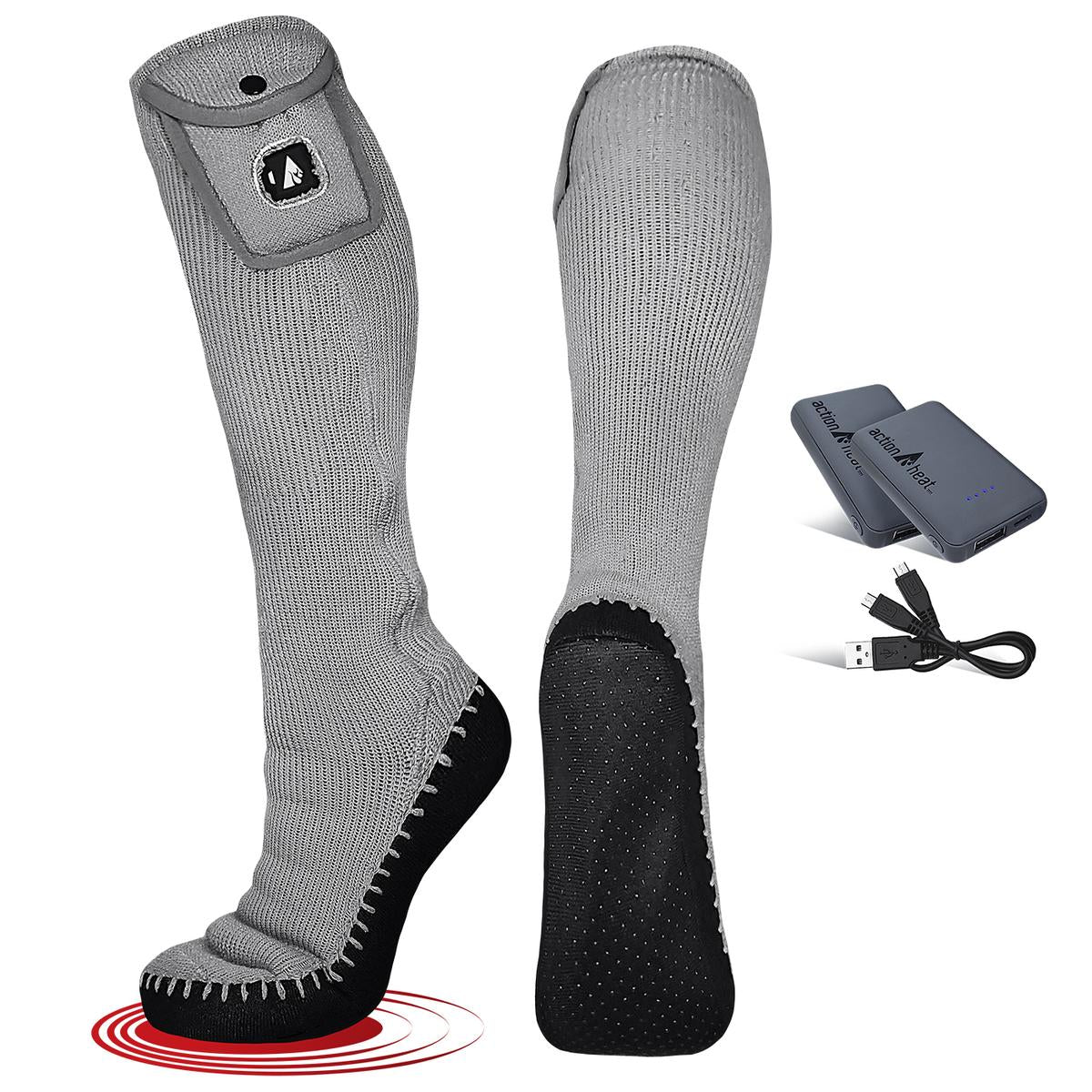
Heated socks add warmth directly around the feet through built-in heating panels powered by batteries. Many rechargeable wool heated socks come with remote control options. These socks use adjustable settings, so you can choose the amount of warmth that fits the conditions.
Why Feet Get Cold So Quickly
Your feet sit farthest from your core, which can make them feel cold before the rest of your body. Tight footwear may also reduce circulation. Damp socks create another problem because moisture pulls heat away from the skin.
Cold ground adds pressure from below. Standing on frozen pavement, sitting in a hunting blind, or walking across snow can leave your feet uncomfortable even with insulated boots. Once the chill settles in, adding another pair of ordinary socks may make the fit worse without solving the problem.
Heated socks take a more direct approach. Instead of depending entirely on trapped body heat, they produce warmth around key areas of the foot.
How Heated Socks Work
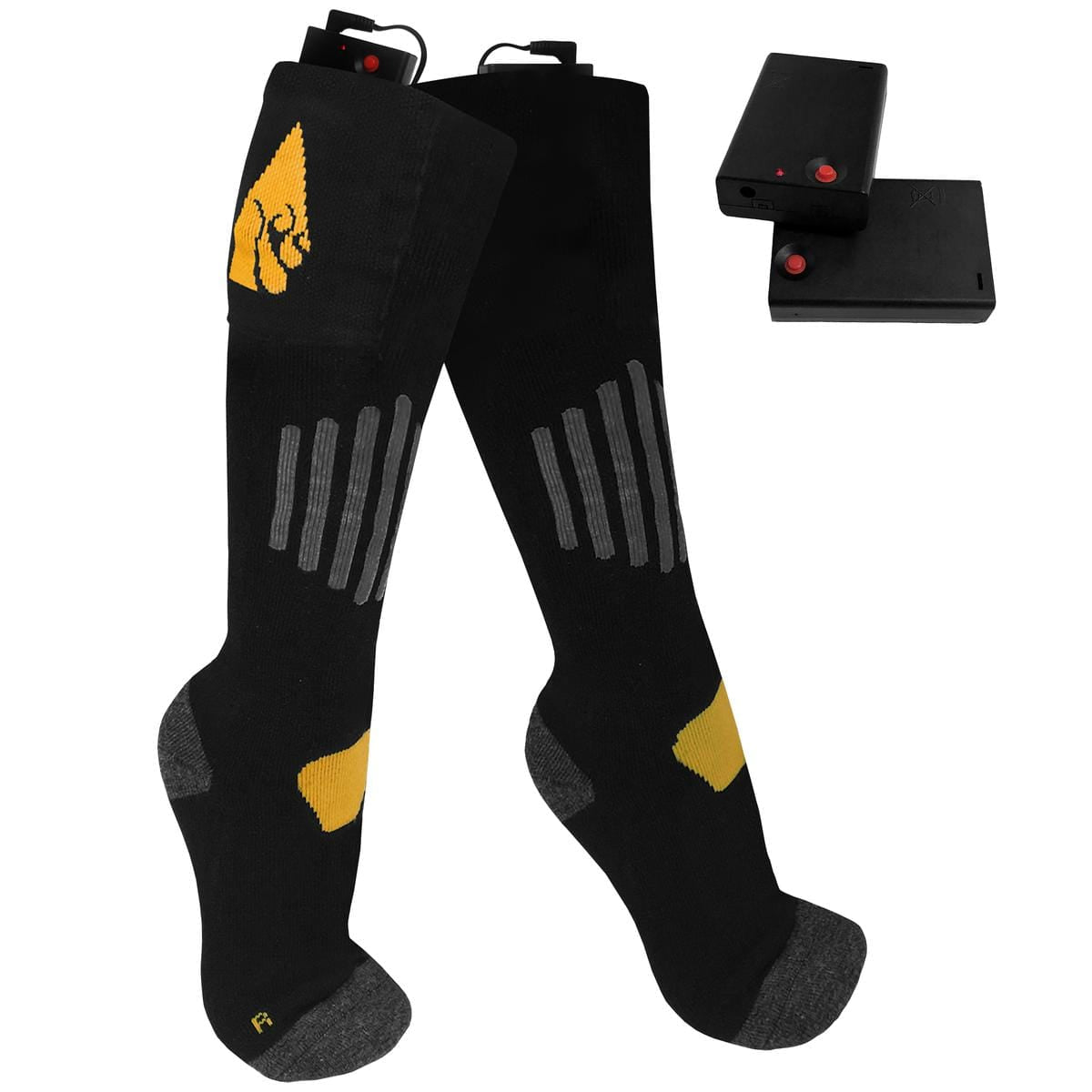
Heating panels usually sit near the toes, across the top of the foot, or around the front section of the sock. A small battery powers the panels. Depending on the product, users may control the warmth through a button, remote, or connected device.
Many heated socks use rechargeable batteries, three heat settings, and touch-button controls. The company states that its panels can reach temperatures up to 150 degrees Fahrenheit. Battery life depends on the product, setting, outside temperature, and activity level.
Start with a lower setting during movement. Walking can generate natural warmth, so full power may feel unnecessary. A higher setting may feel more useful while sitting still or spending several hours outside.
Choose Socks That Fit Your Boots
Fit deserves close attention. Heated socks need enough room for the battery, wiring, and heating panels. At the same time, they should not feel loose inside the boot.
Check the thickness before buying. A wool pair may provide extra insulation, though it can require more space than a lightweight synthetic sock. Your boots should still allow your toes to move. Tight footwear can create pressure, reduce comfort, or limit circulation. Bulky seams near the toes may become irritating during long walks.
Match the Socks to Your Routine
Different activities call for different features. Someone attending outdoor sports may care most about battery duration. A hunter may prefer remote controls that allow quick temperature changes without removing gloves. A worker may need socks that fit beneath protective footwear throughout a long shift.
For skiing or snowboarding, focus on warmth, fit, moisture control, and compatibility with the boot. For camping, consider how you will recharge the batteries. If you spend several days away from a power outlet, bring a backup charging plan.
Many 5V batteries run for roughly four to eight hours or longer per charge, depending on the heat level. That range can cover a work shift or an outdoor event, although high heat usually shortens runtime.
Take Care of the Batteries
Recharge the batteries before each outing. Test the controls before leaving home. Keep spare batteries dry, especially during snow, rain, or damp storage conditions.
Remove batteries before washing the socks. It is advised that users secure the connector before placing compatible garments in a gentle machine wash. Always follow the care instructions for the specific product.
Avoid folding wires sharply or pulling on the connector. Small habits can help protect the heating system over time.
Are Heated Socks Worth It?
Heated socks make sense for people whose feet become cold during long outdoor activities. They can add comfort during winter work, hunting, skiing, camping, travel, and outdoor events. They also give you more control than ordinary socks because you can adjust the warmth as conditions change.
They still work best with properly fitted boots, dry layers, and suitable protection from snow or rain. The socks supply heat, while the footwear helps hold that warmth in place.
For anyone who dreads cold feet, that combination can make winter outings easier to enjoy. The weather may stay harsh, but your feet do not have to accept the full punishment.