Good cheese tells a story through its texture, aroma, and age. But that story falls apart the second a clumsy blade tears through it. Most people overlook slicing as a minor detail, yet the tool behind each cut shapes how cheese looks, feels, and tastes on the plate.
Even portions hold their form, breathe properly, and deliver flavor the way the maker intended. For those who treat cheese as more than a snack, the cutting instrument is never an afterthought.
How the Right Cut Changes the Eating Experience
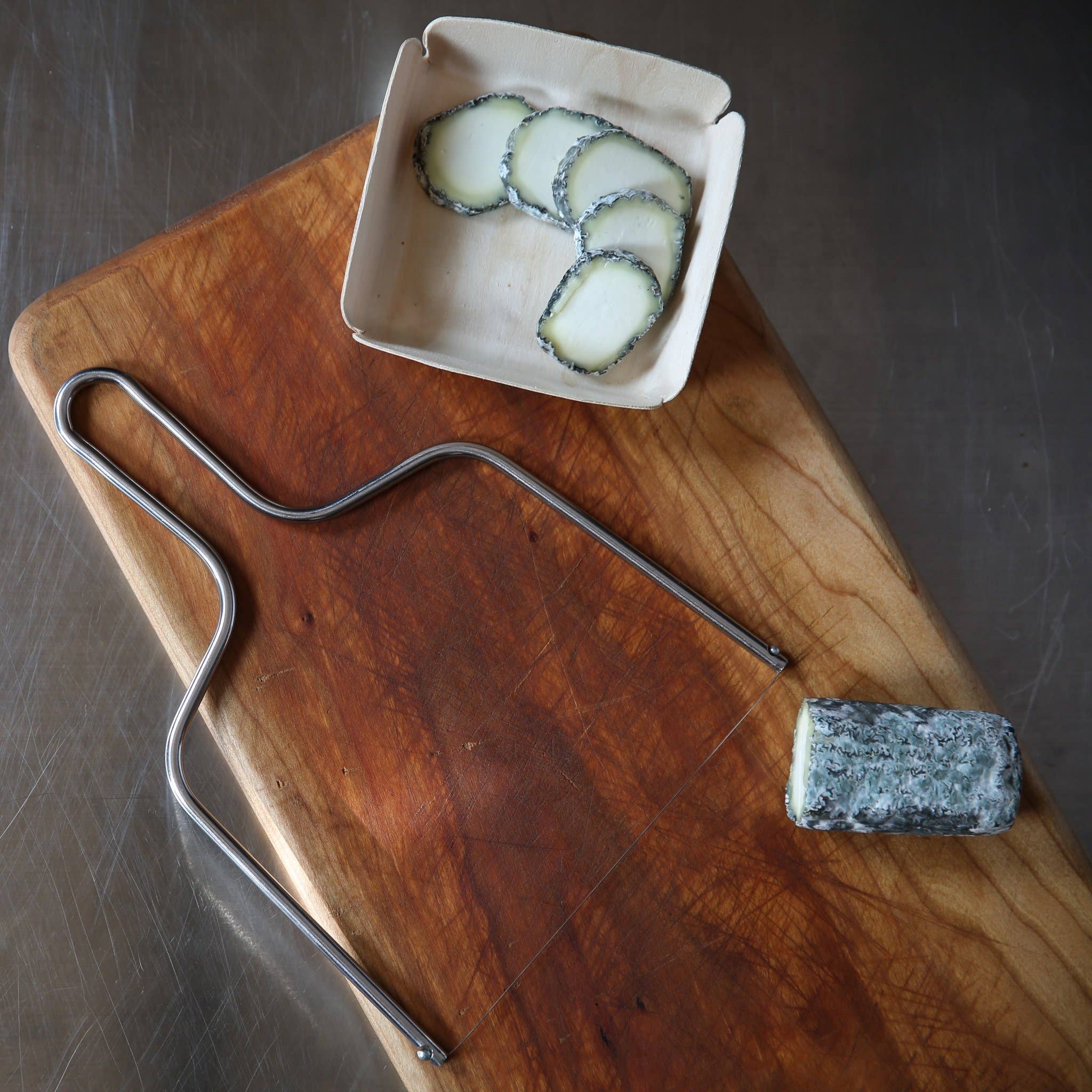
So much of the appreciation for cheese comes down to texture. A jagged, uneven slice compresses the interior paste, dulling the mouthfeel before a single bite lands.
Uniform, thin portions allow each piece to open up across the palate and release its full aromatic range.
Research in food science confirms that surface area governs how flavor compounds interact with saliva. A smoother cut exposes a more consistent surface, producing a richer, more balanced taste with every piece.
A wire cheese slicer handles this beautifully, with almost no resistance. Its slender filament passes through soft and semi-hard varieties without dragging or tearing the surface apart.
A standard knife blade creates broad contact that pulls and sticks; the wire concentrates pressure along one narrow line, keeping friction minimal and the cheese fully intact. That small mechanical difference is what separates a forgettable cheese plate from one that genuinely impresses.
Why Knives Fall Short on Cheese Boards
Kitchen knives were built with vegetables, proteins, and loaves in mind. Their wide, flat surfaces create far too much contact against sticky or crumbly cheese. A soft variety like camembert clings to the steel and drags sideways, leaving a smeared mess.
Harder types (aged cheddar, for instance) crack unpredictably when a thick edge forces them apart.
Specialty offset knives improve things slightly but still fall short. A broad blade generates friction heat, gently warming the surface of the cheese and altering its intended consistency. A thinner cutting element avoids that problem entirely.
The Science Behind Wire Cutting
Simple physics tells the full story here. Pressure equals force divided by area. A thin wire channels all downward force into a tiny contact point, so it needs far less effort to pass through a dense or delicate block.
This is the same principle that has kept wire tools as standard equipment in commercial cheese production for decades.
Reduced Crumbling and Waste
Brittle cheeses like Parmesan or aged Manchego often fracture under the pressure of a wide-bladed knife.
A fine filament travels through crystalline structures with precision, yielding neat sections rather than scattered shards. Less breakage means more cheese reaches the plate, and less ends up wasted on the counter.
Cleaner Presentation
Visual appeal carries genuine weight at tastings, dinner parties, and charcuterie spreads.
People notice when every slice looks deliberate, even if they cannot pinpoint why the board feels inviting.
Consistent, tidy portions communicate care and attention. It is no coincidence that professional cheesemongers rely on wire tools as their go-to choice.
Versatility Across Cheese Types
One advantage that rarely gets discussed is sheer range. A single wire tool moves effortlessly from a pillowy triple cream to a firm block of Gruyère. Adjustable models let users set thickness down to the millimeter, accommodating individual taste or specific recipe requirements without a fuss.
Different pairings call for different slice widths. Paper-thin cuts dissolve on the tongue beside fig preserves. Thicker portions hold their own against crusty bread and cured meats.
Controlling that range from one instrument streamlines preparation while keeping the finished board looking polished.
Maintenance and Longevity
Upkeep is refreshingly simple compared to conventional knives. Replacement filaments cost a small fraction of professional blade-sharpening services. Swapping out a worn wire takes only seconds, bringing the tool back to peak sharpness right away.
Stainless steel frames hold up well against moisture and corrosion, and most models disassemble quickly for a thorough wash.
With occasional wire replacements, a well-cared-for unit performs reliably for years. That durability makes it a sensible, long-term addition for home cooks and regular hosts alike.
Conclusion
The right slicing tool seems like a small decision until the results speak for themselves.
Wire cutters deliver cleaner edges, better texture preservation, and a noticeably sharper presentation than traditional knives.
They adapt to nearly every type of cheese while requiring minimal care over time. Whether the occasion is a carefully arranged board for guests or a quiet evening with a favorite wedge, this single upgrade brings a visible improvement.
True precision at the cheese board starts with choosing the right instrument for the job.