New mothers navigating the early weeks of breastfeeding often find themselves searching for reliable ways to support milk supply. Moringa has become one of the more talked-about plant-based options in that conversation.
But before adding anything new to a postpartum routine, it is important to look closely at what the research actually confirms, where the gaps still exist, and how moringa compares to other herbal galactagogues.
What Makes Moringa a Galactagogue Candidate
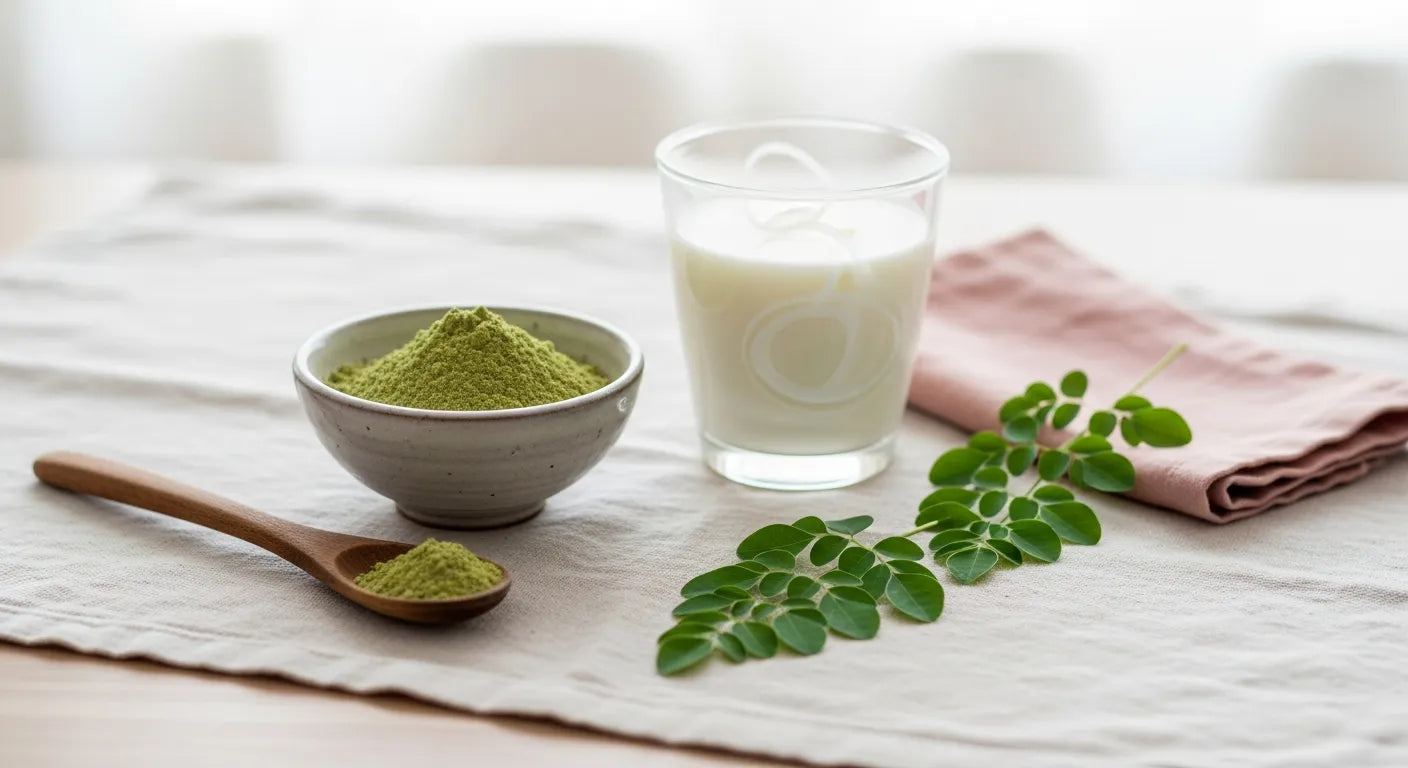
Moringa oleifera leaves pack an impressive nutritional profile. Iron, calcium, vitamins A and C, and plant-based protein are all present in meaningful concentrations. These nutrients are thought to support the hormonal and physiological conditions that influence how milk is produced in the first place.
Mothers evaluating the best lactation supplements will find moringa-based products appearing with increasing frequency in recommendations from lactation consultants and postpartum dietitians.
Part of that growing interest comes from moringa’s tolerability profile, which tends to be gentler than many synthetic or single-compound alternatives on the market.
The more specific proposed mechanism involves phytosterols found in moringa leaves. These compounds may interact with prolactin activity, and since prolactin is the primary hormone driving milk synthesis, that interaction is worth examining carefully.
What the Research Shows
Clinical Evidence
A meaningful body of early clinical literature does support moringa’s potential as a milk-supply aid. One randomized controlled trial, published in the Journal of Pediatric Sciences, found that mothers who took moringa supplements in the first week after delivery produced significantly more milk than those in the placebo group by days four and five postpartum.
A separate study conducted in the Philippines, where moringa has deep roots in traditional postpartum care, reported measurable increases in breast milk volume among mothers taking moringa leaf capsules.
Sample sizes across both studies were modest, but the results consistently pointed in the same direction.
Where the Evidence Falls Short
Common limitations run through most of the available research: small participant pools, short observation windows, and inconsistent dosing protocols. No large-scale, long-term randomized controlled trial has established a definitive effective dose.
The United States Food and Drug Administration has not approved moringa as a treatment for insufficient milk supply.
That absence of approval does not mean the evidence is dismissible. It means the research is still maturing, and any claims about moringa should be read in that context.
Safety Profile and Tolerability
Moringa leaf powder is broadly considered safe for most adults at food-level quantities. Adverse effects are uncommon, though some mothers report mild gastrointestinal discomfort at higher doses.
Women managing thyroid conditions should speak with a physician before starting moringa, as some research has raised questions about potential interactions with thyroid function.
What to Avoid
The root and bark of the moringa plant carry a distinct safety profile from the leaf and are not recommended during lactation or pregnancy. Most commercial products use only leaf-derived material, but verifying the label before purchase is still a reasonable step.
Dosages in published clinical studies generally range from 250 to 500 milligrams per day in capsule form, though formulations vary considerably across available products.
Moringa Versus Other Common Galactagogues
Fenugreek holds its position as the most widely used herbal galactagogue globally, but the trade-off often involves side effects like body odor changes, digestive discomfort, and possible blood sugar interactions. Blessed thistle and fennel are also commonly recommended, though the clinical backing for both remains similarly limited.
Moringa differentiates itself through nutritional completeness. Rather than delivering a single targeted compound, it contributes meaningfully to overall maternal nutrition while potentially supporting milk output at the same time.
That dual function makes it a practical consideration for mothers who are also recovering from postpartum nutrient depletion.
Practical Considerations Before Starting
A lactation consultant or obstetrician should always be part of the conversation before beginning any supplement. Supply challenges frequently trace back to latch mechanics, feeding frequency, or underlying hormonal factors that no supplement can address independently. Moringa may support other interventions but is unlikely to compensate for structural barriers on its own.
Product quality deserves equal attention. Third-party testing, transparent moringa leaf content, and a clean ingredient list are all worth factoring into any purchasing decision.
Conclusion
Moringa carries real promise as a plant-based support option for breastfeeding mothers, grounded in early clinical findings and a long history of traditional use. Its nutritional depth adds practical value beyond its potential galactagogue effects.
The evidence base is still growing, though, and moringa is best approached as one component of a broader support plan rather than a standalone fix.
Guidance from a qualified healthcare provider remains the most dependable starting point for any postpartum supplement decision.