The safest way to hang artwork in a modern Australian home is to position the visual centre around 145 to 150 cm from the floor. Plan gallery walls before drilling any holes. Match your wall anchors to the specific wall material and the exact weight of your artwork. Heavy or highly valuable pieces usually require professional installation.
Whether you are styling a bright Brisbane Queenslander or looking for reliable picture hanging Melbourne services, using the right hardware protects both your artwork and your property.
How High Should You Hang Pictures
Finding the right height is usually where things go wrong first. A commonly used guideline places the centre of your artwork at approximately 145 to 150 cm from the floor. This aligns the piece with the average standing ‘eye level’ for most people. I think it makes a room feel instantly more balanced. You just measure up 145 cm from the skirting board and make a small pencil mark.
Things change a bit when you hang art above furniture. If you have a sofa or a sideboard leave roughly 15 to 25 cm between the top of the furniture and the bottom of your frame. The artwork has to visually relate to the furniture below it. It shouldn’t just float randomly near the ceiling. Sometimes people hang things so high they look like they belong to the upstairs neighbours.
I remember helping a mate move a few years ago. He is quite tall and hung all his prints based on his own eye line. Everyone else had to literally crane their necks to appreciate his vintage posters. We ended up patching a lot of holes that weekend. Stick to the 145 cm rule unless your ceilings are exceptionally high or the room is mostly used for sitting.
For a gallery wall you measure the height to the centre of the entire arrangement. Not the centre of one individual frame.
Planning Your Modern Gallery Wall
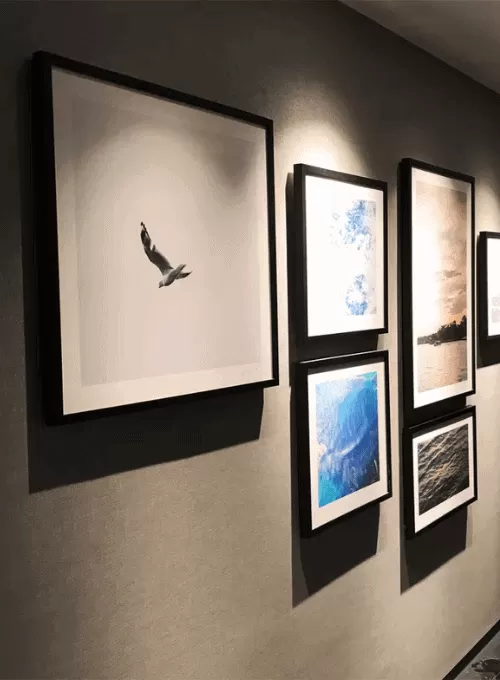
Gallery walls are incredibly popular right now. But they take patience. A spacing of about 5 to 8 cm between frames creates a clean and balanced look. Consistent spacing matters a lot more than having identical frame sizes. You can mix timber frames with thin metal ones as long as the gaps between them remain steady.
Start with a floor plan. Measure your wall space and mark out the exact same dimensions on your living room rug. Lay all your frames down. Pick your largest or most favourite piece to act as the “anchor piece” for the whole setup. Then build the rest of the arrangement around it. I usually leave things on the floor for a day or two just to see if the layout annoys me.
Once you are happy with the layout on the floor take a quick photo with your phone. Cut out paper templates for each frame. Tape these templates to the wall to check the overall shape and spacing. It is much easier to move a piece of paper than to patch a hole in the plasterboard. A little bit of masking tape goes a long way here.
Choosing Fixings For Different Walls
Australian homes use a mix of plasterboard & timber studs and solid brick. You absolutely need to match your hardware to the wall type. Plasterboard is common in newer apartments. Light frames might be fine with a basic rated picture hook. Heavy pieces definitely need a load rated plasterboard anchor or a toggle bolt.
The plastic screw-in anchors are okay for medium weights but they can pull out if the frame gets bumped constantly.
Finding a timber stud is always the best option for heavy items. A screw driven directly into a sound timber stud gives you a very secure fixing. Just avoid over tightening the screw because that can damage the timber or the bracket on your frame. I always use a spirit level to keep things straight. Sometimes the studs are not perfectly straight themselves which is incredibly frustrating.
Brick and concrete walls require masonry rated hardware. You will need a masonry drill bit and the right plastic plugs. Older Brisbane cottages sometimes have decorative VJ panels. These thin timber linings might not be strong enough to accommodate a heavy mirror. You have to find the structural support behind the panel. Drilling into old brick also creates a massive amount of red dust so keep a vacuum cleaner nearby.
Damage Free Picture Hanging For Renters
Renting brings its own set of challenges. Renters usually want to avoid drilling multiple holes. A picture rail system offers a really flexible way to display art without ruining the paintwork. These systems let you swap out frames whenever you feel like a change. They are brilliant for long hallways or older heritage homes.
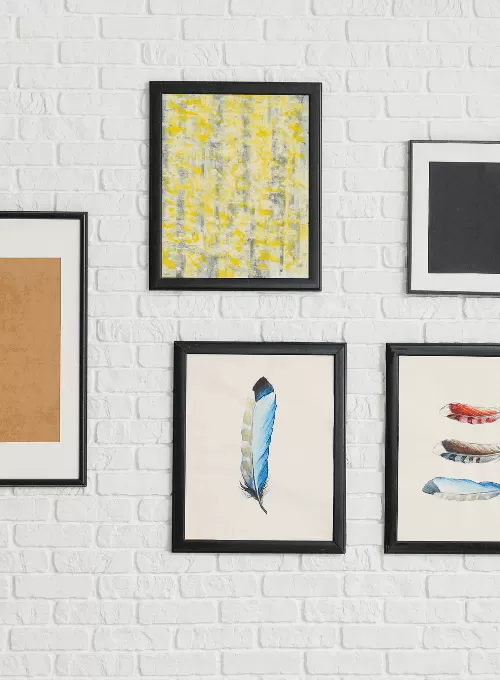
Adhesive hooks and strips are another option. Brands like Command Australia make products that work well for lighter frames. The wall surface needs to be smooth and clean for them to stick properly. Freshly painted walls or textured surfaces are usually a bad idea for adhesives. You also have to pull the tab straight down when removing them. Pulling them towards you will rip the paint right off.
Never completely trust an adhesive strip with a heavy mirror or a priceless painting. They can fail. When they do fail they take chunks of paint with them. Rental laws vary by state. Consumer Affairs Victoria allows certain minor modifications for renters but you still have to fix any damage before you move out. Always check your lease agreement first. Property managers can be very strict about wall damage.
When To Hire A Professional Installer
Sometimes DIY is just not worth the risk. Professional installation is a smart move when the artwork is heavy or features fragile glass. If the wall is solid concrete or you suspect there are hidden plumbing pipes nearby it is better to call an expert. Water damage from a punctured pipe will cost you far more than an installation fee.
Bunnings Australia advises that artwork weighing more than 20 kg should be mounted directly into a stud. Relying purely on Plasterboard for massive items is asking for trouble. A professional picture hanger knows exactly how to assess the substrate and calculate the safest fixing positions. They bring laser levels and specialized hardware that you probably don’t have in your toolbox.
This applies anywhere on the east coast. Whether you are staging a property in Queensland or booking picture hanging Melbourne services for a new townhouse. Professionals carry the right equipment to handle awkward stairwell drops and oversized mirrors. Hanging a 30 kg mirror over a staircase is not a weekend project for one person.
Brisbane And Melbourne Artwork Styling Ideas
Styling trends shift slightly depending on where you live. Brisbane homes often feature bright natural light & open layouts. Art in these spaces tends to lean towards vibrant colours and large scale pieces that fill tall walls without causing clutter. A single massive canvas can completely transform an open plan room.
Melbourne interiors sometimes favour layered gallery walls and eclectic mixes of local art. But the core hanging principles remain exactly the same. You still need proper anchors and consistent spacing regardless of the postcode. Good design translates across state lines.
Protecting Your Art From The Sun
One major factor in Queensland is the harsh sunlight. Bright light will fade valuable works over time. Keep your precious pieces out of direct sunlight. Consider using UV protective glass for original watercolours or expensive prints. I learned this the hard way after ruining a signed band poster by leaving it opposite a north-facing window for two years. It turned completely blue and yellow.
Large artwork is brilliant for defining specific zones in a large room. One massive piece often looks much better than a dozen tiny frames scattered aimlessly across a huge wall. It gives the eye a place to rest.
Picture Hanging Safety Checklist
Safety should always trump aesthetics. A good rule of thumb is to choose hardware with a load rating higher than the actual weight of your frame. One common guide suggests using hardware rated to at least 1.5 times the weight of the item. Glass is incredibly heavy and people often underestimate how much a large framed print actually weighs.
Always check for concealed electrical cables before you start drilling. A basic stud finder with an AC wire warning feature is a very cheap investment that might save your life. Older homes are notorious for weird wiring paths. Plumbers also run pipes in the strangest places.
Using two fixing points instead of one is generally safer for wide frames. Two hooks distribute the weight more evenly and stop the picture from constantly swinging out of level every time a door slams. Just make sure both wall anchors are equally secure. If one fails the other has to catch the entire load.
Final Thoughts On Wall Styling
Hanging art is really about making a house feel like your own. It transforms blank walls into something personal and lived in. You just need to respect the weight of the frames and the limits of your walls. A beautifully styled room loses its charm quickly if a frame crashes down in the middle of the night.
Take your time with the layout. Rushing the process almost always leads to extra patching and painting later on. I still catch myself trying to eyeball measurements sometimes and I almost always regret it. Trust the tape measure. Use the right anchors.
If a mirror feels too heavy to lift on your own it is definitely too heavy to hang on a cheap plastic hook. Get some help and do it right the first time. Your walls and your artwork will thank you for the extra effort.