


It is common knowledge that apart from investment expertise and communication skills, financial advisors need appropriate tools to effectively handle their activities. These tools include systems that help organize and store information about every aspect of the firm’s operations, as well as clients’ needs and preferences.
As a practice develops, maintaining an up-to-date overview of every single aspect and ensuring nothing is forgotten is challenging.
This is why clients turn to Relationship Management systems – they help handle the organization’s operations conveniently and efficiently.
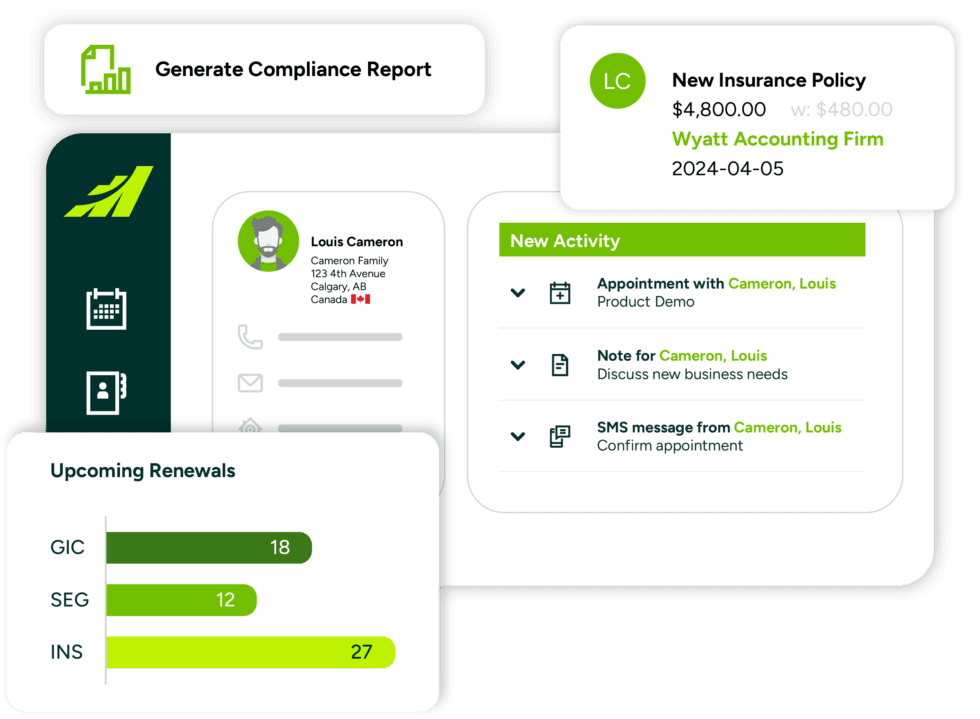
Centralized Client Information
One of the most significant advantages of CRM software is the convenience of keeping all client data in one place. Instead of searching for information in multiple sheets and emails, financial advisors can locate the required data in one click.
Having all information concerning clients in one place will save time and effort that would otherwise be spent on retrieving and organizing information.
Moreover, using this software makes recordkeeping consistent throughout the whole process. Having access to all of the past information makes it easier to prepare for upcoming meetings and have a clear vision of a client’s preferences.
Therefore, it is possible to achieve better outcomes by delivering proper recommendations and maintaining an adequate flow of information throughout the process.
Better Task Management
Working with multiple clients usually means juggling a ton of deadlines and keeping track of all sorts of tasks. CRM software gives financial advisors an easy way to store these tasks in a system that reminds them when things are due or when they need to do something in the future. Having these things tracked in a software means you won’t have to rely on your own memory to ensure you do everything you need to do.
Task management will help advisors keep themselves accountable. They can prioritize the important jobs while still getting everything else done in a timely manner. This makes sure everything runs smoothly and without things being forgotten or put off for too long.
Improved Client Communication
Maintaining constant communication with clients is essential to develop good relationships with them. CRM software allows advisors to store all communication records in one place and have an excellent overview of the history of communication with each client. This way, the advisor knows exactly what has been said to the client and what they discussed before.
Moreover, having a detailed history of communication will allow the advisor to personalize their future communications with clients. This is an essential feature because it will allow the advisor to avoid asking their clients about the same information they have already provided.
Using a CRM for financial advisors will help them communicate better with their clients and remind them of important information regarding their clients’ needs.
More Efficient Meeting Preparation
It becomes much easier to prepare for a meeting with a client if there is a place where all significant information about the client and their needs is stored.
This information could be the client’s goals, the recommendations that the financial advisor has already made, what questions they need to ask, and what information they have already learned.
It makes the meetings much more productive because the clients can be sure the advisor knows exactly what they’re talking about.
The advisors would be able to prepare much better for meetings in advance if they had access to previous advice and information about their clients.
This also helps the clients feel better about their meetings because they know the meeting will run smoothly and efficiently since everything is well-organized.

Stronger Workflow Consistency
Any financial advisory practice has to be able to carry out certain operations in a consistent manner. Using a CRM system can help a firm develop repeatable processes for working with clients, such as onboarding, annual reviews, collecting documents, and follow-ups. These standardized procedures make certain that each client is treated equally.
Such uniformity is critical as the advisory firm’s operations become more complex or as the company scales. It allows the practice to grow more efficiently and remain consistent.
Having a standard process makes it easier for all the employees to do their tasks since they all have clear instructions and know what they are supposed to do at a given time.
Better Organization For Growing Practices
Growth can often create more administrative headaches. As the number of clients increases, manually keeping track of everything becomes harder and more time-consuming.
CRM software helps to solve that problem, as it can provide an organized environment for the growth of the business to not become too complicated.
Furthermore, having an organized system can help understand workloads better, and plan resources accordingly. Using these programs can provide an easy look at upcoming meetings and appointments that may need assistance or resources allocated towards them.
All in all, helping an advisor grow their business while providing the best level of care possible, without adding additional administrative burdens.
Improved Document Management
Financial advisors often deal with various types of documentation, including contracts, financial reports, planning statements, and regulatory filings. The application of CRM software offers to store such information in an organized manner, which in turn helps save time and avoids misplacement of documents.
Improved organization facilitates cooperation within the firm, as advisors are able to quickly access relevant information without having to ask for permission to view or edit the same data.
It is especially important to store such information in an accessible location to ensure that everyone who requires access to a particular file can find it without asking other colleagues.
In addition to time savings, this increases efficiency by maintaining the overall organization of the practice.

Better Business Insights
An organized CRM system offers a wealth of information on the functioning of a business. Through it, one can track clients’ activity and progress, assess the completion of follow-ups, analyze the workflow, identify weaknesses and those areas needing improvement. The reports provided by an organized CRM can contribute to better business decision-making.
In addition, having accurate information may help the advisor to spot areas for improvement in his practice and tweak it accordingly. Rather than hypothesizing changes and their outcomes, one can rely on actual data reflecting the current state of the business processes. This will facilitate more effective long-term business management decisions.
The CRM software is vital in establishing an organized and effective advisory practice. It helps in managing and organizing the information, schedules, and communications about clients’ financial matters.
It supports business development and growth while providing a reliable framework for handling and delivering consistent service to clients.
Having an organized CRM system makes it easier for financial advisors to manage their practice while meeting the increasing demands of their clients.