


Table Of Contents
- Why Fulfillment Resilience Matters
- Start With A Clear Baseline
- Choose The Right Fulfillment Model
- Strengthen Inventory Control
- Build Carrier Flexibility
- Use Technology With Purpose
- Prepare For Peak Demand
- Manage Returns And Reverse Logistics
- Measure What Matters
- A Practical 90-Day Plan
For a growing brand, fulfillment is more than putting products in a box. It is the connected work of receiving inventory, storing it accurately, picking and packing orders, choosing transportation, communicating with customers, and processing returns. Small businesses that need support beyond their own four walls can evaluate options such as Freeport Logistics while keeping control of the customer experience and the operational decisions that matter most.
Resilience means being able to keep orders moving when demand changes, inventory is delayed, labor is tight, or a carrier has an interruption. That matters as online retail remains a meaningful part of U.S. commerce. The quarterly retail e-commerce sales report from the U.S. Census Bureau illustrates the scale and continued importance of online purchasing, which makes dependable delivery operations a practical priority for brands of every size.
Why Fulfillment Resilience Matters
In practical terms, resilient fulfillment is the ability to deliver the right product to the right customer with fewer disruptions and to recover quickly when problems occur. The complete process from a customer inquiry through delivery includes many handoffs, so a weak link in inventory, packing, shipping, or communication can affect the entire order.
A delayed or incorrect shipment can create extra support work, return costs, and lost confidence. Smaller brands are especially exposed when they rely on a single warehouse, carrier, or sales channel. For example, a retailer that normally ships 50 orders a day may struggle after a promotion produces 250 orders if labels, storage locations, packaging, and staffing were designed only for the usual volume.
Start With A Clear Baseline
A practical way to begin is to review operations at https://www.freeport-logistics.com/ alongside internal records, then compare the capabilities of outside support with the brand’s actual needs. The goal is not to copy another company’s process. It is to identify where orders slow down, errors occur, and costs rise.
Create a simple monthly baseline report that tracks order volume, average fulfillment time, shipping cost, order errors, return rate, stockouts, and available storage space. Ask where customers live, which products sell fastest, how long picking and packing take, and how often orders leave late, damaged, or incomplete. Accurate answers provide a useful starting point for improvement.
Choose The Right Fulfillment Model
In-House Fulfillment
Handling fulfillment internally gives a brand direct control over packing, quality checks, branded inserts, and customized items. It can be a sensible fit for low-order volume or products that require special handling. However, growth can turn spare-room storage or a small back room into a bottleneck as space, labor, and shipping needs expand.
Third-Party Or Hybrid Fulfillment
A third-party provider can supply warehouse space, systems, labor, and shipping operations without requiring the brand to build every capability itself. A hybrid model can also work well: keep fragile, personalized, or high-value orders in-house while routing standardized orders elsewhere. Compare options based on order volume, product dimensions, customization, shipping zones, labor costs, service expectations, and growth plans.
Strengthen Inventory Control
Inventory accuracy supports every promise a brand makes online. Organize products by sales velocity and margin, set reorder points for important items, and keep appropriate safety stock when supplier lead times are longer or less predictable. Count fast-moving items more often, review aged inventory before reordering, and clearly separate sellable units from damaged and returned goods.
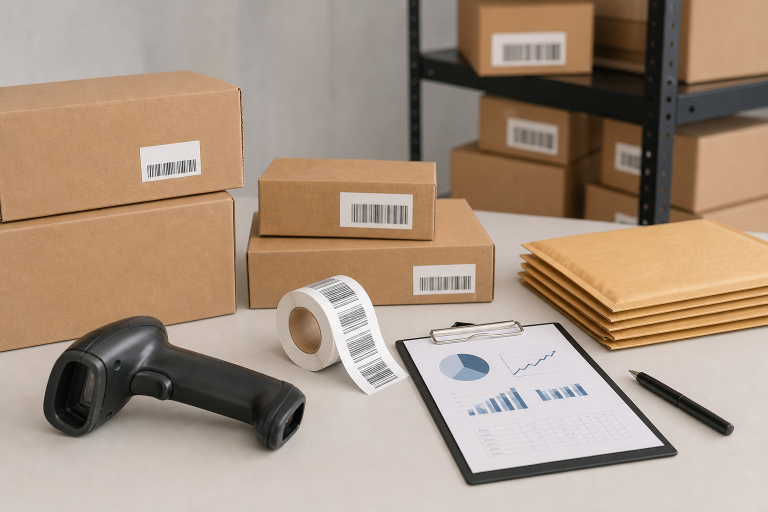
If the website shows an item as available but the physical count is wrong, the customer still experiences a delay or cancellation. Clear location labels, barcode scanning, and routine cycle counts can reduce that risk without requiring an overly complicated process.
Build Carrier Flexibility
One shipping method rarely suits every order. Review delivery performance by destination, then match services to product weight, dimensions, value, and promised arrival window. National carriers, postal services, regional carriers, and local delivery options can each serve a different purpose. Maintaining a backup option gives the team more choices during severe weather, peak volume, or a service interruption.
Packaging deserves the same attention. Test box sizes and protective materials before making a broad change, because dimensional weight and damage risk can alter the real cost of a shipment. A regional carrier may be useful for nearby destinations while a national option remains necessary for customers farther away.
Use Technology With Purpose
Technology should make the process clearer, not harder to manage. Useful tools may include inventory software, warehouse systems, barcode scanning, order-routing rules, shipping-rate comparison tools, tracking notifications, and returns platforms. Select tools that reduce manual entry, improve visibility, and fit the skills and time available to the team.
Some retailers also use store-based fulfillment to place online inventory and order processing closer to customers. Small brands can apply the same principle on a smaller scale by considering whether to position inventory closer to major customer regions rather than relying entirely on a single distant location.
Prepare For Peak Demand
Peak planning should begin before a holiday, promotion, launch, or seasonal rush is underway. Review prior sales patterns, estimate the effect of planned marketing, order packaging early, set daily shipping cutoffs, and arrange temporary help or outside support before capacity is strained. Test the pick, pack, and handoff workflow before the busiest week.
Be realistic in customer-facing delivery promises. Fast shipping is only dependable when inventory, labor, packaging, and transportation capacity can support it.
Manage Returns And Reverse Logistics
Returns are part of fulfillment, not a separate cleanup task. Use clear return rules, simple instructions, and prompt status updates. Inspect returned products quickly, then sort them for resale, repair, donation, recycling, or disposal. Tracking return reasons by product and channel can reveal issues with sizing, product descriptions, quality, or packaging.
Measure What Matters
Keep reporting focused on a small set of decision-ready measures:
- Order accuracy: Whether customers receive the correct items and quantities.
- Order cycle time: How long it takes to move from purchase to shipment.
- On-time delivery: Whether orders arrive within the promised window.
- Cost per order: the sum of labor, storage, packaging, and shipping costs.
- Stockout and return rates: Where lost sales and avoidable friction may be occurring.
A Practical 90-Day Plan
Days 1 Through 30: Find The Weak Points
Map the full order journey, verify inventory counts, record delays and costs, review carrier performance, and list recurring customer complaints.
Days 31 Through 60: Test Improvements
Improve labels and storage locations, test packaging sizes, compare shipping options, update reorder points, and automate basic order and tracking messages.
Days 61 Through 90: Build The Backup Plan
Choose a backup carrier or fulfillment option, document responses for stockouts and damaged orders, create a peak staffing plan, and schedule quarterly reviews of the entire operation.
Conclusion
A resilient fulfillment plan does not require the biggest warehouse or the most advanced software. It requires reliable information, disciplined inventory control, flexible shipping choices, clear customer communication, and a plan for disruptions. By making targeted improvements over time, small brands can make growth more manageable and deliveries more dependable.