


Modern offices depend on laser printers for fast and quality document production. While an office-grade printer provides greater efficiency, it brings up the delicate issue surrounding the safety of toner, especially in organizations that use multiple printers and have to deal with frequent toner cartridge replacements.
Facility managers and procurement professionals face one of the most nagging and urgent issues: Is printer toner toxic? For businesses using Hp toner laser p1102w models, attaining safety compliance with toner utilization becomes an issue not just from a workplace health perspective, but also from an organizational responsibility towards the environment and sustainable printer health.
The article examines what constitutes toner, and its possible health problems. In addition, we shall address organizational safety measures, as well as safety precautions when selecting toner. Many organizations now consider using hp 203a compatible toner for operational efficiency, and we will explain why.
What is in a Toner Cartridge?
Toner is more than just colored dust; it is a complex blend of several chemical compounds finely engineered for the high-resolution printing enabled in today’s laser printers. Most toner used in devices such as toner hp laserjet p1102w contains the following components:
- Thermoplastic polymers – Most of these types, which are polyesters, and styrene-acrylate polymers, are melted and fused onto paper within the printing process.
- Pigments or colorants – The most common is carbon black for monochrome printing. In color toners, cyan, magenta, and yellow dyes are used.
- Charge control agents – These assist the toner in mechanically sticking to the print drum with static electricity.
- Flow agents – To reduce clumping and improve the movement of toner powders, silicon dioxide is often used.
Typically, toner is safely enclosed within sealed cartridges and managed through fully automated printing systems. However, in cases where refilling and handling of cartridges is done carelessly, or if there is poor management during disposal, sealed toner cartridges can become compromised. This is especially detrimental for high-volume printing environments where workers are exposed to toner dust.
Health Concerns: Is Toner Toxic?
Though not classified as acutely toxic, toner does raise a number of health considerations that B2B facilities need to manage regarding fleet printers.
Respiratory Irritation
Dust from printer toner may become airborne during cartridge leaks, mishandling, or breaks. Inhaling this dust may cause:
- Sore throat
- Coughing or sneezing
- Congestion or headaches
This is particularly troublesome for closed and poorly ventilated office spaces. While laser printers, like the toner hp laserjet p1102w, are designed to contain toner spills internally, small external leaks over long periods of time can turn out to be harmful for sensitive people.
Skin and Eye Contact
The skin may become mildly irritated or dry. Exposure to toner dust can make the eyes red and uncomfortable, although this is uncommon. Those who are hypersensitive to toner ingredients might develop extreme allergic reactions.
Long-Term Risks
To date, there is no known connection between printer toners and chronic health problems for everyday use. However, those who work in industries or print on a high frequency basis are at risk for stress on their respiratory systems from fine airborne particles.
Companies using non-branded products, like hp 203a compatible toner and toner hp laserjet p1102w, should exercise caution with low-quality cartridges that may not be properly sealed or leakproof.
B2B Office Practices for Proper Toner Safety
Businesses have the option to adopt Toner Safety for B2B Offices that offer practical solutions for health restrictions while balancing an efficient print workflow.
Designated Print Areas
Designate specific locations for the placement of large, multifunction, or high capacity printers. Isolation of designated print zones from the main office to a separate room mitigates the risk of exposure to toner particles and ozone emissions.
Ventilation and Air Quality
Make sure the room is well-ventilated when several printers are in operation at the same time. Investing in air purifiers and HEPA air filtration systems, strategically positioned, can greatly improve the concentration of airborne particles within the work area.
Staff Training and PPE
Train staff on properly dealing with toner cartridges, such as:
- Gentle shaking of cartridges with toner to avoid clumps and leaks.
- Gentle removal to avoid damage
- Use protective gloves and masks when dealing with damaged or leaking cartridges.
While PPE is not essential for most work settings, it can reduce risk in high volume and production printing areas.
Emergency Protocols for Toner Spills
Even though they are rare, spills must be cleaned up at once. For collection, use toner specific vacuums or cloths. Do not use brooms or dry cloths, as this will result in the spread of toner particles.
Having a response protocol minimizes risk to health and safety for employees and permits a rapid response.
Considerations for Safe and Effective Toner Solutions
When acquiring toner for business operations, particularly for models such as toner hp laserjet p1102w, safety and quality are important considerations. While OEM cartridges are reliable, there is a growing trend towards hp 203a compatible toner and other compatible cartridges driven by cost considerations.
But at what cost?
What to Look For in a Toner Cartridge:
- RoHS Compliance: Mercury, lead, and cadmium are among hazardous substances that may not be contained in the toner.
- MSDS Availability: Purchase of the toner should include material safety data sheets that detail the chemistry of the toner as well as precautions for handling it.
- Low-emission Certification: Trustworthy vendors have their toner tested for emissions of ultra-fine particles during normal use.
- Sealed Packaging: Cartridges should be airtight and tamper-proofed to protect against exposure during transport and handling.
In seeking alternatives to OEM supplies, procurement personnel face the dilemma of cost savings vs. risk exposure. There are many reliable third-party toner cartridges that can be counted on for safety and performance as long as they comply with accepted international safety standards.
A good case of prudent purchasing is the hp 203a compatible toner and toner hp laserjet p1102w which observes emission control compliance and ISO certification testing.
The Sustainability Factor: Toner and the Environment
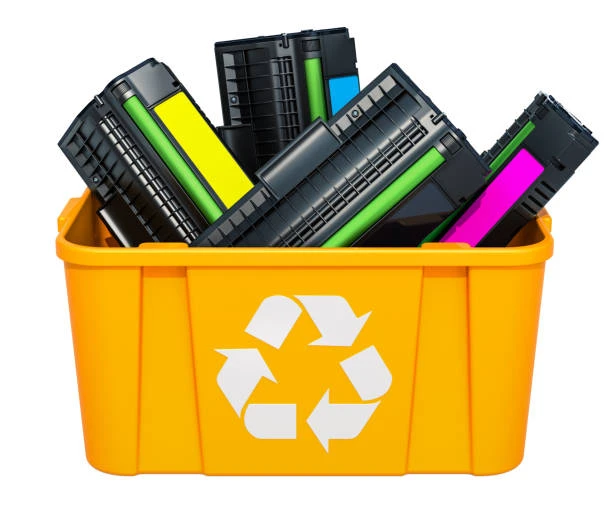
Besides health impacts, companies have to consider the environmental impact of toner use. Many toner cartridges, particularly the economically priced ones, add to e-waste if not recycled or disposed of appropriately.
Best Practices for Toner Sustainability:
- Participate in recycling programs offered by your vendor or other third-party providers.
- Purchase remanufactured cartridges from reputable vendors with thorough quality control systems.
- Adopt managed print policies to curb unauthorized printing and monitor toner consumption.
- Reduce the number of print devices to lower energy consumption and the number of required consumables.
Green procurement guidelines that establish toner vetting criteria enable businesses to showcase corporate responsibility. This is an increasingly vital competitive edge in B2B relationships.
Conclusion
Is printer toner toxic? The answer is no, but businesses need to take toner safety seriously, especially in offices that perform high-volume laser printing. Exposure risks can be controlled through proper training, responsible sourcing, and environmental controls.
Devices such as toner hp laserjet p1102w are popular and productive, but workplace health as well as environmental considerations greatly depend, for instance, on whether a genuine HP cartridge or an hp 203a compatible toner is used.
For B2B companies, the main focus is using safe toner products, following maintenance procedures, and user training. By doing so, companies not only protect their employees, but also further their commitment to sustainability on every printed page.