Poorly timed lane closures increase accident risk by forcing drivers to slow down, merge, or change lanes when traffic conditions leave little room for error. Closing lanes without adequate warning or during heavy traffic can create sudden bottlenecks that increase the chances of rear-end, sideswipe, or multi-vehicle crashes.
Road construction and maintenance are necessary, but the timing matters. A lane closure that causes few problems at 2 a.m. could also result in miles of congestion during morning rush hour. If you’re injured in a work-zone crash, knowing how the closure was planned and managed may help identify what went wrong and who ultimately bears responsibility.
Why the Timing of a Lane Closure Can Make a Road More Dangerous
Closing a lane alters the regular flow of traffic. Drivers who regularly use the same road may suddenly find their usual lane blocked by anything from cones and barriers to vehicles and construction equipment.
They have to process this change by finding an opening in another lane or adjusting their speed. When traffic is light, they may have plenty of space to do that. However, during rush hour, those same decisions happen with vehicles packed tightly together and drivers who can already be impatient.
Congestion can also create a chain reaction.
Drivers approaching the closure might initially be traveling at highway speed, while vehicles closer to the work zone will have slowed to a crawl. If the backup extends farther than anticipated, someone might come around a curve or over a hill and encounter stopped traffic. Even a driver who quickly reacts might not have enough distance to stop safely. The danger grows when vehicles behind that driver have to make the same sudden adjustment.
Warning is particularly important when a closure happens during a busy period. Signs need to give drivers enough time for two things. First, they need to understand which lane is closing. Second, they must prepare to merge.
Warning signs placed too close to the closure may leave drivers little time to react. An obscured sign can result in similar trouble. Drivers who don’t realize their lane is ending might brake hard or make abrupt moves into neighboring traffic.
Traffic volume is a timing issue, but it’s not the only one. A closure can turn more dangerous when scheduled around a major sporting event, festival, concert, or other predictable surge in traffic. Weather can compound the problem. Visibility can, too. A lane shift that’s manageable on a clear afternoon might be much harder to navigate after dark or during heavy rain. This is particularly true when temporary pavement markings are hard to see.
Construction schedules can create more problems when workers repeatedly open and close lanes. You may encounter one traffic pattern on your way to work only to see a different one on the trip home. Temporary markings and portable barriers can make roadways less predictable, particularly if new configurations differ sharply from familiar routes.
Making these changes when traffic is already heavy presents problems for drivers. They have less time and space to adapt.
Bad timing can make an ordinary lane closure a sudden traffic hazard.
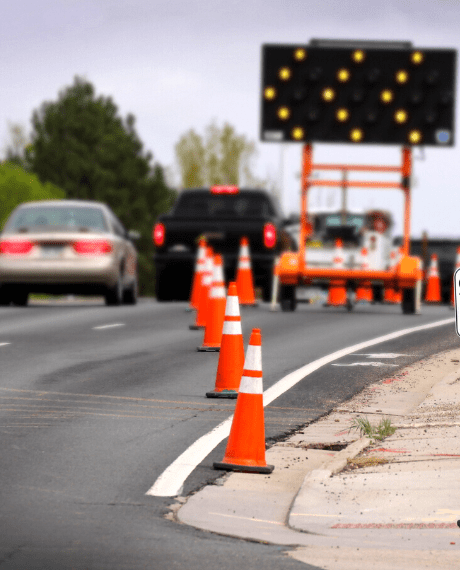
How Lane Closures Can Contribute to Different Types of Crashes
Rear-end collisions are an obvious risk because lane closures often create abrupt speed changes. You might expect traffic to keep moving normally, only to realize too late that vehicles ahead have stopped. The risk is particularly serious on high-speed roads, such as interstates. A vehicle traveling at highway speed needs much more room to stop than one already moving slowly through congestion.
Sideswipe crashes can happen when drivers are competing for limited space near a merge point. Some motorists merge well before reaching a closure, but others stay in the closing lane longer. Confusing signs or an unexpectedly short transition area can make things more complicated. Two drivers might attempt to enter the same opening; one vehicle might drift across a temporary lane boundary that’s hard to follow.
A single poorly managed merge can impact everyone behind it. An experienced car accident lawyer like the attorneys at Barrera Law Group LLC can help you determine fault.
You may additionally be able to obtain compensation when filing a legal claim that can go towards your recovery costs, medical bills, loss of wage costs, and more. This compensation can potentially help pave the way to closure and recovery.
What Can Matter When Determining Responsibility After a Work-Zone Crash
Responsibility for a crash involving a lane closure is based on how the collision happened. A negligent driver might be responsible for speeding, making an unsafe lane change, or following too closely.
However, individual motorists’ actions aren’t always the whole story. Evidence concerning the work zone might show that its design, timing, or traffic controls also contributed to the collision. More than one party may sometimes share responsibility for the same accident. An experienced attorney will be able to take this into consideration.
Records related to the closure might help reconstruct what happened. A traffic-control plan may show how vehicles were supposed to move through the affected area, while construction schedules might show when lanes were closed. Video or photographic evidence can document the signs and barriers drivers actually encountered. Witness statements might help establish whether traffic backed up unexpectedly or if motorists seemed confused as they approached the work zone.
How the lane closure was originally planned can matter as much as the crash itself.
Understanding the Role of Lane Closure Timing
A lane closure doesn’t have to be inherently unsafe to contribute to an accident. The danger often comes from how the closure interacts with everything from traffic volume and visibility to warning distance and road conditions at that time.
If you’re injured in a work-zone collision, looking beyond the drivers’ actions may give you a fuller picture of what happened.
Examining when the lane was closed, whether actual traffic conditions matched the plan, and how motorists were warned might reveal factors that are easy to overlook immediately after a crash.