Key Takeaways
- Inspect and count freight before signing the delivery receipt.
- Record specific damage or shortage details.
- Take clear photos of the shipment and packaging.
- Preserve damaged goods and packaging.
- Gather all documents needed for the claim.
- Check carrier notice and filing deadlines.
- Track claims until they are resolved.
- Review recurring problems to prevent future freight damage.
Damaged, missing, or short freight requires quick, organized action. The first few minutes after delivery can affect the evidence available to support a claim, especially when a pallet has torn wrap, crushed cartons, broken bands, or an incorrect piece count.
For businesses that need help coordinating the process, freight claims management services from FLI Logistics provide end-to-end support for documenting losses, submitting claims, following up with carriers, and pursuing settlements.
As a third-party logistics provider serving areas including LTL, truckload, and international freight, FLI Logistics also uses claim reporting and carrier scorecarding to help clients identify recurring shipping problems.
Know Which Type Of Freight Problem You Have
A freight claim is generally a request for payment related to cargo that was damaged, lost, or delivered short. Understanding the issue helps the receiving team take the right next step.
- Visible damage: Damage that can be seen before signing the delivery receipt.
- Concealed damage: Damage or shortage discovered only after unpacking.
- Shortage: Fewer cartons, pallets, or units arrive than the shipping documents list.
- Loss: All or part of the shipment fails to reach the destination.
- Refused delivery: The receiver rejects freight because its condition is unacceptable.
The basic structure of a freight claim is straightforward: identify the shipment, describe the loss, state the amount requested, and make a clear demand for payment. Proving the claim, however, depends heavily on the records created at delivery.
Step One: Inspect Freight Before Signing
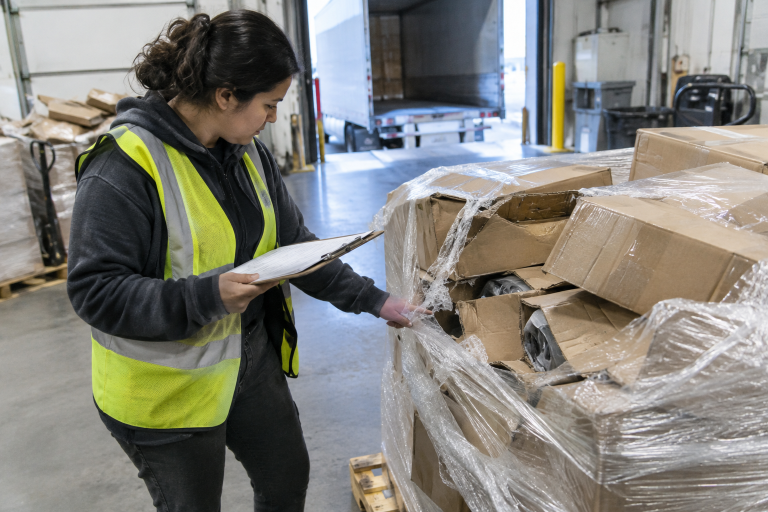
Receiving staff should inspect the shipment before signing whenever practical. Check pallets, crates, cartons, shrink wrap, seals, labels, and the visible condition of the product. Look for punctures, crushed corners, water marks, broken straps, retaped boxes, or freight that appears shifted inside its packaging.
Count every piece against the bill of lading, packing list, or delivery paperwork. If possible, ask the driver to wait while the team completes a reasonable inspection.
A clean signature can make it harder to show that visible damage or a shortage existed when the carrier delivered the freight.
Step Two: Record Specific Notes On The Delivery Receipt
Do not rely on vague notes such as “subject to inspection.” Instead, describe what the team can actually see. For example, write “two cartons crushed on pallet 3,” “one pallet missing,” or “shrink wrap torn with exposed product.” Include item numbers, pallet numbers, and the number of affected pieces when available.
Ask the driver to acknowledge the notation before leaving, and retain a copy of the signed delivery receipt. Specific delivery notes create a direct record connecting the shipment’s condition to the moment it changed custody.
Step Three: Take Photos That Show Context
Photos should document more than the damaged item itself. A single close-up may show a dent or tear, but it may not establish which shipment was affected or how the cargo was packed.
- Photograph the full pallet, crate, or shipment from several angles.
- Take close-up photos of each damaged area.
- Capture labels, tracking numbers, seals, pallet tags, and package markings.
- Photograph the outer packaging before it is removed.
- Save original image files with the shipment number and delivery date.
Step Four: Preserve Product And Packaging
Keep damaged goods, cartons, pallets, internal packing materials, wrap, and straps until the carrier provides written direction or the claim is resolved. Separate affected inventory from saleable stock when possible, and protect it from further damage. If the goods require repair, salvage, disposal, or relocation, record the decision and retain related invoices.
Step Five: Build A Complete Claim File
A well-organized file makes it easier to explain what shipped, what arrived, what was damaged, and what the loss is worth. Gather the bill of lading, delivery receipt, commercial invoice, freight bill, photos, repair estimate or replacement invoice, inspection report if requested, and copies of written notices sent to the carrier.
The claim should clearly identify the shipment, describe the loss, state the claimed amount, and request payment. Keep all carrier emails, inspection requests, claim numbers, and follow-up notes in the same file.
Step Six: Track Notice And Filing Deadlines
Deadlines may depend on the shipping mode, route, carrier terms, contract, and governing law. The deadline for reporting concealed damage can be much shorter than the deadline for submitting a formal claim. Review the bill of lading and carrier terms as soon as a problem is found, then create a calendar that includes delivery, notice, claim filing, inspection, and follow-up dates.
Domestic motor freight claims often provide up to nine months for formal filing, but that general timeframe should not be treated as a universal rule. Ocean, air, rail, cross-border, and contract shipments may follow different requirements.
Who May Be Responsible For The Loss?
Responsibility can depend on when the damage occurred, whether the freight was properly packed, which party had custody, and whether a carrier, broker, warehouse, or another provider performed the transportation. Cross-border shipments can add further contractual and legal considerations.
An appeals court decision involving damaged truck bodies moving through Laredo illustrates why a party’s role matters. The dispute turned in part on whether the transportation company acted as a broker or as a carrier, making careful documentation of each party’s services important when freight is damaged.
When To Seek Help With Freight Claims
Outside support may be useful when shipment values are high, multiple carriers handled the load, a cross-border move is involved, liability is disputed, documents are missing, or the business has many open claims at once. A structured claims process can reduce missed deadlines and keep carrier follow-up from becoming an overlooked administrative task.
How To Reduce Repeat Freight Claims
- Review damage and shortage patterns by carrier, lane, product, and facility.
- Improve packaging for products with recurring breakage.
- Train receiving teams to inspect and document freight before signing.
- Review pallet stability, loading practices, and securement methods.
- Use carrier performance reviews to address repeated loss or damage issues.
Common Questions About Damaged Freight
Should A Receiver Refuse Damaged Freight?
Refusal may be appropriate when freight is unusable, but the decision should be made in accordance with the shipper’s instructions, carrier terms, and operational needs. Document the condition thoroughly, whether the shipment is refused or accepted.
What If Damage Is Found After Delivery?
Stop further handling, photograph the goods and packaging, preserve the shipment, promptly notify the carrier or shipping contact, and request inspection instructions if needed.
Can A Claim Be Filed Without A Damage Note?
It may still be possible, but the claimant may need stronger evidence that the damage occurred while the carrier had custody of the freight.
Final Checklist For The Receiving Team
- Inspect the shipment and count all pieces.
- Write specific notes on the delivery receipt.
- Take wide-angle and close-up photos.
- Preserve damaged goods and packaging.
- Notify the appropriate parties quickly.
- Collect shipping documents, invoices, and estimates.
- Track every notice and filing deadline.
- Follow up until the claim is closed.
Conclusion
A damaged shipment does not have to become an unrecoverable loss. Fast inspection, precise delivery notes, high-quality photos, preserved packaging, and complete documents provide a stronger foundation for a freight claim.
Tracking repeated issues can also help shippers reduce future damage and improve carrier accountability.