


We have wrote before many times about the secrets of Giza Pyramids and the New Grand Egyptian Museum. To our knowledge there were lots of facts and misconceptions about the three Pyramids of Giza and their relations to Orion Belt.
We researched a bit in Archaeoastronomy and came out with a few points to clarify the misconception regarding the alignment of the three pyramids with Orion’s Belt, in what is called Orion Correlation Theory.
The Relationship between Giza Pyramids and Orion Belt
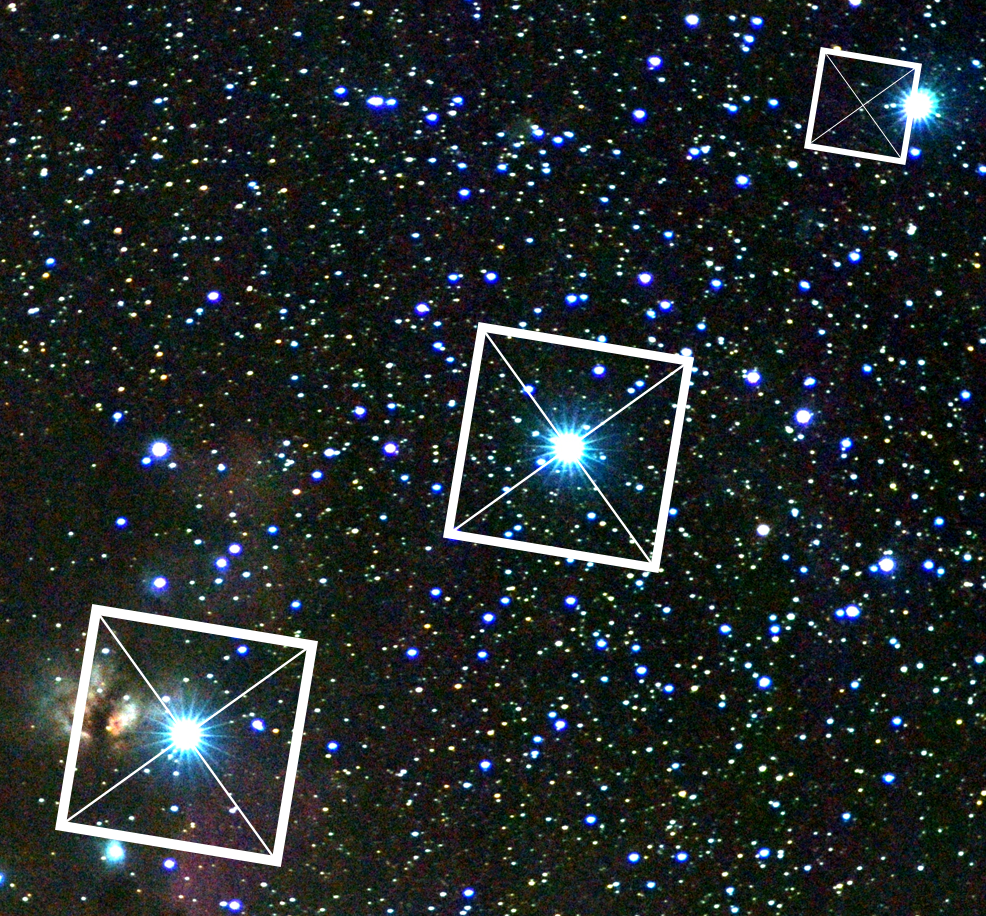
Firstly, the positions of stars gradually change over time due to the precession of the celestial pole and the precession of the Equinoxes.
Therefore, attempting to align the pyramids with Orion as seen today does not reflect the actual position of the sky at the time of their construction.
Secondly, Orion’s Belt consists of three stars: Alnitak, Alnilam, and Mintaka, lying on a line obliquely relative to each other. The three pyramids at Giza (Khufu, Khafre, and Menkaure) are not on the same line of stars, and the relative distances between them are not precise. Attempts at “alignment” rely on mentally manipulating the image to fit the theory, not on actual measurements.
Third, all ancient Egyptian texts about the pyramids are linked to the king (the “Lord of the Great House/Pharaoh”) and the soul’s ascent to heaven, or to the gods, and not specifically to the alignment of stars.

Fourth, modern scientific studies using precise astronomical software show that the pyramids’ alignment does not coincide with the Orion Belt at any precise point in time during the Fourth Dynasty. Differences in angles and inclination render the hypothesis scientifically untenable.
Fifth, because the ancient Egyptians excelled in astronomy, they observed many stars and used them to guide them in matters of their lives and the afterlife they believed in. They knew the constellation Orion and associated it with the god Osiris, lord of the underworld and resurrection. It was believed that the king’s soul would unite with Sah/Osiris in the heavens after death. This means the texts speak of religious symbolism, not architectural planning.
Finally, all the false claims linking the pyramids to the Orion Belt originated from a book published in 1994 by Robert Bauval titled “The Orion Mystery: Unlocking the Secrets of the Pyramids“.
Key points regarding the scientific analysis
- Lack of Exact Match: When the layout of the three main pyramids (Khufu, Khafre, Menkaure) is superimposed on a precise star map using modern software, the alignments do not perfectly overlap. The visual similarity is often attributed to pareidolia, the human tendency to see patterns where they may not exist.
- Angle Discrepancies: The angle formed by the stars of Orion’s Belt relative to the horizon (about 17 degrees when due south) does not match the angle formed by the Giza pyramids’ layout (about 45 degrees relative to the east/west axis) during the Fourth Dynasty.
- Star Movement (Precession): Due to the Earth’s axial precession, the relative positions of stars in the night sky change over millennia. Astronomical calculations show that the alignment would have been even less accurate the further back in time one goes from the Fourth Dynasty.
- Pyramid Construction Evidence: The Pyramid of Menkaure, which is significantly smaller and slightly offset, appears to have been an afterthought, suggesting the builders were working within the constraints of the Giza plateau rather than following a precise celestial map.
- Alternative Alignments: While the general alignment with Orion is debated, the pyramids do exhibit other confirmed, highly accurate astronomical alignments, such as the sides of the Great Pyramid being aligned almost perfectly with true north, likely achieved using stellar observations of stars like Thuban and Kochab.
- No Textual Evidence: There are no known ancient Egyptian texts or architectural plans that provide technical explanations for the alignment or explicitly mention an intentional correlation with Orion’s Belt
So, what would happen if we went back ten years? Thousands of years ago, we wondered if the stars of Orion’s Belt were aligned with the location of the pyramids.
Practical experimentation and precise astronomical alignment proved the hypothesis incorrect.
Archaeoastronomy scholars demonstrated that the angular deviation and distance between the stars and the pyramids are too great for the alignment to have been intentional.
Conclusion
Despite its enduring popularity in books and online forums, the Orion Correlation Theory ultimately crumbles under the weight of scientific scrutiny. The central claims—that the three main pyramids of Giza mirror the stars of Orion’s Belt as they appeared during the Fourth Dynasty—fail on multiple fronts.
We must contend with the reality of celestial precession, which shifts star positions over millennia, making modern “alignments” irrelevant.
More crucially, precise astronomical software and simple geometry reveal that the angular deviations and distances between the pyramids and the stars are far too significant to be intentional.
Furthermore, the theory relies on ignoring the extensive body of ancient Egyptian texts, which consistently link the pyramids to the King, his ascent, and the god Osiris (the celestial representation of Orion), not to architectural planning.
The notion of a direct, architectural star-alignment is, therefore, a contemporary invention, popularized by a 1994 publication. Archaeologists and archaeoastronomy scholars have demonstrated that the pyramids’ purpose was spiritual and symbolic, guiding the soul of the Pharaoh to unite with the divine.
The true wonder of Giza lies not in a manufactured celestial puzzle, but in the genuine, sophisticated understanding of the cosmos the ancient Egyptians possessed, rooted in religion and meticulous observation.