Understanding the Co-Occurrence of Mental Health and Substance Use Disorders
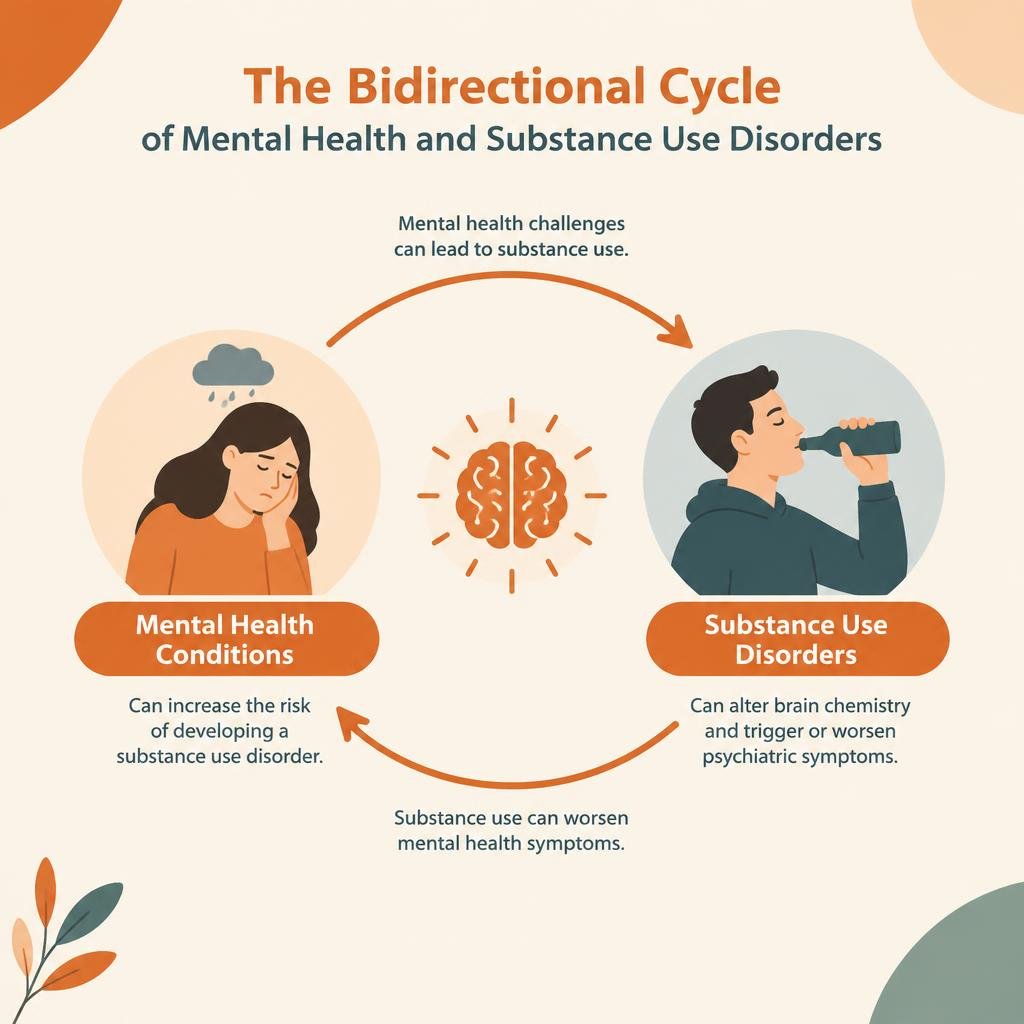
The relationship between mental health and substance use is often described as bidirectional. This means that a mental health condition can increase the risk of developing a substance use disorder, while chronic substance use can alter brain chemistry in ways that trigger or exacerbate underlying psychiatric symptoms.
The Biological and Psychological Drivers of Dual Diagnosis
At the neurobiological level, both addiction and mental health disorders often involve the same reward and stress-response pathways in the brain. For instance, dopamine—the neurotransmitter associated with pleasure and motivation—is frequently dysregulated in both cases.
When an individual experiences chronic stress, anxiety, or depression, they may turn to substances to “self-medicate,” attempting to regulate their emotional state. While this might provide temporary relief, it often leads to a cycle of dependency that further disrupts the brain’s natural ability to manage mood and stress.
Furthermore, we must consider the impact of Adverse Childhood Experiences (ACEs). Research indicates that approximately 84% of individuals in substance use treatment have experienced four or more ACEs, compared to only 13% of the general population.
This suggests that for many, substance use is an attempt to cope with the profound, lingering effects of past trauma.
Systemic Barriers and the “Wrong Door” Dilemma
Historically, the healthcare system has treated mental health and addiction as separate entities. This has led to the “wrong door” syndrome, where a person seeking help for depression at a mental health clinic is told they must first address their alcohol use elsewhere, while an addiction center may refuse to treat someone until their mental health symptoms are stabilized. This fragmentation leaves patients caught in the middle.
To bridge this gap, many are turning to online mental-health services that offer integrated platforms, allowing for more seamless coordination between therapy and psychiatric care. By moving away from siloed models, we can prevent patients from falling through the cracks of a disjointed system.
Core Principles of Integrated Mental Health and Addiction Treatment
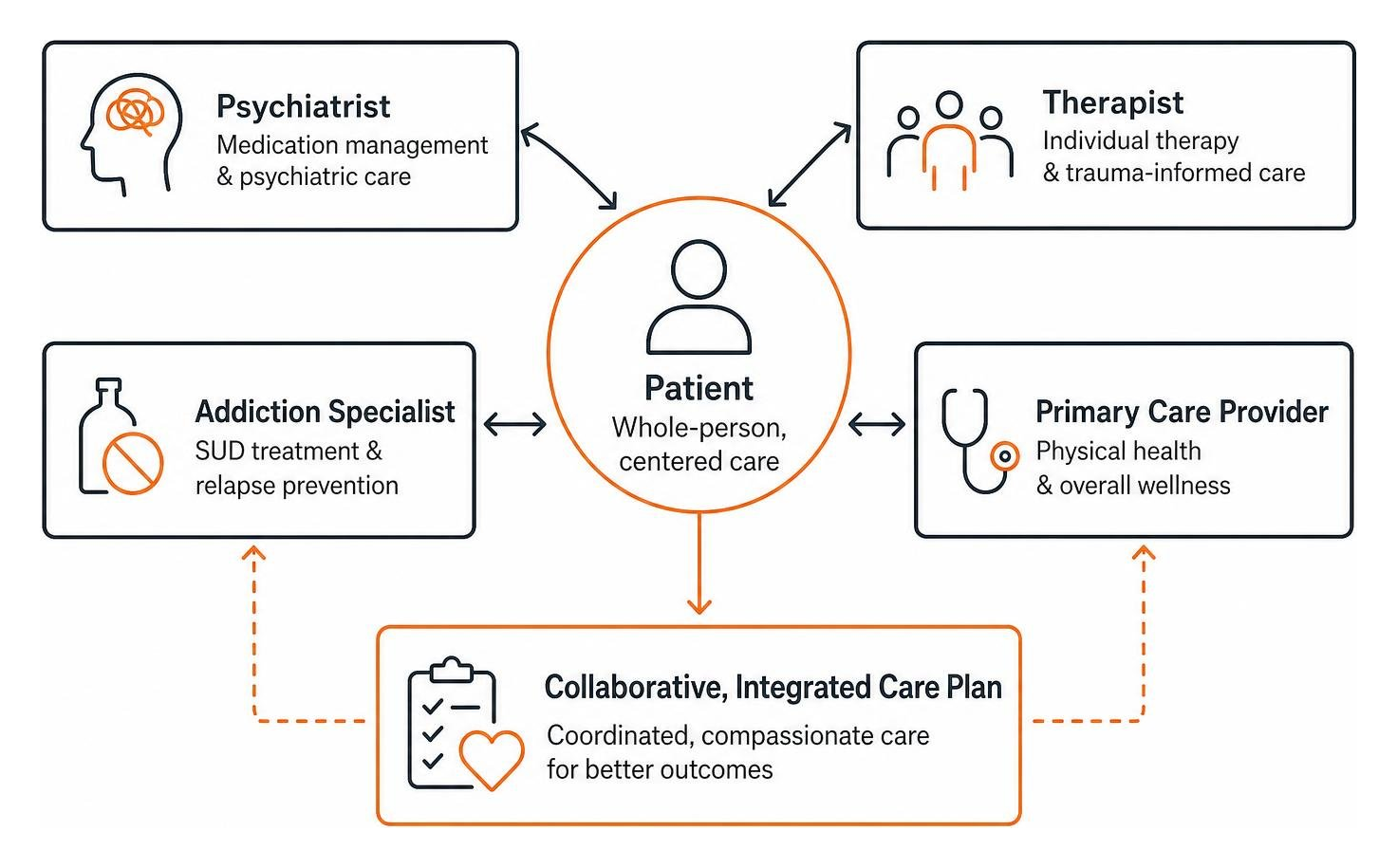
Effective integrated care is built on the principle that the patient is a whole person, not a set of symptoms to be treated in isolation. A successful model requires a multidisciplinary team—including psychiatrists, addiction specialists, therapists, and primary care providers—to work in tandem.
The Critical Role of Trauma-Informed Care
Trauma-informed care is not just a clinical modality; it is a fundamental shift in how we interact with those in recovery. It involves recognizing that a patient’s history of trauma likely influences their current behaviors and health outcomes.
By creating an environment of psychological safety, clinicians can use therapies like Cognitive Processing Therapy (CPT) or Eye Movement Desensitization and Reprocessing (EMDR) to help patients process their past without the need for substance-based avoidance.
Medical Stabilization and Pharmacological Interventions
For those struggling with physical dependency, the first step is often clinical stabilization. Engaging in medical drug/alcohol detox ensures that the patient’s physical withdrawal symptoms are managed safely under professional supervision.
Once stabilized, pharmacological interventions—such as naltrexone for alcohol or opioid use disorder, or antidepressants like sertraline and bupropion—can play a vital role in balancing brain chemistry, allowing the patient to engage more effectively in behavioral therapies.
Clinical Modalities and Age-Specific Care Strategies
Evidence-Based Behavioral Therapies in Mental Health and Addiction Treatment
Behavioral therapies provide the tools necessary for long-term change. Cognitive Behavioral Therapy (CBT) helps individuals identify and challenge the negative thought patterns that trigger substance use.
Dialectical Behavior Therapy (DBT) is particularly effective for those with emotional dysregulation, teaching skills for mindfulness and distress tolerance. Additionally, motivational interviewing helps resolve the ambivalence many feel about changing their habits, empowering them to take the lead in their own recovery.
Tailoring Mental Health and Addiction Treatment for Young Adults
Young adults (aged 18–25) face unique developmental challenges, as their brains are still maturing. With over 50% of young adults with substance use disorders also experiencing a co-occurring psychiatric condition, early intervention is critical.
Approaches like the Adolescent Community Reinforcement Approach (A-CRA) are designed to help this demographic build a social and lifestyle foundation that supports abstinence and mental wellness.
Using screening tools like the CRAFFT questionnaire allows providers to catch issues early, before they become entrenched.
Overcoming Stigma, Enhancing Policy, and Building Support Networks

Stigma remains one of the greatest barriers to recovery. We must shift our language to be person-first, viewing addiction as a chronic medical condition rather than a moral failing.
This includes providing training on neurodivergence, as many individuals with co-occurring disorders may also be neurodivergent, requiring tailored support strategies.
Policy and Healthcare System Reforms
To truly support those with dual diagnoses, commissioners and policymakers must move toward Integrated Care Systems.
This involves “cross-training” staff so that addiction counselors understand mental health basics and mental health clinicians are equipped to handle substance use screenings.
Furthermore, harm reduction strategies, such as the widespread distribution of naloxone, are essential components of a compassionate, public-health-focused policy. If you or someone you know is in crisis, the 988 Suicide & Crisis Lifeline provides 24/7, confidential, and free support.
Actionable Strategies for Families and Loved Ones
Supporting a loved one with a dual diagnosis can be emotionally taxing. The most effective approach involves:
- Education: Understanding that the condition is medical, not a choice.
- Communication: Using non-judgmental language and focusing on “I” statements.
- Boundaries: Setting healthy limits that protect your own well-being while encouraging the loved one to seek professional help.
- Support: Joining family support groups to share experiences and learn from others in similar situations.
Frequently Asked Questions About Co-Occurring Disorders
What is the most common example of a dual diagnosis?
One of the most frequent examples is the co-occurrence of major depressive disorder and alcohol use disorder.
Often, individuals use alcohol to numb the pain of depression, which in turn deepens the depressive state, creating a cycle that requires simultaneous treatment of both conditions to break.
How do clinicians determine whether mental illness or addiction developed first?
Clinicians use a process called differential diagnosis. This involves taking a longitudinal history, reviewing medical records, and conducting toxicology screenings.
By mapping out the timeline of symptoms—noting when mental health symptoms began versus when substance use intensified—providers can determine the primary drivers of the patient’s condition.
What immediate crisis resources exist for dual diagnosis emergencies?
For immediate help, the 988 Suicide & Crisis Lifeline is available 24/7 in the U.S.
Additionally, the SAMHSA National Helpline (1-800-662-HELP) provides confidential, free, 24/7 information and treatment referrals. These resources are vital for connecting individuals to local, evidence-based care when they need it most.
Conclusion
Recovery is rarely a linear path, but with integrated, trauma-informed care, it is entirely possible.
By treating the whole person—addressing the brain, the history, and the environment simultaneously—we can provide the support necessary for lasting wellness. Whether you are beginning your own journey or supporting a loved one, you are not alone.
With the right resources, a commitment to integrated care, and a focus on compassion, a healthy, fulfilling life is within reach.