Key Takeaways
- All-on-4 replaces a full arch of teeth: Four strategically placed dental implants support replacement teeth in the upper or lower jaw.
- Candidacy depends on individual needs: Jawbone condition, gum health, remaining teeth, medical history, bite forces, and treatment goals all influence the recommended approach.
- Several treatment options are available: All-on-4, All-on-6, All-on-X, implant-supported bridges, and removable implant-supported dentures offer different designs and levels of support.
- Treatment involves several stages: Consultation, diagnostic imaging, personalized planning, implant placement, healing, and final restoration may all be part of the process.
- Results and timelines vary: Some patients may qualify for a temporary restoration during treatment, but suitability and timing depend on clinical findings.
- Implant-supported teeth require ongoing care: Daily cleaning, professional maintenance, and follow-up visits help monitor the implants, gums, and restoration.
- Understand the risks and costs before deciding: Discuss possible complications, treatment alternatives, maintenance needs, and the full expected cost with your dental provider.
Several missing teeth, failing teeth, or loose traditional dentures can make everyday meals, conversations, and smiling feel more difficult.
Patients seeking all-on-4 implant dentures Catoosa can schedule a consultation with Dental Arts of Catoosa to discuss full-arch replacement options based on their oral health, jawbone, goals, and preferred treatment approach.
All-on-4 is a full-arch implant treatment in which four dental implants support replacement teeth in the upper or lower jaw. It can provide an alternative to a conventional denture that rests directly on the gums.
However, four implants are not automatically the best choice for every patient, so a complete evaluation is an important first step.
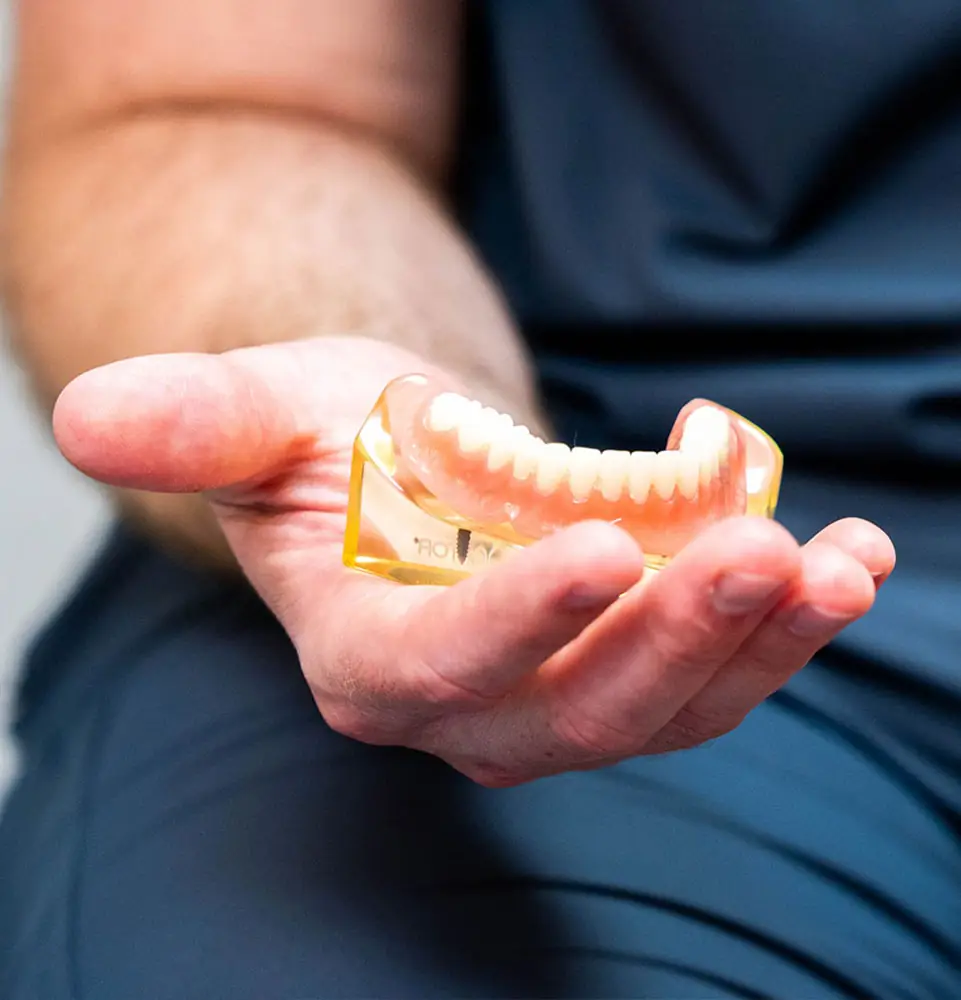
Why Missing Teeth and Loose Dentures Deserve Attention
Tooth loss can affect more than appearance. Gaps or failing teeth may make it harder to chew certain foods, speak clearly, or maintain a comfortable bite.
Conventional dentures can help replace missing teeth, but some wearers experience movement, pressure spots, clicking, or reduced confidence when eating in public.
Dental Arts of Catoosa offers implant-supported dentures and bridges for people who need to replace multiple teeth or an entire arch. A dental implant is placed in the jaw to provide support for a restoration, rather than relying only on gum tissue for retention.
Common Concerns That May Lead to a Full-Arch Consultation
- Traditional dentures that shift or feel loose.
- Difficulty chewing firm, sticky, or crunchy foods.
- Severely damaged, decayed, or non-restorable teeth.
- Soreness beneath a denture or recurring pressure areas.
- Changes in facial support after extensive tooth loss.
- A desire for a more stable replacement option.
What Are All-on-4 Implant Dentures?
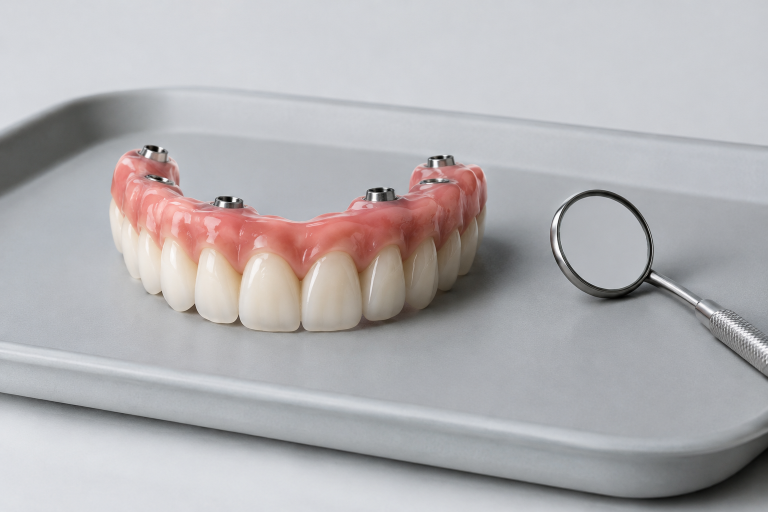
All-on-4 describes a treatment concept in which four strategically positioned implants support a full arch of replacement teeth. The implants are planned in areas with available bone, and the resulting restoration may be fixed in place or designed to be removable for home cleaning, depending on the treatment plan. Compared with a traditional denture, an implant-supported arch is anchored to implants in the jaw.
This may improve stability during speaking and chewing. It also requires thoughtful planning of the bite, implant positions, restoration material, cleaning access, and future maintenance.
Why Four Implants May Be Used for a Full Arch
The number in All-on-4 refers to the support design, not a promise that every person will receive exactly four implants.
Dental Arts of Catoosa reviews the quality and amount of available bone, the condition of remaining teeth, gum health, bite forces, health history, and the design of the final restoration before recommending a solution.
Some patients may be candidates for four implants, while others may benefit from additional support. Published research on full-arch implant treatment has found generally strong outcomes in appropriately selected patients, but it also recognizes that implant loss and restoration complications can occur.
A review of All-on-4 treatment reinforces why careful planning, follow-up, and maintenance matter.
How Dental Arts of Catoosa Determines Candidacy
A full-arch consultation is not a one-size-fits-all recommendation. The team can evaluate whether All-on-4, All-on-6, an All-on-X approach, an implant-supported bridge, or a removable implant-supported denture may better meet the patient’s needs.
Factors Reviewed During Planning
- The number and condition of remaining teeth.
- Jawbone volume, density, and anatomy.
- Gum health, infection, and healing needs.
- Medical conditions, medications, and tobacco use.
- Bite alignment and the force placed on the restoration.
- Whether the patient prefers a fixed or removable design.
- Expected treatment stages, maintenance, and budget considerations.
What to Expect During the All-on-4 Process
The exact timeline varies. Some patients need extractions or preliminary treatment before implants are placed, while others may be eligible for a temporary restoration during treatment.
Dental Arts of Catoosa can explain the anticipated sequence after the examination and diagnostic imaging are complete.
Typical Treatment Stages
- Consultation and imaging: The dental team reviews health history, treatment goals, teeth, gums, jaw structure, and available options.
- Personalized planning: Implant locations, restoration design, any extractions, and the need for additional procedures are considered.
- Implant placement: The implants are placed according to the approved treatment plan.
- Healing: The implants need time to integrate with the surrounding bone. Follow-up appointments help monitor healing and comfort.
- Final restoration: Once the implants and tissues are ready, the final full-arch teeth are fabricated, adjusted, and attached or fitted.
All-on-4, All-on-6, All-on-X, and Removable Options
There is no universally best implant count or restoration style. The appropriate option depends on individual clinical findings and personal priorities.
- All-on-4: Four implants support a full arch and may be appropriate when anatomy and treatment goals support that design.
- All-on-6: Six implants support a full arch and may be considered when additional support is clinically useful.
- All-on-X: A flexible approach that uses the number of implants considered appropriate for the individual case.
- Removable implant-supported dentures: A denture attaches to implants for improved retention but can be removed for cleaning.
- Implant-supported bridges: These may be considered when multiple adjacent teeth need replacement, but a full arch is not required.
Benefits, Risks, and Long-Term Care
Implant-supported full-arch teeth may offer more stability than conventional dentures and can provide a comprehensive option for extensive tooth loss. Still, treatment involves surgery and restorative care. Possible concerns include soreness, infection, implant failure, gum inflammation, bite changes, wear, loosening, or fracture of restoration components.
Daily cleaning and professional maintenance are essential. Patients should clean around the restoration as instructed, use recommended cleaning tools, attend follow-up visits, avoid biting hard nonfood objects, and contact the office promptly if they notice pain, swelling, bleeding, looseness, or a change in their bite.
Request an All-on-4 Consultation in Catoosa
Dental Arts of Catoosa can help patients explore a full-arch plan that fits their clinical needs. A consultation provides an opportunity to discuss candidacy, alternatives, treatment stages, expected maintenance, and personalized costs before making a decision.
For patients living with missing teeth or unstable dentures, that conversation can be a practical first step toward restoring comfortable function and confidence.
Conclusion
All-on-4 implant dentures may offer a stable full-arch replacement option for people in Catoosa, Oklahoma, who are dealing with extensive tooth loss or loose traditional dentures.
However, the right treatment depends on each patient’s oral health, jawbone condition, medical history, preferences, and budget.
A consultation with Dental Arts of Catoosa can help clarify whether All-on-4 or another solution is appropriate and explain the expected treatment stages, potential risks, maintenance requirements, and costs.
By reviewing the available options and asking questions before proceeding, patients can make a more informed decision about restoring everyday comfort and function.