


Most of us don’t think much about where our electricity comes from. We switch on the lights, charge our phones, and expect everything to work. But with energy bills taking up a significant part of household budgets, more homeowners are questioning whether their current electricity supply is the best option.
From traditional grid electricity to solar panels and battery storage, several options can power a modern home. Each has its advantages, and the right choice depends on your property, lifestyle, and budget.
Before investing in a new system, it’s worth understanding what’s available and how each option could work for you.
Start by Understanding How Much Energy You Use
Before deciding how to power your home, you need to know how much electricity your household actually consumes.
A small household with few appliances will have very different needs than a large family running electric heating, multiple computers, and an electric vehicle.
Take a look at your electricity bills from the past year. Most providers include information about your consumption in kilowatt-hours (kWh), which can help you identify how much energy you typically use.
It’s also worth thinking about when you use electricity. Do you work from home during the day, or do you use most of your electricity in the evenings?
These details matter because certain energy systems, particularly solar panels, generate electricity at specific times.
Consider Whether Solar Power Is Right for Your Property
Solar energy is one of the most accessible renewable electricity options for homeowners.
Solar panels convert sunlight into electricity that can power appliances and reduce the energy you buy from the grid.
If you’re considering this approach, companies such as Build The Power offer solar equipment worth exploring as you compare systems.
However, not every property is equally suited to solar generation.
Roof orientation, available space, shading, and local weather conditions can all influence how much electricity a system produces. You’ll also need to consider installation costs and whether your roof is in suitable condition.
For households that use a lot of electricity during daylight hours, solar panels may be especially beneficial.
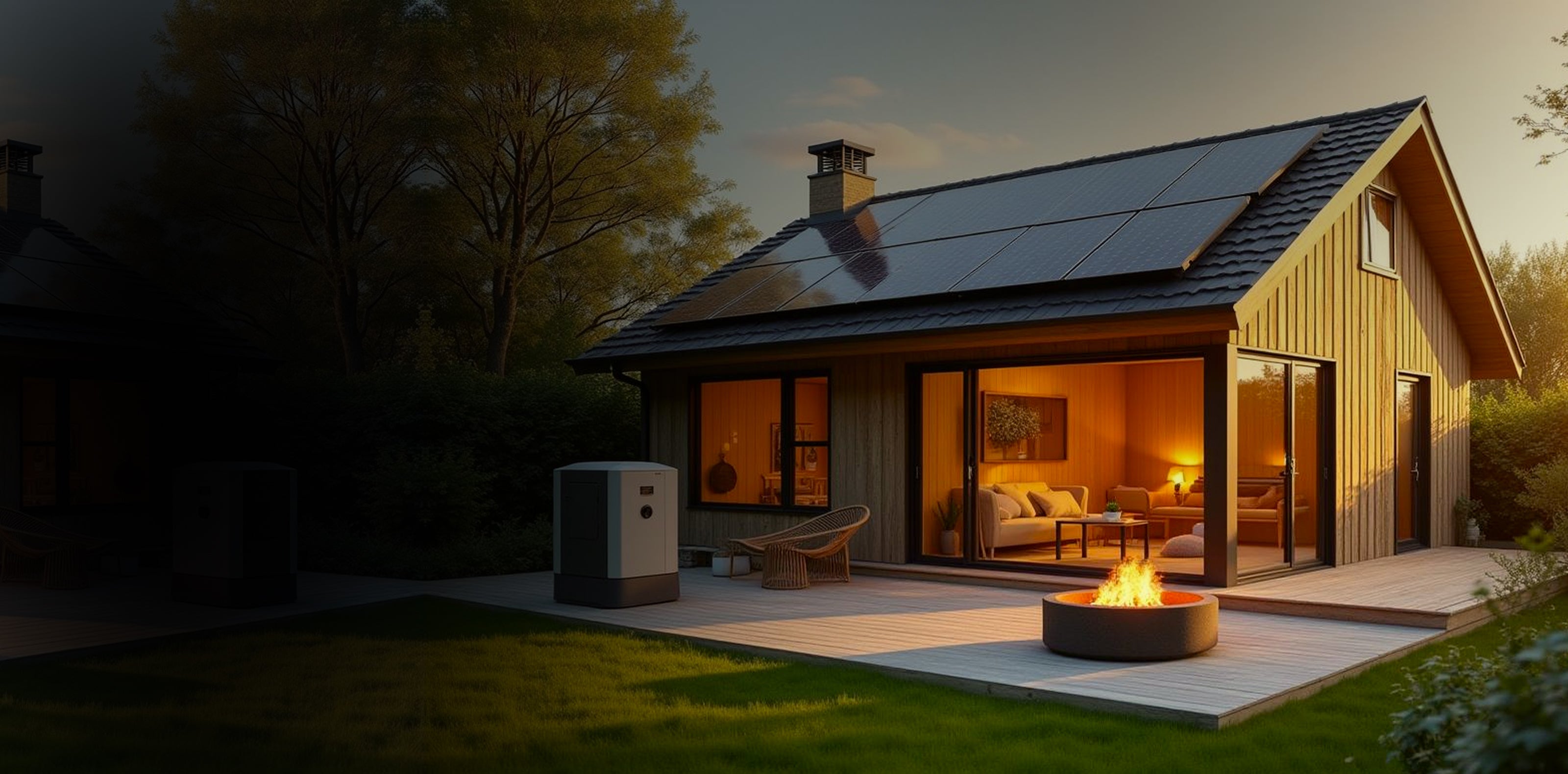
Think About Battery Storage and Backup Power
One of solar panels’ main limitations is that they don’t generate electricity at night.
Battery storage can help by letting you save some of the electricity produced during the day for later use.
This can be useful if your household’s energy consumption increases in the evening when everyone returns home.
Some homeowners also invest in backup power systems to keep essential appliances running during outages.
However, not every solar or battery installation can operate when the grid goes down. You’ll need compatible equipment specifically designed to provide backup electricity.
Before choosing a system, consider which appliances you want to keep running and how long you need power.
Decide Whether to Stay Connected to the Grid
Generating your own electricity doesn’t necessarily mean you need to disconnect from your electricity provider.
In fact, many homeowners choose a hybrid approach that combines solar panels with an existing grid connection.
This lets you use your own electricity when it’s available and draw power from the grid when generation falls short.
Living completely off-grid is possible, but it requires considerably more planning. You’ll need enough generation and storage capacity to meet your household’s needs year-round, including during periods of poor weather.
For most properties, maintaining a grid connection provides additional flexibility and reassurance.
Choose a System That Works for Your Lifestyle
No single electricity solution suits every household.
Some homeowners may benefit from solar panels and battery storage, while others might find that improving energy efficiency and remaining connected to the grid is the most practical approach.
Focus on your long-term needs rather than the initial purchase price.
Think about your household’s energy consumption, your property’s suitability, and how much maintenance you’re comfortable managing.
With careful planning, you can choose a power system that offers the right balance of reliability, affordability, and environmental responsibility for your home.