


Key Takeaways
- The best fence depends on its job, your site conditions, and the upkeep you are prepared to handle.
- Rain, shade, soil moisture, drainage, and slope can matter as much as the visible fence material.
- Wood, vinyl, chain link, metal, and composite fencing each offer different advantages.
- Confirm property lines, access needs, local rules, and gate details before installation starts.
- A detailed written scope is more useful than comparing estimates by total price alone.
Table Of Contents
- Start With The Property Goals
- Match The Material To The Weather
- Compare Common Fence Materials
- Plan For Rain, Soil, And Drainage
- Balance Privacy, Security, And Visibility
- Choose The Right Height And Layout
- Build A Realistic Fence Budget
- Maintain The Fence Through The Year
- Common Questions
A fence is more than a line around a yard. It can create privacy, contain pets, protect equipment, improve security, direct foot traffic, and give an outdoor space a finished appearance. The right choice starts with how you need the fence to work every day, not simply which style looks best in a photo.
For homeowners and businesses comparing options in the South Sound, Tacoma fence company Amocat Fencing LLC provides owner-led residential and commercial installation services for cedar, vinyl, chain link, metal, composite, and custom fencing.
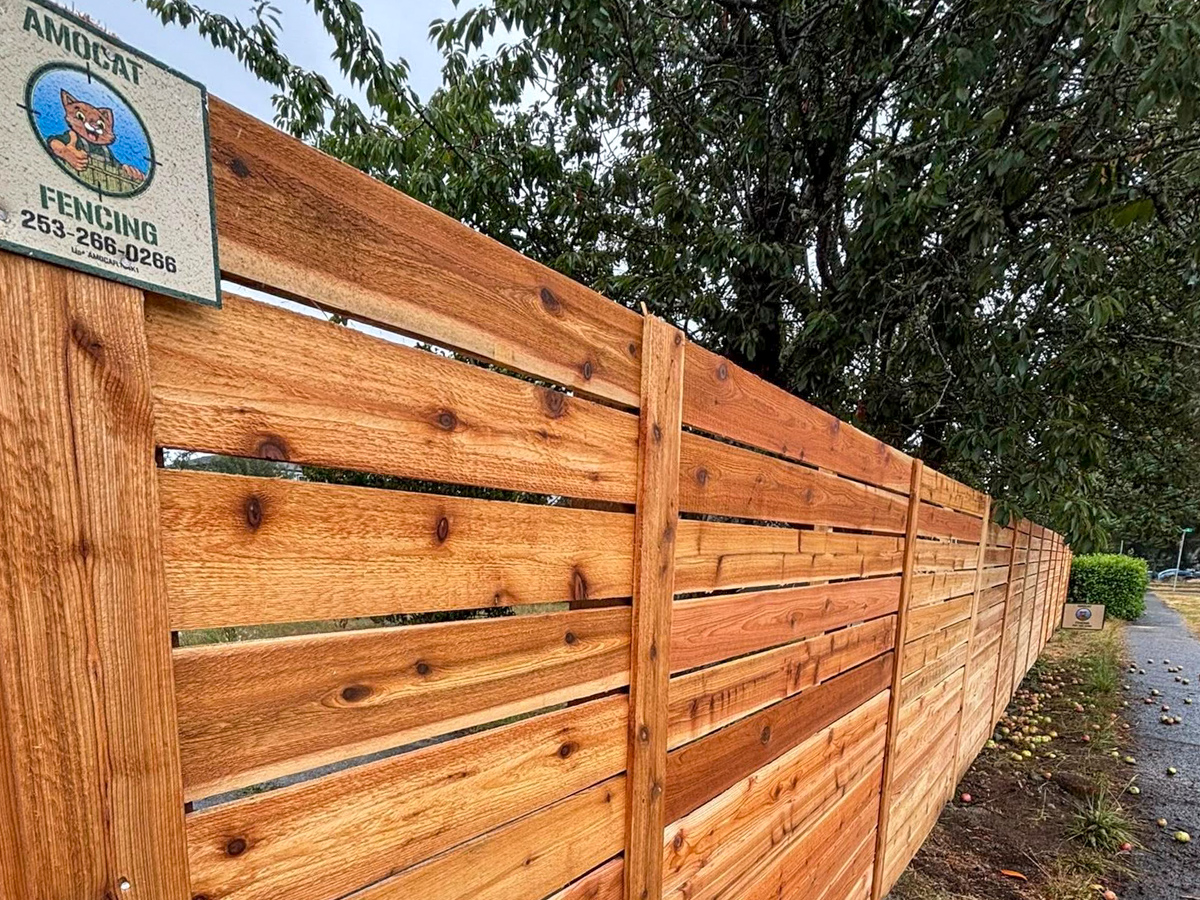
Its website focuses on helping Tacoma, Pierce County, Puyallup, Auburn, Federal Way, Lakewood, and nearby property owners select durable fence solutions suited to Pacific Northwest weather.
Start With The Property Goals
Rank your priorities before choosing a material. A backyard beside a busy street may need privacy first. A dog run may need reliable containment and a secure latch. A front-yard boundary may call for open visibility and curb appeal. Consider who will use the space, what should stay in or out, and how much maintenance fits your routine.
Questions To Answer First
- Do you need privacy, security, pet containment, safety, or decoration?
- Will the fence be exposed to sprinklers, deep shade, standing water, or heavy wind?
- Do you need a walk gate, a double gate, or vehicle access?
- Would a solid barrier make the yard feel too enclosed or limit needed visibility?
Match The Material To The Weather
In wet climates, fence performance depends on the whole system: posts, fasteners, drainage, ground clearance, caps, rails, and gates. Repeated rain and slow drying can be especially hard on wood, while metal components need a durable protective finish. The U.S. Forest Products Laboratory guide to protecting wood fences explains why moisture and oxygen contribute to wood decay, particularly around ground-level areas.
That does not mean wood is a poor choice. It means wood fencing benefits from careful material selection, adequate clearance from soil and mulch, protected cut ends, and regular inspection. Vinyl, composite, chain link, and metal can reduce some maintenance demands, but all fences still need sound post installation and working gate hardware.
Compare Common Fence Materials
- Wood: A strong choice for privacy, traditional style, and custom layouts. It can be repaired board by board, but needs cleaning and periodic staining or sealing.
- Vinyl: Well-suited to low-maintenance privacy fencing. It is easy to wash and does not require staining, though damaged panels may be less simple to match or replace.
- Chain link: Practical for dog runs, larger yards, commercial perimeters, and budget-focused projects. It provides visibility, but privacy usually requires slats or screening.
- Metal: Useful where security, open views, or ornamental lines matter. Coating quality, corrosion resistance, and strong gate hardware are important.
- Composite: Offers a modern wood-like appearance with moisture resistance and reduced routine upkeep. It often has a higher initial cost and may have fewer repair options.
Plan For Rain, Soil, And Drainage
Walk the property during or soon after rain. Look for puddles, runoff channels, downspouts that empty near posts, soft ground, and landscaping that keeps the fence base wet. The HUD sitework guide is a useful reminder that drainage and site conditions should be considered before exterior work begins.
Photorealistic image of a newly installed cedar privacy fence beside a Pacific Northwest backyard after light rain, with damp soil, small puddles, proper ground clearance, and green landscaping visible.
Also identify roots, buried irrigation lines, old concrete, utility locations, and retaining walls. Soil pushed against boards, mulch piled along the base, and vines that block airflow can shorten the life of a fence and make future repairs more difficult.
Balance Privacy, Security, And Visibility
A tall, solid fence can create a quiet patio or block an unattractive view, but it can also reduce airflow and make a compact yard feel darker. Open chain link or metal fencing preserves visibility and may suit a storage area or commercial perimeter, but it does little to hide activity. For dogs, a less visible fence can sometimes reduce reactions to passersby, while a secure bottom edge and dependable latch remain essential.
Choose The Right Height And Layout
Height should serve the property’s purpose and comply with current local requirements, HOA rules, setbacks, and easements. On a slope, a fence may be stepped in level sections or racked to follow the grade. Review driveway sight lines, corner locations, gate swing direction, and the width needed for lawn equipment, bins, or vehicles. If the property line is uncertain, resolve that question before holes are dug.
Build A Realistic Fence Budget
Linear footage matters, but it is not the entire price. Gates, steep terrain, limited access, old fence removal, buried obstacles, brush clearing, staining, and difficult post locations can change the scope significantly. Ask for a written estimate that identifies material, height, footage, posts, hardware, gates, demolition, cleanup, finish work, warranty terms, and payment schedule.
Maintain The Fence Through The Year
Spring And Summer
- Check posts for movement after winter rain and inspect gates for dragging.
- Clear leaves, soil, and mulch away from the fence base.
- Wash dirt and organic growth from vinyl, metal, and chain link.
- Trim plants that press against boards or trap moisture.
Fall And Winter
- Inspect hinges, latches, fasteners, and gate posts before storm season.
- Remove debris that holds moisture against wood.
- Watch for runoff that erodes soil along the fence line.
Prioritize water, movement, and hardware before cosmetic work. A loose post or dragging gate can become a larger repair if ignored.
Common Questions
What Is The Best Fence Material For A Wet Climate?
There is no universal answer. Vinyl and chain link can offer lower routine upkeep, while properly built and maintained wood provides warm, effective privacy. Choose based on appearance, budget, privacy needs, and maintenance habits.
Does Wood Need More Maintenance Than Vinyl?
Usually, yes. Wood typically needs more frequent inspection, cleaning, refinishing, and occasional board replacement. Vinyl needs less routine care but can be harder to repair after a major impact.
Should A Fence Be Installed Before Landscaping?
Often, yes, because installation access is easier. Still, plan around mature plants, irrigation, drainage paths, and enough space to maintain both the fence and landscaping later.
The best fence is the one that fits the property, climate, budget, and your willingness to maintain it. Inspect the site carefully, compare materials honestly, confirm rules before work begins, and choose a detailed scope that leaves no important assumptions unresolved.