


A sharpening kit works best when the grit range, angle support, and included tools match real practice habits. Many buyers collect extra stones before they can hold pressure or read a burr. That usually leads to slower progress and uneven edges.
A better method sorts kits by skill level first. Seen that way, each package becomes easier to judge by steel removal, finish quality, and daily usefulness, rather than by crowded contents or flashy claims.
Weekend Cook
Most home cooks need repeatable angles, clear feedback, and a setup that does not punish small mistakes.
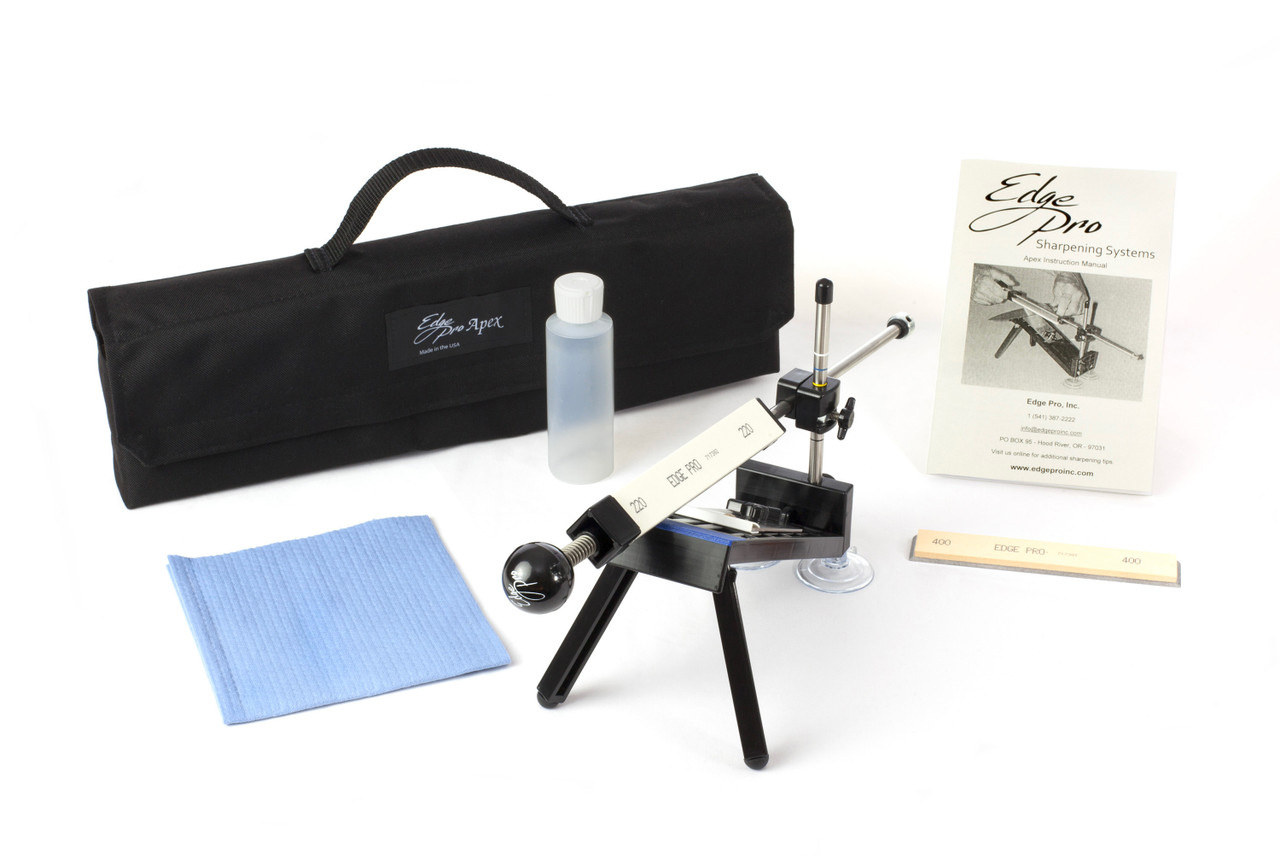
In early use, Knife sharpening stone kits with a short grit progression often teach burr control, stroke consistency, and edge awareness more effectively than larger bundles. Fewer choices also calm the process, which helps new users stay steady while restoring chef’s knives, parers, and utility blades used through a busy week.
Best Fit: Apex 1
The Apex 1 Kit starts with 220 and 400 grit water stones, plus a manual, cloth, bottle, and case. That spread is narrow, yet practical. A weekend cook can remove fatigue from a dull edge without getting lost in extra finishing steps.
Steel comes off at a measured pace. Progress also stays visible, which matters more than a polished bevel that offers little benefit during routine vegetable prep.
Step-Up Beginner: Apex 2
Apex 2 adds a 600-grit stone and an 8-inch ceramic hone. That small change improves edge refinement without making the process heavier. Slicing ripe tomatoes feels cleaner, and herb prep leaves less bruising along tender leaves.
Another gain appears during maintenance. Users can refresh knives before they become truly blunt, which preserves blade life by limiting unnecessary metal removal across repeated sessions.
Confident Home Sharpener
Once a sharpener can hold the angle and confirm burr formation, a wider progression becomes useful. The goal changes from basic recovery to a controlled edge character. Some cooks want bite for onions and peppers.
Others prefer a smoother finish for long push cuts. At this stage, kit selection should center on coarse access, polish range, and how well the setup serves thicker Western profiles and finer Japanese geometry.
Best Value: Apex 3
At this level, Apex 3 opens a broader path with 120, 220, 400, 600, and 1000 grit stones plus a ceramic hone. The coarse stone shortens repair time on neglected knives with rolled or flattened edges.
Midrange grits steady the scratch pattern. The 1000 grit finish leaves a working edge many kitchens prefer because it still grips food skins while feeling cleaner through proteins and herbs.
Fine-Finish Home User
Apex 4 offers polish tapes, two mounting blanks, and 2000- to 3000-grit finishing options. Those additions matter for users who notice edge texture during delicate slicing. Fish, herbs, and fine produce often reveal that difference quickly.
The higher finish can reduce drag through soft flesh and improve visual cleanliness along cuts. For many households, this marks the point where sharpening becomes a regular craft rather than an occasional chore.
Serious Hobbyist
Some users eventually want more bench stability, finer adjustment, and a platform that feels calmer under sustained work. That is where the BevelTech line starts to make sense.
The added weight improves contact consistency during longer sessions. Shared stone compatibility also helps users carry over familiar abrasives. Anyone servicing several knives, tracking bevel changes, or correcting uneven factory grinds will notice the benefit of sturdier hardware.
BevelTech 1 and 2
BevelTech 1 includes 220- and 400-grit stones, along with basic support items. BevelTech 2 adds 600 grit and an 8-inch ceramic hone. These packages suit sharpeners who already trust their hand position but want tighter mechanical control.
Compared with early Apex kits, they cost more while offering greater bench stability, firmer feedback, and a more settled feel during repetitive strokes on harder kitchen steel.
Serious Blade Nerd
The highest tier needs broad grit coverage, strong repeatability, and finishing tools that support close-edge study. BevelTech 3 moves from 120 through 1000 grit and includes a ceramic hone. BevelTech 4 extends that range with polish tape blanks plus 2000 and 3000 grit tapes.
That spread supports repair work, edge tuning, and high-finish passes. For sharpeners comparing scratch depth, this level clearly sits at the top.
Ranking Snapshot
For beginners, Apex 1 earns the first spot because it teaches core habits without excess parts. Apex 2 and Apex 3 fit growing home users who need more range.
Apex 4 suits cooks who value cleaner finishing and smoother slicing. BevelTech 2 and 3 serve committed hobbyists with heavier bench habits. BevelTech 4 ranks highest for serious enthusiasts who want wide coverage, strong control, and refined finishing options.
Conclusion
The right sharpening kit depends less on ambition than on present skill, hand control, and sharpening frequency. A weekend cook usually benefits from quick success and simple grit choices.
A steady home sharpener gains more from wider coverage and better finish control. A serious enthusiast will appreciate stronger hardware and added polish options. Ranked by actual use, the lineup becomes easier to read, and buyers can choose with less waste.


