Why Proper Footwear Engineering Matters to Every Larger Guy
For ambitious professionals, athletes, and everyday guys between the ages of 20 and 40 who stand taller or wear larger shoe sizes, daily comfort often starts from the ground up.
Yet, the apparel industry has historically treated larger dimensions as an afterthought. When you wear a size 12, size 13, size 14, size 15, or size 16 and above, pulling on a standard “one-size-fits-all” sock is an exercise in frustration.
The fabric stretches paper-thin across the toes, the heel pocket sits awkwardly beneath your arch, and the top elastic band digs painfully into your calf, leaving deep red indentations at the end of a long workday.
Understanding the mechanics of big and tall socks is fascinating and vital for everyone. Foot health directly impacts posture, athletic endurance, joint longevity, and circulatory wellness.
Exploring how specialized textile engineering solves these everyday friction points helps larger men eliminate unnecessary discomfort while improving overall physical performance.
This educational guide breaks down the anatomy of properly proportioned footwear, existing medical considerations, and modern manufacturing breakthroughs—giving you the exact blueprint for upgrading your daily essentials.
The Problem with “One-Size-Fits-All” Manufacturing
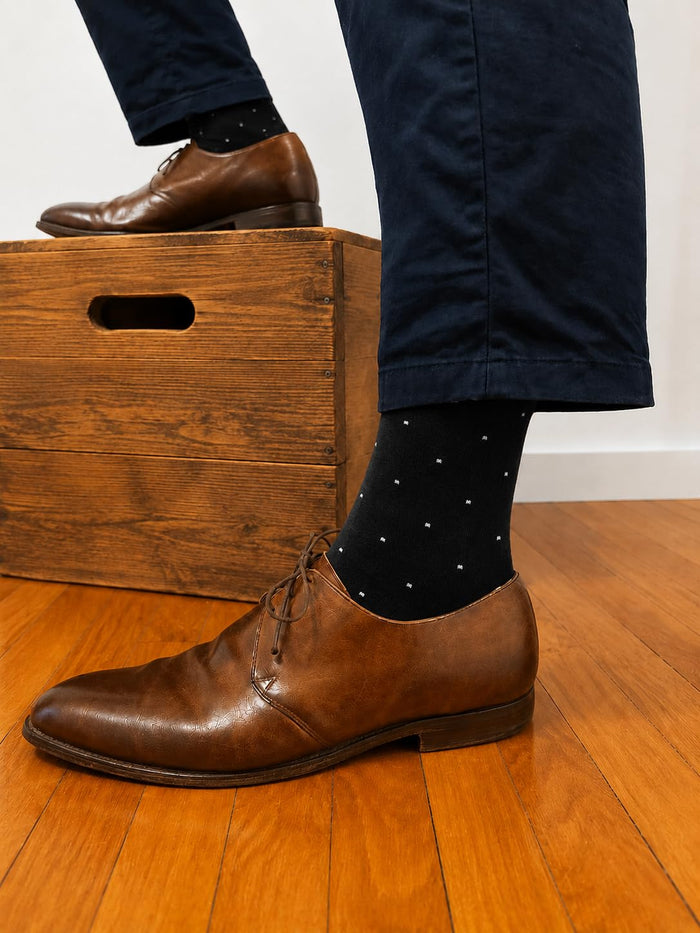
Standard hosiery is typically engineered around a median shoe size—usually men’s 9 to 11.
When manufacturers claim a standard sock stretches up to a size 13 or 14, they rely entirely on elastic tension rather than structural volume.
Stretching a smaller garment over a larger foot creates three immediate mechanical failures:
- Premature Fabric Thinning: Pulling knit fibers past their intended resting state separates the yarns, eliminating cushioning and causing rapid blowouts at the big toe and heel.
- Heel Pocket Misalignment: When the knit tube lacks adequate length, the reinforced heel cup migrates toward the middle of the sole, causing the sock to bunch up inside your shoe and trigger painful friction blisters.
- Tourniquet Cuff Pressure: Over-stretched ankle and calf ribbing exerts excessive radial pressure on the lower leg, restricting natural blood flow and causing noticeable discomfort during long periods of sitting or standing.
True big socks for big feet avoid these compromises entirely through proportional scaling rather than aggressive stretching.
Purpose-Built Engineering: Designing From the Heel Up
To eliminate the flaws of stretched standard gear, modern specialty makers have completely rethought how hosiery is constructed.
Rather than modifying small templates, forward-thinking brands build their patterns specifically for larger anatomical proportions.
For example, specialized labels like No Socks Given focus exclusively on larger dimensions; every single pair is constructed starting directly from the heel pocket to accommodate men’s shoe sizes 12 through 15.
Because they do not manufacture smaller sizes, the knit structure is never forced to stretch out just to cover your foot.
This heel-up engineering philosophy ensures that:
- The toe box provides generous width and depth so toes can splay naturally without compression.
- The arch band aligns precisely with the plantar fascia to deliver targeted structural support.
- The leg shaft features wider knit geometry, allowing the cuff to stay securely in place without digging into larger calves.
When searching for big and tall socks for men or browsing men’s big and tall socks deals, looking for brands that engineer strictly for larger sizes guarantees superior durability and all-day comfort.
Medical Solutions and Circulatory Wellness
For many taller individuals and men with larger frames, lower-leg circulation and foot swelling are critical health considerations.
Long flights, hours behind a desk, heavy weightlifting sessions, or underlying cardiovascular conditions can cause fluid retention in the lower extremities.
Existing medical solutions for lower-limb discomfort often rely on graduated compression therapy.
Clinical compression hosiery applies precise pressure—strongest at the ankle and gradually decreasing up the leg—to assist veins in pumping blood back toward the heart.
However, traditional medical compression garments can be notoriously difficult to put on and often lack accommodations for wide feet or muscular calves.
Modern approaches blend clinical circulatory principles with ergonomic comfort:
- Non-Binding Tops: Engineered with wide-stretch, low-tension ribbing that grips gently without leaving marks or impeding venous return, making them ideal as big socks for swollen feet.
- Seamless Toe Closures: Hand-linked or flat-knit toe seams prevent skin irritation, pressure ulcers, and friction—an essential safeguard for men managing diabetes or sensitive skin.
- Targeted Cushioning Zones: High-density terry loops placed strictly under the heel and forefoot absorb shock during high-impact movement without adding bulk inside tight-fitting dress shoes or athletic sneakers.
Decoding Culture and Terminology: What Does It All Mean?
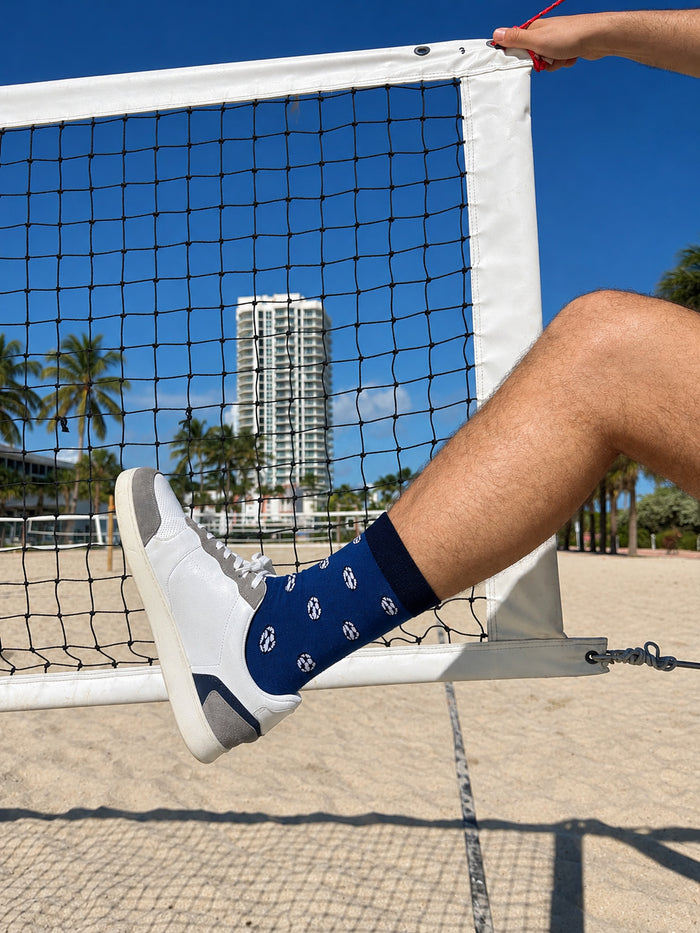
Navigating the terminology around oversized hosiery online can sometimes feel confusing, as literal apparel searches frequently overlap with pop-culture slang and seasonal trends.
Understanding these distinctions helps you find the exact products you need quickly.
For instance, people frequently search for big socks meaning or ask what does big feet big socks mean.
In everyday fashion and apparel, the phrase big feet big socks simply highlights the practical necessity of matching garment proportions to foot volume—avoiding the discomfort of undersized gear.
In casual internet humor, the phrase occasionally serves as a playful riff on old-school idioms linking shoe size to physical stature.
Additionally, search trends span diverse demographics and seasonal occasions:
- Everyday Athletic and Dress Gear: Queries for men’s big socks, mens big socks, and big socks mens point directly to daily performance, moisture-wicking athletic crews, and refined merino wool dress socks built for larger frames.
- Oversized Loungewear and Inclusive Sizing: Searches for big socks for women and big socks for girls typically refer to slouchy, ultra-cozy cabin socks, oversized loungewear styles, or inclusive extended-width footwear designed for women with wider feet or higher instep volume.
- Seasonal Gifting: During winter months, terms like big socks for christmas and christmas big socks spike as shoppers look for both oversized decorative fireplace stockings and practical, heavy-duty winter thermal socks for the taller men on their holiday gift lists.
- Extreme Sizing: When standard extended sizes still fall short, really big socks engineered for size 16 and above provide specialized multi-directional stretch and extra-deep heel pockets to ensure nobody is left squeezing into undersized gear.
Modern Material Science: Beyond Basic Cotton
While 100% cotton was once the default standard for men’s drawers, modern textile engineering has introduced vastly superior fiber blends that manage moisture, regulate temperature, and resist odor.
| Material Type | Core Performance Benefit | Best Use Case |
| Merino Wool | Naturally thermoregulating, antimicrobial, and wicks moisture away before it feels damp. | Office dress wear, winter boots, and multi-day travel. |
| Bamboo Viscose | Ultra-soft hand feel, hypoallergenic, and highly breathable for sensitive skin. | Daily casual wear and individuals prone to foot irritation. |
| Synthetic Performance Blends | Combines polyester, nylon, and spandex for rapid sweat evaporation and high abrasion resistance. | Running, gym training, basketball, and outdoor hiking. |
| Combed Ring-Spun Cotton | Removes short, rough fibers to create a smoother, stronger yarn that resists pilling. | Relaxed weekend wear and classic everyday sneakers. |
Choosing the right fiber blend is just as important as selecting the proper length. High-performance yarns keep feet dry, drastically reducing the risk of fungal issues and friction blisters.
Step-by-Step Guide: How to Audit and Upgrade Your Sock Drawer
Overhauling your daily footwear foundation takes minimal effort and pays immediate dividends in physical comfort:
-
- Measure Your True Foot Dimensions: Measure both foot length and ball-of-foot width at the end of the day when feet are naturally at their largest.
- Purge Stretched-Out Pairs: Discard any pairs where the heel cup sits under your arch, the toe fabric appears translucent when worn, or the cuff leaves deep grooves on your skin.
- Match Cushioning to Footwear: Pair lightweight, flat-knit merino styles with tailored dress shoes, and reserve thick, cushioned soles for roomy athletic trainers or work boots.
- Prioritize Anatomical Sizing: Select dedicated big and tall socks engineered specifically for your exact size bracket (such as 12–15 or 16+) rather than settling for broad “one-size” ranges.
- Rotate Your Inventory: Maintain at least 10 to 14 quality pairs in active rotation so elastic fibers have 24 hours to recover their shape between wears.
FAQ: Expert Insights on Big and Tall Hosiery
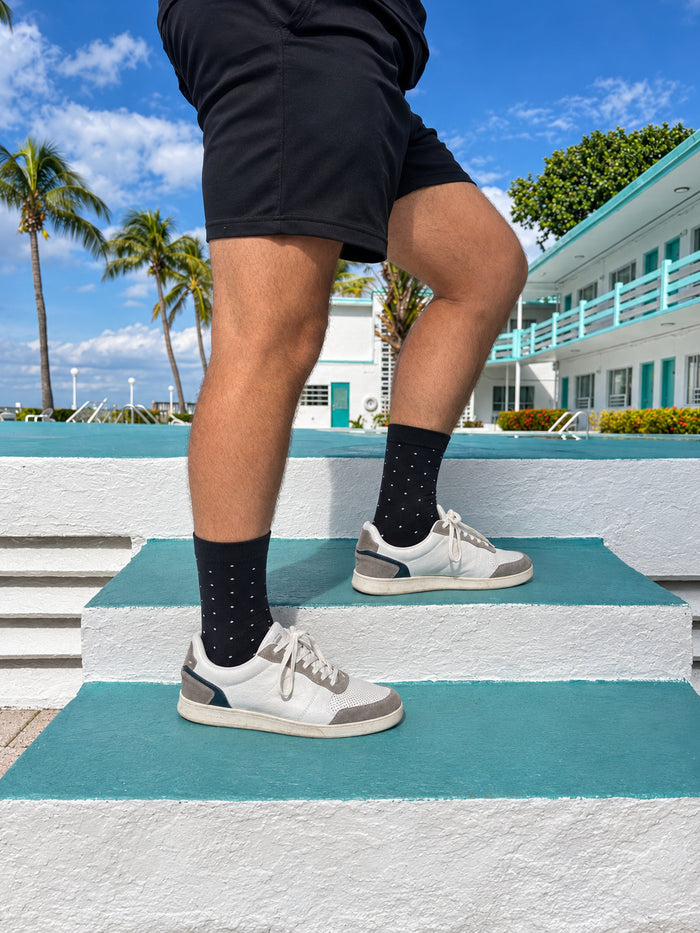
Q: Why do my socks constantly slide down into my shoes while walking?
A: Heel slippage occurs when the sock’s foot tube is too short for your foot length. As you walk, tension pulls the heel pocket forward under your arch, dragging the cuff down into your shoe. Switching to properly proportioned big socks for men solves this immediately.
Q: How should I wash oversized performance socks to prevent shrinking?
A: Wash your socks inside-out in cold or warm water using a gentle detergent, and avoid high-heat tumble drying. Air drying or using a low-heat setting preserves spandex elasticity and prevents natural fibers like merino wool from shrinking.
Q: Are non-binding socks safe for men with diabetes or poor circulation?
A: Yes. Non-binding tops combined with seamless toe closures are widely recommended by podiatrists because they stay up through even fabric distribution rather than tight elastic constriction, promoting healthy blood flow.
Q: What is the difference between “Big” and “Tall” in hosiery sizing?
A: “Big” sizing focuses on wider foot beds, deeper heel pockets, and expanded calf circumferences, while “Tall” sizing provides extended length in both the foot bed and the leg shaft so crew and over-the-calf styles hit at the proper height.
Q: How often should I replace my everyday socks?
A: With regular rotation, high-quality performance and merino socks typically last 12 to 18 months. Replace them as soon as you notice thinning underfoot cushioning, stretched-out cuffs, or persistent odor after washing.
Conclusion: Build Your Comfort From the Ground Up Today
Settling for tight cuffs, misaligned heels, and worn-out toes is a daily tax on your comfort and physical energy that no man should have to pay.
Your feet carry you through demanding workdays, intense workouts, and weekend adventures—giving them properly engineered support is one of the simplest, highest-return upgrades you can make to your wardrobe.
By understanding anatomical sizing, leveraging modern moisture-wicking materials, and choosing purpose-built big socks, you eliminate friction, support healthy circulation, and step into every day with genuine comfort.
Take control of your daily essentials, clear out undersized pairs that work against your anatomy, and experience the difference of true proportional fit.
Ready to upgrade your daily comfort? Audit your sock drawer, invest in purpose-built big and tall sizing, and feel the difference with every step today!