


If you’re looking for an activity that keeps your child active, builds their confidence, and teaches them valuable life skills, taekwondo might be exactly what you’ve been searching for.
Unlike many sports that focus purely on physical fitness, taekwondo offers a unique blend of mental discipline, self-awareness, and character development, all wrapped up in a fun, structured environment.
As a parent, choosing the right extracurricular activity can feel overwhelming. There are so many options, and you naturally want something that will benefit your child in the long run.
In this guide, we’ll walk through the key benefits of taekwondo for kids, what to expect when they start, and how to decide if it’s the right fit for your family.
What Is Taekwondo?
Taekwondo is a Korean martial art that emphasises kicking techniques, speed, and agility. It’s one of the most widely practised martial arts in the world and has been an Olympic sport since 2000.
But beyond the high kicks and coloured belts, taekwondo is built on five core tenets: courtesy, integrity, perseverance, self-control, and indomitable spirit.
For children, this means every class isn’t just about learning physical moves. It’s about developing a mindset that carries over into school, friendships, and everyday life.
How Does Taekwondo Benefit Your Child?
1. Builds Confidence and Self-Esteem
One of the most noticeable changes parents often report is a boost in their child’s confidence. Taekwondo uses a belt-grading system that gives kids clear goals to work toward. Each time they earn a new belt, they experience a genuine sense of achievement.
This step-by-step progression helps children realise that effort leads to results, a lesson that builds self-esteem far beyond the training hall.
2. Teaches Discipline and Focus
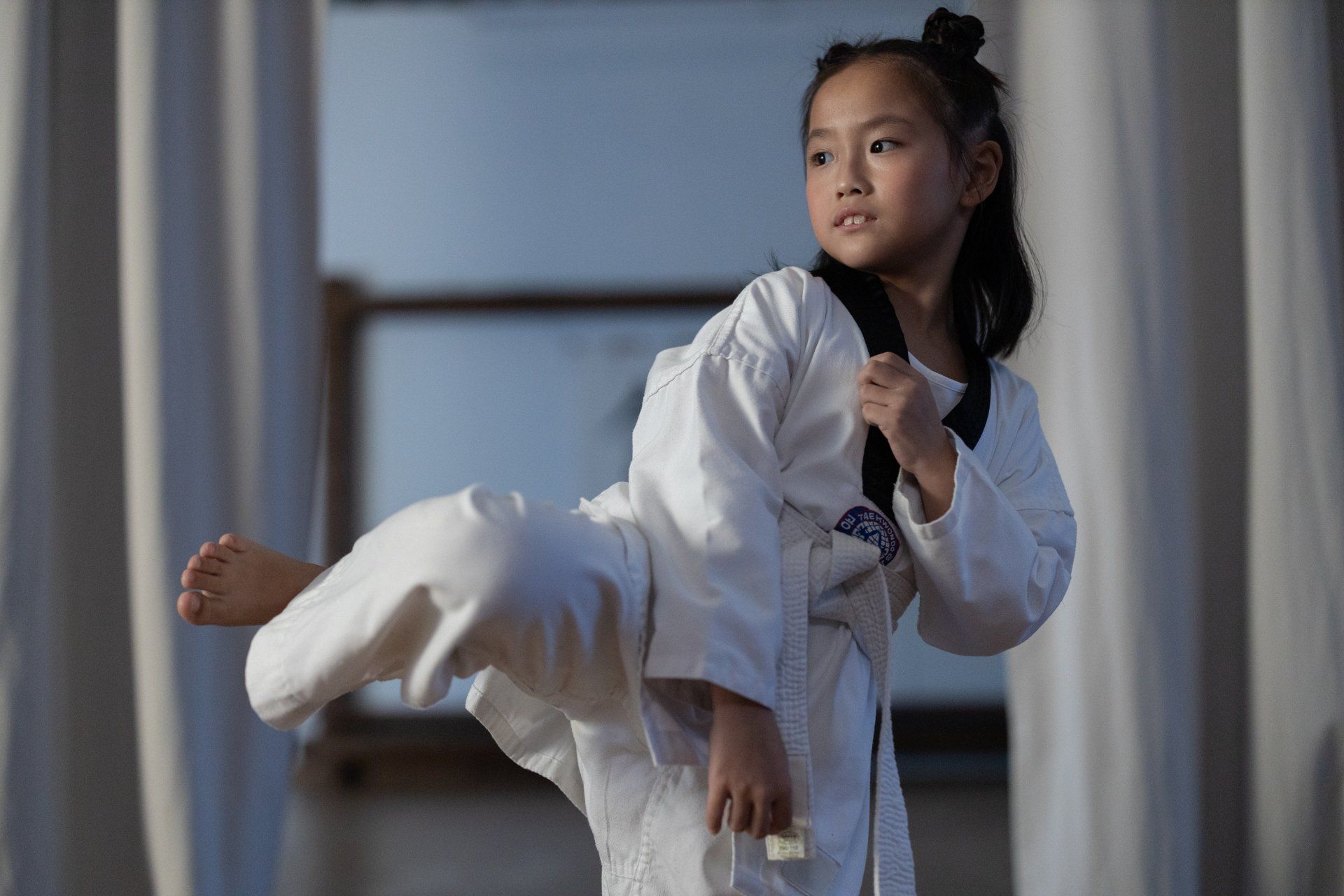
Alt text: Young girl performing a controlled taekwondo kick in a structured class setting
Taekwondo classes follow a structured format. Children learn to listen to their instructor, follow directions, and practise techniques with patience and repetition. Over time, this structure helps improve their attention span and ability to concentrate.
Many parents find that this improved focus carries over into the classroom, helping their child stay on task and manage their time more effectively.
3. Improves Physical Fitness and Coordination
Taekwondo is a full-body workout. Kids develop strength, flexibility, balance, and coordination through a combination of kicks, blocks, and movement drills. Unlike repetitive gym routines, the variety in taekwondo training keeps children engaged and motivated.
Regular practice can also support healthy growth and development, encouraging an active lifestyle from a young age.
4. Encourages Respect and Good Manners
Respect is woven into every aspect of taekwondo. Children bow to their instructor and training partners, address seniors politely, and learn to treat others the way they’d like to be treated.
These habits often extend to how they interact with family members, teachers, and peers.
5. Develops Resilience and Perseverance
Not every technique comes easily, and not every grading goes to plan. Taekwondo teaches children that setbacks are a normal part of learning. Instead of giving up when something feels difficult, they learn to keep trying, a quality that serves them well in all areas of life.
6. Provides a Positive Social Environment
Taekwondo classes bring together children of different ages and backgrounds. Training alongside others helps kids develop teamwork skills, make new friends, and feel part of a supportive community. For children who may be shy or find it hard to socialise, the structured setting can make it easier to connect with others.
What Age Can a Child Start Taekwondo?
Most taekwondo schools accept children from around three to four years old. At this age, classes tend to focus on basic movements, coordination games, and listening skills rather than complex techniques. As children grow, the training becomes progressively more challenging.
There’s no single “right” age to start. Some children take to it immediately, while others may need a little more time to settle in.
What Should You Look for in a Taekwondo School?
Alt text: Child sparring in a taekwondo class to strengthen discipline and focus skills
Choosing the right school can make a big difference in your child’s experience. Here are a few things worth considering:
- Instructor credentials – Look for qualified, certified instructors with experience teaching children.
- Curriculum structure – A good school will have a structured curriculum with clear progression from one belt to the next.
- Class atmosphere – Observe a class before signing up. Notice how the instructor interacts with the kids and whether the environment feels positive and encouraging.
- Class size – Smaller classes often mean more individual attention for your child.
- Practical factors – Consider whether the location, schedule, and fees work for your family’s routine.
Consider going for trial classes if the school offers one, so your child can see if it’s the right fit.
Is Taekwondo Safe for Children?
Safety is understandably a top concern for parents. Taekwondo is generally considered a low-risk activity for children when taught by qualified instructors in a properly supervised setting.
Classes for younger children typically focus on non-contact drills, and sparring, if introduced at all, is conducted with protective gear and strict rules.
As with any physical activity or sport, minor bumps and bruises can occur, but serious injuries are uncommon in a well-run programme. You should discuss this with the school to see what measures are in place.
Summary: A Sport That Shapes Character
Taekwondo offers children far more than just physical exercise. From building confidence and discipline to encouraging respect and resilience, the benefits extend well beyond the training mat. It’s an activity that can shape your child’s character while keeping them active and engaged.
If you’re considering taekwondo for your child, a trial class is a great place to start. You might be surprised at just how much they enjoy it, and how quickly you begin to notice the positive changes at home and at school!