


Main Points
- Miniature toys, such as those sold by mini toys, have an important part to play in childhood development.
- These toys promote creativity, storytelling, and problem-solving skills.
- Research has established the academic value of playing with toy models.
Simple Ways To Incorporate Miniature Toys Into Learning Activities
Mini toys have fascinated children’s imaginations for centuries. More than mere sources of fun, these tiny powerhouses are vital instruments in assisting a child’s development across multiple areas.
From stimulating creativity to strengthening learning skills, mini toys provide kids with a miniaturized world in which to experiment and learn.
Here, we examine the diverse ways in which miniature toys contribute to childhood development and how they can be leveraged by parents and teachers.
Enhancing Intellectual Capacity Using Miniature Toys
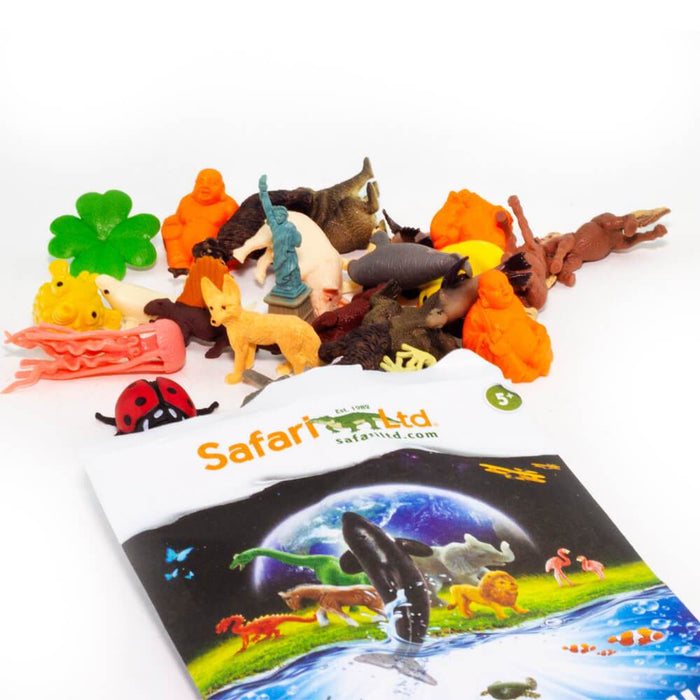
The mental advantages of playing with mini toys are considerable. The kids practice exercises in logic and reasoning by putting these objects into various scenarios and trying to resolve little problems.
For example, placing objects in a dollhouse not only exercises space awareness but also introduces them to the idea of size and proportion.
This tactile manipulation of objects enhances fine motor skills and hand-eye coordination.
A research on how imaginative play affects kids also draws attention to how kids exposed to frequent imaginative scenarios have better cognitive flexibility and creative thinking skills.
Imaginative Play: The Imagination Key
Imaginative play can’t be rivaled when it relates to childhood development. Miniatures are perfect as imaginative play tools because they provide a physical expression for kids’ unlimited worlds.
From creating an epic drama with plastic dinosaurs, having a tea party with doll miniatures, or a cosmopolitan city grid with model cars, kids are learning to communicate rich stories, developing linguistic and storytelling skills.
Such aids compel kids to move beyond their everyday lives and envision a different scenario outside everyday situations, stimulating creativity that is strongly impactful.
Micro Toys and Social Competencies
Beyond individual cognitive improvements, miniature toys also have a very strong impact in terms of developing social skills.
Playing in a group, children learn to develop interaction with other people by role-negotiating, conflict resolution, and cooperation towards shared goals.
For example, when multiple children play with a collection of miniature animals, they need to figure out with what animal is interacting with whom and develop a sense of problem-solving and cooperation.
These games help children visualize other people’s perspectives, a very integral part in developing sympathy. Playing with miniatures in groups is an excellent platform for instilling such essential values as cooperation and taking turns, laying down building blocks for strong social relationships.
Creating a Miniature World: Simple-To-Do Projects
One method that parents and teachers can use to enhance play in children is by constructing miniature worlds for them.
The building of structures, landscapes, or cities within which miniature toys roam is a way to allow children to pretend that they’re playing architect on their surroundings. Below is how to get started building these fantasy worlds:
Begin by rounding up materials such as shoeboxes, little cartons, and pieces of fabric that can double as buildings, roads, or landscapes.
Set aside a special play space, like a tabletop or a part of the floor, where the miniature world can live and develop over a period of time.
Invite children to share their thoughts and participate in building this world, stimulating creativity and ownership over their play environment.
Educational Value of Miniatures
There is also growing appreciation for learning benefits provided by miniatures. Used as components within play-based learning models, such toys become strong teaching tools.
In a study on learning through play, it has been described how children playing with miniatures have better memories, attention span, and academic achievement.
Miniatures have a relationship with actual experiences and abstract concepts such that learning difficult concepts may become easier to understand in interactive and enjoyable ways.
Instructors may utilize these toys to educate students on scientific principles, history, and mathematical concepts as part of education plans.