


Introduction
In the rapidly advancing landscape of modern manufacturing and logistics, the role of industrial cranes has never been more significant.
These machines, once simply tools for lifting and transporting heavy loads, are now at the core of innovation in many industries.
From the automation of processes to the integration of cutting-edge technologies such as IoT (Internet of Things), AI (Artificial Intelligence), and machine learning, cranes are evolving into sophisticated systems that drive operational efficiency, safety, and profitability.
This article explores how the evolution of industrial cranes is reshaping manufacturing, construction, and port operations. By focusing on the rise of automation and the integration of smart technologies, we will delve into how these innovations are optimizing crane functionality and transforming industries worldwide.
We’ll also take a closer look at the specific applications of cranes in these sectors, particularly those in high-demand fields like container handling, manufacturing, and infrastructure development.
The Evolution of Industrial Cranes: A Leap into Automation
Industrial cranes have undergone a remarkable transformation in the past few decades. No longer are they just mechanical devices designed to lift heavy loads; they are now integral components of highly automated systems.
Automation has been the key driver behind this evolution, and modern cranes are equipped with technologies such as automatic positioning systems, telemetry, and remote control capabilities that significantly enhance their precision and efficiency.
One of the most notable advancements in crane technology is the integration of laser-guided positioning systems and encoder-based systems, which enable cranes to position loads with millimeter-level accuracy.
This is crucial in environments where precision is paramount, such as in the handling of shipping containers at ports or automated warehouses.
Gantry cranes, for instance, which are commonly used in port operations, are now equipped with advanced automation features. These cranes can automatically pick up and place containers without the need for human intervention.
This automation not only speeds up the loading and unloading processes but also reduces human error, which can lead to costly damage or delays.
In addition to automation, many modern cranes are designed with energy efficiency in mind. Electric bridge cranes and gantry cranes are increasingly being deployed in manufacturing facilities, offering a more environmentally friendly alternative to traditional diesel-powered models. These electric-powered cranes provide higher operational efficiency, reduce carbon footprints, and lower long-term operating costs, making them a preferred choice in sustainable industries.
The continued adoption of automation in cranes is setting a new standard for industrial operations, paving the way for fully autonomous cranes that can operate independently, managing complex tasks such as load positioning, maintenance scheduling, and real-time data analytics.
Applications of Cranes in Key Industries
Cranes are indispensable in several industries, where their applications range from lifting and moving heavy materials to facilitating complex construction processes. The versatility of cranes, especially electric bridge cranes and gantry cranes, has made them critical to industries like manufacturing, construction, and logistics. Let’s take a closer look at how these cranes are applied across various sectors.
Manufacturing Industry
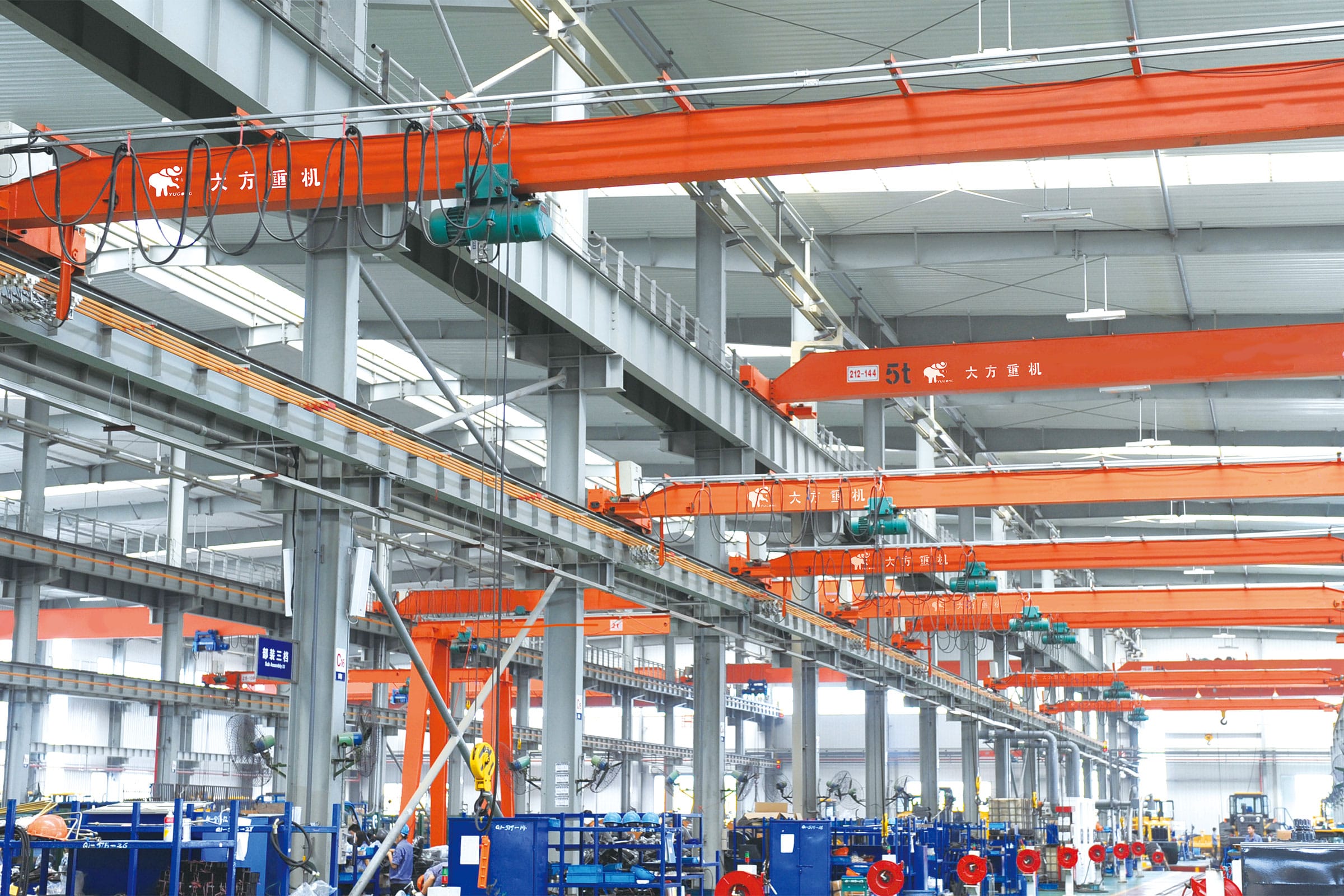
In the manufacturing sector, cranes are primarily used to move materials and components between different stages of production. Electric bridge cranes, in particular, are highly efficient in factory environments, where they are used to transport raw materials, finished products, and assembly components.
These cranes come equipped with powerful lifting hooks and other attachments such as lifting slings, grabs, and bucket lifts, which enable them to handle a wide variety of materials, from metal sheets to large, delicate machinery.
A significant trend in manufacturing is the increasing reliance on automated cranes, which are integrated into production lines to streamline operations.
Smart cranes with automatic positioning systems can place items at specific locations within the manufacturing process, minimizing the need for human operators and reducing the likelihood of errors. The automation also enables better resource management, ensuring that materials are moved efficiently and safely across production lines.
Construction and Infrastructure
In the construction sector, cranes are essential for tasks ranging from lifting structural components to moving construction materials in tight spaces. For example, gantry cranes are used for lifting heavy beams, precast concrete panels, and other large components, providing flexibility in confined construction sites where space is limited.
Another important application of cranes is in subway and metro construction. Gantry cranes for subway construction are specialized machines that help clear debris and maintain tunnel integrity, ensuring smooth operations in underground systems.
These cranes are designed with advanced safety features, including automatic load stabilization systems, which prevent accidents and improve the speed of construction.
The use of tower cranes may still dominate in high-rise building projects, but bridge cranes and gantry cranes are increasingly being used for large infrastructure projects due to their mobility and versatility. These cranes offer more flexibility in lifting and transporting oversized loads, particularly in areas with limited vertical clearance.
Port Operations
Ports are one of the most demanding environments for cranes, as they need to manage the continuous unloading and loading of massive shipping containers. Rail Mounted Container Gantry Cranes (RMGs) are a staple in container handling, offering remarkable efficiency in moving containers from ships to storage yards.
These cranes are equipped with automatic positioning systems that ensure precise container placement, helping ports optimize their storage and retrieval processes.
The rise of automation in port cranes has been particularly transformative. RMGs and automated stacking cranes (ASCs) are increasingly used in automated container terminals, where they work autonomously to move containers between ships and land-based storage systems.
These automated cranes are not only faster and more precise than manual operations but also reduce labor costs and improve safety by minimizing human exposure to heavy lifting operations.
Ports are embracing smart technology by integrating telemetry systems that provide real-time data on crane performance, load status, and potential maintenance needs.
By monitoring cranes remotely and implementing predictive maintenance systems, port operators can significantly reduce downtime, enhance operational efficiency, and extend the lifespan of their crane fleets.
The Future of Cranes: Automation and Smart Technologies
As the global economy continues to demand more efficiency, safety, and cost-effectiveness, the future of industrial cranes is inextricably linked to the ongoing advancements in automation and smart technologies.
The growing role of artificial intelligence (AI), the Internet of Things (IoT), and machine learning in industrial operations will make cranes smarter, safer, and more efficient.
In the coming years, rail mounted container gantry cranes (RMGs) are expected to play an even larger role in automated container handling at ports. These cranes will continue to evolve, incorporating more sophisticated AI-driven algorithms that can optimize load management and route planning in real-time.
This will improve throughput and minimize delays, ultimately increasing the efficiency of ports worldwide.
Smart cranes will also integrate more machine learning capabilities, allowing them to predict potential failures before they occur, reducing the risk of costly breakdowns.
Predictive maintenance tools will use data gathered from sensors on cranes to assess wear and tear, ensuring that operators can address issues before they lead to costly repairs or operational downtime.
Additionally, the trend towards energy-efficient cranes will continue, with more cranes transitioning to electric-powered and hybrid models to meet environmental sustainability goals.
Cranes equipped with solar panels and other renewable energy solutions will likely become more common, particularly in industries focused on green energy and sustainability.
Conclusion
As industries evolve, so too does the role of cranes. From traditional manual operations to sophisticated automated systems, cranes are transforming industries by enabling more efficient, precise, and safe handling of heavy loads.
The integration of automatic positioning systems, smart sensors, and AI-powered technologies has elevated cranes to the status of indispensable tools that streamline operations in manufacturing, construction, and logistics.
Looking ahead, the future of cranes is undoubtedly shaped by automation. With the continued adoption of smart technology, cranes will become even more autonomous, reducing the need for manual intervention and increasing the efficiency of critical industrial operations.
For businesses aiming to remain competitive in a rapidly changing market, investing in modern cranes and automation systems is essential.