


Key Takeaways
- Landlords are legally required to ensure rental properties remain safe and habitable at all times.
- Tenants can pursue legal action if they suffer harm and their landlord fails to correct known dangers.
- Documenting hazardous conditions and officially notifying your property manager or landlord are crucial first steps before litigation.
Living in an apartment complex typically comes with certain expectations about safety, maintenance, and the general quality of life.
Unfortunately, not all landlords or property managers uphold their legal and ethical obligations, leaving tenants to face unsafe or unhealthy environments.
If you find yourself struggling with dangerous living conditions and the property owner refuses to act, you may have legal recourse. Proactively understanding your options and working with qualified professionals, such as Gardner Trial Attorneys, can help protect your rights and well-being.
The law recognizes that tenants should not be forced to endure unsafe living situations. Landlords are held to certain standards and can be held responsible when their negligence puts their residents at risk. Knowing what constitutes unsafe conditions, the process for addressing these concerns, and the potential compensation available can help you make informed decisions.
Before considering legal action, it is essential to understand the procedures and steps involved. Filing a lawsuit is a significant decision that should generally be a last resort after all attempts to resolve issues directly with your landlord have failed.
Across the United States, tenant advocacy groups and legal authorities provide resources and guidance to ensure renters are aware of their options when conditions are unsafe. Taking the appropriate actions can not only safeguard your own interests but also improve overall standards within your community.
Landlord Responsibilities and Tenant Rights
Landlords have a fundamental duty to ensure that the premises are free from unreasonable dangers, comply with all building codes, and meet public health standards. This includes maintaining the property’s structural safety, making timely repairs, and addressing environmental hazards such as mold, lead paint, and pest infestations.
Failure by a landlord to make necessary repairs or to provide adequate security can result in both financial and legal consequences.
Tenants have the right to a safe environment under implied warranty of habitability laws in most states. These laws obligate property owners to provide basic services and security measures; otherwise, tenants may have grounds for complaint, withholding rent in some states, or legal action.
Common Unsafe Conditions in Apartment Complexes
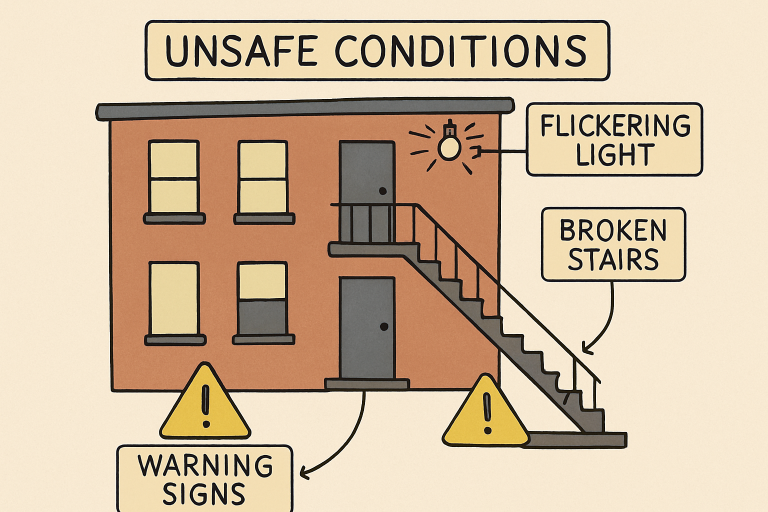
Unsafe conditions can take many forms and are not always immediately apparent. Some of the most regularly cited hazards include:
- Broken stairs, faulty elevators, damaged flooring, or other structural issues pose trip-and-fall risks.
- Insufficient security measures, such as broken locks, malfunctioning gates, or inadequate outdoor lighting, make it easy for unauthorized individuals to gain access.
- Environmental and health hazards, including persistent mold growth, water damage, exposed asbestos, pest infestations, and hazardous chemicals.
A notable example occurred when tenants at St. Clair Place in Cleveland reported ongoing security failures resulting from a broken door frame. This allows unauthorized individuals to repeatedly enter the building, contributing to an unsafe environment for lawful residents. High-profile cases like this emphasize the real-world impacts of neglect and the need for tenants to have enforceable legal remedies.
Steps to Take Before Filing a Lawsuit
Initiating a lawsuit should be done only after following the key steps to properly document the issues and give your landlord an opportunity to address them. These steps include:
- Document the Unsafe Conditions: Use photographs, written notes, and witness testimonies to record any hazards. Save all correspondence and incident reports related to the unsafe conditions.
- Notify the Landlord in Writing: Send a formal notification describing the dangers and requesting necessary repairs. Always keep copies of written communication for your records.
- Request an Inspection: Contact your city or county’s housing department, or health or building inspectors, and request an official inspection. A formal report from public officials can provide powerful evidence in legal proceedings.
Taking these precautions not only helps to resolve issues quickly but also establishes a timeline that can strengthen your case if legal action becomes necessary.
Legal Grounds for Suing an Apartment Complex
If your landlord fails to respond after proper notification and your living environment remains unsafe, you may be entitled to pursue a claim under premises liability law.
This area of law holds property owners accountable for injuries or damages resulting from their negligence. Successful claims usually require proof that the landlord was aware, or should have been aware, of the danger and failed to make timely repairs or install appropriate safety features.
Potential Compensation for Tenants
If you are able to show that your injuries or damages stemmed directly from unsafe or unaddressed conditions, courts may award compensation. Remedies may include:
- All medical bills related to an accident or exposure resulting from property hazards.
- Lost income if your injury required you to miss work.
- Compensation for pain, suffering, and any lasting physical or psychological impact caused by the hazardous environment.
Consulting with a Legal Professional
Premises liability and tenant rights laws can be complex and vary significantly by state. Working with an experienced attorney is vital.
Legal professionals can help you gather crucial evidence, file claims with the appropriate documentation, and negotiate with landlords or their insurance representatives.
Choosing a reputable firm experienced in premises liability increases your chances of a favorable outcome and fair compensation.
Conclusion
No tenant should have to live in fear or endure harm due to negligent property management.
Knowing your rights, taking methodical steps to document unsafe conditions, and seeking support from professionals can empower you to resolve difficult situations or pursue justice when necessary. By holding landlords accountable, you help ensure that your community maintains safe, habitable apartments for all residents.


