


Contrary to many people’s belief, the shamrock is not the official symbol of Ireland; it is the Celtic harp which appears from the Euro coin to the government official papers. Those who are aware of Irish tradition don’t find it surprising that their national symbol is a musical instrument rather than anything else in the world. It is because Irish people and culture are deep-rooted in music, and they have walked the parallel routes together.
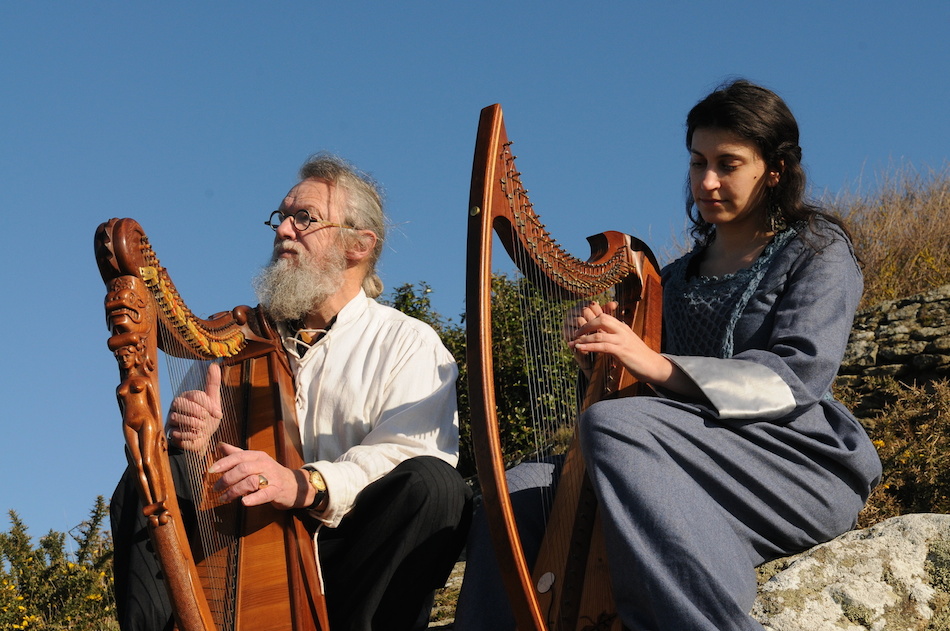
The Celtic harp, once rare and close to extinction, has gradually regained its place in modern times as a traditional instrument associated with royalty in Scotland and Ireland.
Today, many people search for a Celtic harp for sale online to own a piece of this rare and historically rich instrument. In this article, we will explore the roots and evolution of the Celtic harp and how it is viewed and preserved in the present time.
Early Origin
The earliest origin of the Celtic harp goes back to the early Medieval Europe, somewhere between the 8th to 10th centuries, and got its name because it was treated with prominence in the Celtic societies.
The harp also appeared and found its mention in the mythology of Ireland and Scotland, as well as folklore and royal courts. Irish people treated harpists with respect as they possessed the power to evoke emotions through playing harp from sorrow to happiness.
It became an important cultural identity of Ireland and was often associated with the divine figures.
The Medieval Period

The Celtic harp became an inseparable part of the Gaelic aristocratic life during the medieval period and was known as the cláirseach in both Ireland and Scotland.
The earliest known harps were made by carving a single piece of wood and were attached with metal wires, often made of bronze and brass.
Harpists of this era went through rigorous training to play harp, as it involved complex playing techniques and needed intricate finger techniques.
Decline
The Celtic harp witnessed its decline during the 17th century, and it happened because of the political and social disturbance in Ireland and Scotland as the Gaelic aristocracy collapsed.
It was a time when English colonization was supressed on these two countries, leading to the loss of the culture of the Celtic harp. By the 18th century, the ancient wire harp got extinct, with only a few traditional players living.
Revival
After living in oblivion for almost 2 centuries, the Celtic harp made its revival in the 19th century as many musicians found a new interest in the Celtic culture and heritage.
Musicians put a lot of efforts in preserving and reviving the traditional music of Ireland, and the harp was one of them.
However, this revival came with certain replacements and enhancements like gut-strung harps, which replaced the wire strings, making the instrument easier to play.
It was a time when the Celtic harp became the national symbol of Ireland and started to appear on coins, emblems, official papers, and flags, asserting its cultural importance.
Modern Development
During the 20th and 21st centuries, the Celtic harp went through a major revival phase, and the instrument makers started to recreate the design by merging modern innovation and advancements like levers.
The harps raised to popularity not only in Celtic regions but other parts of the world and became an important part of the classical, folk, and even fusion music genres. Musicians from different parts of the world started to include the harp in their performances for its soothing tones.
The Celtic harp today has found its fame and popularity and is being treated as a historical treasure.
Even as we speak now, it is going through evolution, and new generation musicians are trying to preserve its playing technique while enhancing it to increase its playability.