Labubu Origin Linked to El Bo3bo3 or Boogeyman in Arabic
In the vibrant, ever-evolving landscape of global pop culture, certain characters transcend their initial niche and capture widespread fascination. One such phenomenon is Labubu, the mischievous, often adorable, monster-like figure created by artist Kasing Lung.
From limited-edition designer toys like the Labubu doll and collectible Labubu keychain to high-profile collaborations such as Coca Cola Labubu and even high-fashion associations like Labubu Hermes, Labubu has carved out a significant space in the hearts of collectors and casual enthusiasts alike.
The ubiquitous presence of Labubu Popmart items, including the charming Labubu Macaron series, speaks volumes about its current popularity. Yet, beneath this seemingly whimsical exterior, a compelling and somewhat darker theory about Labubu’s origin persists, suggesting a curious link to the boogeyman of Arabic folklore, specifically the infamous El Bo3bo3.
This connection, though perhaps surprising to many Western audiences, offers a fascinating exploration into the cultural threads that can subtly weave into global phenomena.
The Rise of Labubu: A Pop Culture Phenomenon

Before delving into its alleged origin, it’s crucial to understand Labubu’s meteoric rise. Kasing Lung’s creation burst onto the scene with its signature mischievous grin, pointed ears, and sometimes fanged teeth, instantly endearing itself to collectors of designer toys and art figures.
Unlike overtly cute characters, Labubu carries an edge, a playful naughtiness that sets it apart. This duality – charming yet slightly impish – is a key element of its appeal.
The collaboration with Popmart, a leading global art toy company, propelled Labubu into the mainstream. Through blind box releases and limited editions, Labubu Popmart figures became highly sought after, creating a fervent collecting community.
The variety of poses, costumes (like different Labubu clothes series), and themes, from the iconic “Have a Seat Labubu” series to themed collections, kept collectors eagerly anticipating new drops. The accessibility provided by Popmart meant that fans could easily find Labubu near me in major cities, further boosting its popularity.
This strategic collaboration amplified Labubu’s reach, transforming it from a niche art toy into a global pop culture icon, with its current Labubu price often reflecting its high demand and limited availability.
Even now, the prospect of a new Labubu original release causes a stir among collectors.
The Boogeyman in Folklore: A Universal Concept
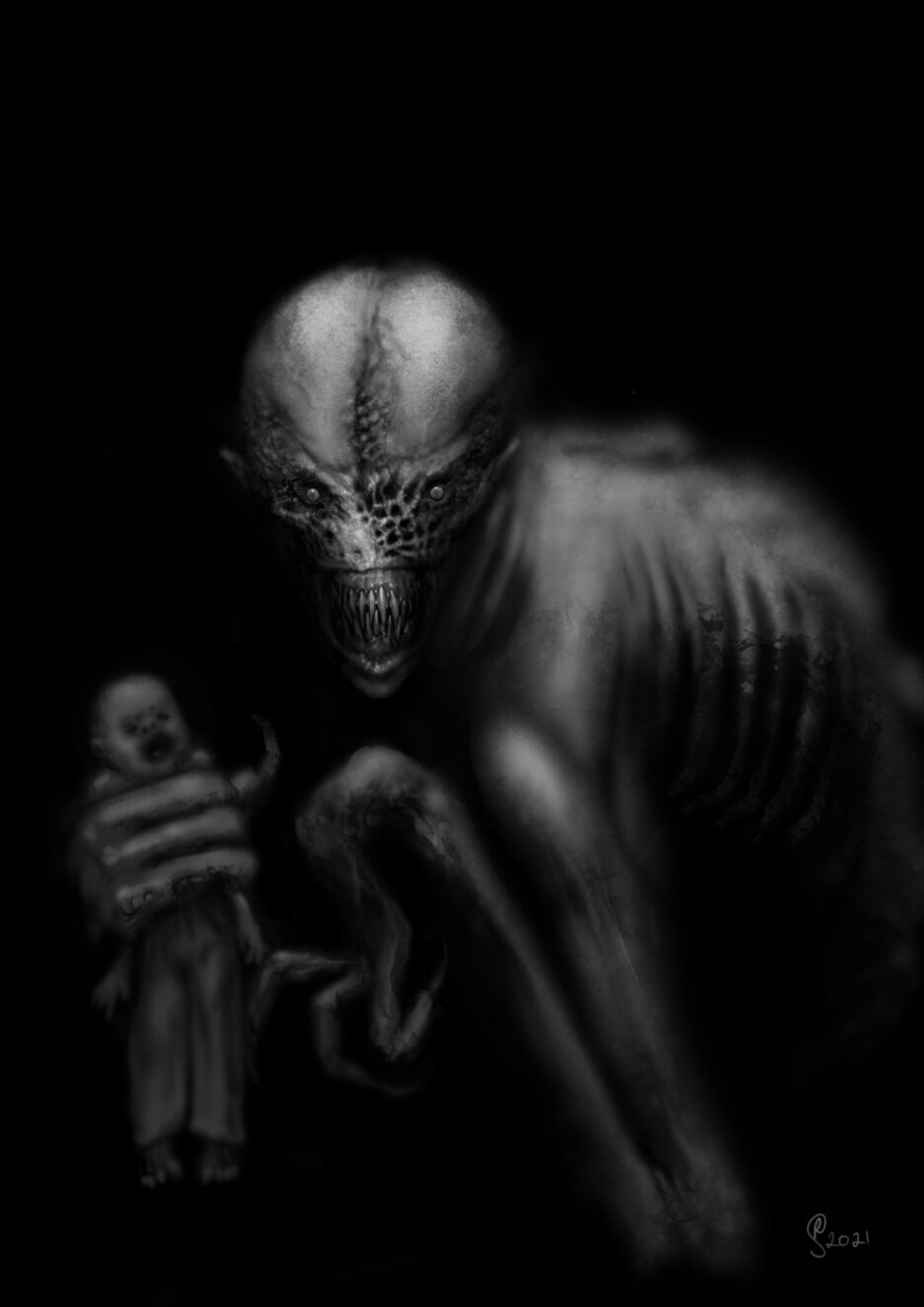
The concept of a boogeyman is almost universal, existing in countless cultures across the globe. It’s a shapeless, often unseen monster or mythical creature used primarily to frighten disobedient children into good behavior.
From the “Bogeyman” in English-speaking countries to “Der Schwarze Mann” in Germany or “Le Croque-mitaine” in France, these figures serve as cautionary tales, embodying the fears of the unknown and the consequences of misbehavior.
While their forms and specific characteristics vary, their fundamental purpose remains consistent: a deterrent woven into the fabric of childhood lore.
In Arabic culture, the boogeyman concept manifests in various forms, often localised and with distinct regional names. However, one of the most widely recognized and feared figures, especially in the Levant and parts of North Africa, is El Bo3bo3 (البُعْبُع).
El Bo3bo3: The Arabic Boogeyman
El Bo3bo3 (pronounced roughly “el boo-uh-boo-uh” or “el bo’bo'”) is a classic Arabic folkloric monster, a quintessential boogeyman used to instill discipline in children. The specific characteristics of El Bo3bo3 are often vague, allowing the imagination to fill in the terrifying details.
This ambiguity is precisely what makes such figures so effective – the fear of the unknown is often more potent than the fear of a clearly defined threat.
Common descriptions or threats associated with El Bo3bo3 include:
- He will take you away: A primary threat used to prevent children from wandering off or misbehaving.
- He lives in dark places: Often associated with closets, under beds, or deserted areas.
- He makes strange noises: Adding to the mystery and fear.
- He is shapeless or takes on various forms: This adaptability makes him more menacing as he can be anything the child fears most.
The literal meaning in Arabic of bo3bo3 itself is fascinating. While not a direct, formal word in classical Arabic with a single root tied explicitly to “monster,” the term bo3bo3 is an onomatopoeic word, often described as representing a “ghostly sound” or a “sound intended to frighten.”
It mimics a low, guttural, or haunting noise. This onomatopoeic quality makes it intrinsically linked to fear and the unsettling presence of something unseen and threatening.
Therefore, when people in Arabic-speaking regions use bo3bo3, they instinctively associate it with a frightful, amorphous entity. It’s a colloquial term that has deeply embedded itself in childhood lore, embodying the chilling essence of the boogeyman.
The Alleged Link: Labubu and El Bo3bo3
The theory linking Labubu to El Bo3bo3 is not universally acknowledged or explicitly stated by Kasing Lung, the artist.
However, it gains traction among certain communities, particularly those with a familiarity with Arabic folklore and a keen eye for character design. The connection is often drawn from several conceptual and phonetic similarities:
Phonetic Resemblance
The most obvious link is the phonetic similarity between “Labubu” and “Bo3bo3.”
While “Labubu” sounds softer and more playful, the repetition of the “b” sound and the vowel structure bears a subtle echo of the Arabic term. This isn’t a direct transliteration, but a suggestive parallel.
The literal meaning in Arabic of Labubu itself isn’t a known Arabic word, which further fuels the speculation that it might be a playful adaptation or homage to an existing phonetic construct.
Monster/Mischievous Nature
Both Labubu and El Bo3bo3 are essentially monster figures. While Labubu is portrayed as mischievous and sometimes naughty rather than purely terrifying, this “naughtiness” can be seen as a diluted, softened version of the boogeyman’s role.
The pointed ears and fanged teeth of the Labubu doll lean into a slightly monstrous, yet endearing, aesthetic. This duality aligns with the idea of a creature that can be both feared and, in a strange way, understood.
Vagueness and Adaptability
Just as El Bo3bo3 is often shapeless and takes on forms determined by a child’s fear, Labubu’s design is highly adaptable.

It’s constantly seen in different costumes, settings, and collaborations (e.g., Stitch Labubu, Coca Cola Labubu). This chameleon-like quality could be interpreted as a modern, playful take on the amorphous nature of the traditional boogeyman.
The “Have a Seat Labubu” series, which often portrays Labubu in mundane or endearing scenarios, perhaps domesticates the monster, making it less threatening and more relatable.

Cultural Exchange
In an increasingly globalized world, elements of folklore and language often cross borders and inspire artists. It’s not uncommon for creators to draw subtle inspiration from diverse cultural backgrounds, perhaps unconsciously or as a hidden nod.
While specific confirmation is lacking, the theory resonates with individuals familiar with the Arabic boogeyman concept.
Why Does This Link Matter? The Power of Origin Stories

Even if the connection remains speculative, the idea of Labubu having an origin rooted in a traditional boogeyman adds a fascinating layer of depth to the character.
Enriching Narrative
It provides a rich, albeit unconfirmed, backstory that elevates Labubu beyond just a cute toy. It hints at a deeper, more primal connection to universal childhood fears and the figures used to process them.
Cultural Bridge
For audiences familiar with Arabic folklore, this theory creates an immediate point of connection and recognition, fostering a sense of shared cultural heritage within a global pop culture phenomenon.
It highlights how ancient tales can be reimagined and repackaged for contemporary audiences.
Mystery and Allure
The ambiguity surrounding Labubu’s exact origin and its potential link to a darker, folkloric past adds an element of mystery and intrigue, fueling discussions and keeping the character relevant in the public imagination. It makes collectors ask, “What is the Labubu original meaning truly?”
The “Monster” Archetype
It plays into the universal appeal of the “cute monster” archetype, where traditionally scary figures are softened and made adorable.
This transformation from a figure of fear (like El Bo3bo3) to a figure of affection (like Labubu) is a powerful narrative in itself.
Labubu’s Global Footprint and Accessibility

Regardless of its origin story, Labubu’s current status is undeniable. The pervasive marketing and distribution through Popmart have made Labubu accessible to a global audience.
Whether you’re searching for “Labubu near me” in a bustling mall or Browse online, the brand’s reach is impressive.
The constant release of new series, variations in Labubu clothes, and the highly coveted Labubu Macaron sets ensure continuous engagement from its fanbase.
High-profile collaborations further cement its status. The Coca Cola Labubu figures, for instance, blend the iconic beverage brand with the mischievous monster, creating collectibles that appeal to both brand loyalists and toy enthusiasts.
The whispers of Labubu Hermes collaborations, though often limited and exclusive, underscore its ascendancy into the realm of luxury collectible art, much like how KAWS figures have bridged the gap between street art and high fashion.
This ability to integrate with diverse brands, from everyday consumables to luxury goods, speaks volumes about Labubu’s versatility and broad appeal.
For non-Arabic speakers, the concept of Labubu in Spanish or other languages doesn’t carry the direct phonetic or folkloric resonance, but the character’s visual appeal and playful personality transcend linguistic barriers.
Its expressiveness and unique aesthetic are universally understood and appreciated, solidifying its place as a truly global character.
FAQs About Labubu and its Origin

Q1: What is the official origin of Labubu?
A: Labubu was created by Hong Kong-based artist Kasing Lung. He is known for creating the “Monsters” series, of which Labubu is a prominent character.
Kasing Lung often draws inspiration from various sources, but a direct, explicit link to El Bo3bo3 or the Arabic boogeyman has not been officially confirmed by the artist himself.
Q2: What does “Bo3bo3” mean in Arabic?
A: Bo3bo3 (البُعْبُع) is a colloquial Arabic term, particularly in the Levant, referring to a boogeyman or a scary, often shapeless monster used to frighten children.
It is often described as an onomatopoeic word mimicking a frightening sound rather than having a specific literal dictionary meaning tied to a concrete object.
Q3: Is Labubu a good or bad character?
A: Labubu is generally portrayed as a mischievous, naughty, and sometimes cheeky character, but not inherently evil or bad. Its charm comes from this playful naughtiness, which contrasts with its somewhat monstrous features, making it endearing to fans.
Q4: Where can I find Labubu products?
A: Labubu products, especially Labubu Popmart figures (including the popular Labubu Macaron and “Have a Seat Labubu” series), are primarily available through Popmart official stores, their online platforms, and authorized retailers.
You can often search “Labubu near me” to find local stores or check their official website for online purchases.
Limited edition items and collaborations (like Coca Cola Labubu or potentially Labubu Hermes concepts) might be harder to find and command a higher Labubu price.
Q5: What are some popular Labubu collaborations?
A: Labubu has seen numerous popular collaborations, primarily through Popmart, often featuring different themes, costumes (Labubu clothes), and crossovers with other popular characters.
Notable examples include the Stitch Labubu series (with Disney’s Stitch) and the Coca Cola Labubu collection.
Q6: What is a “blind box” and how does it relate to Labubu?
A: A blind box is a type of packaging that hides the specific collectible toy inside. Customers buy the box without knowing which figure they will get from a series. This adds an element of surprise and encourages collecting the entire set.
Labubu Popmart figures are frequently sold in blind boxes, driving their popularity and collectible value.
Conclusion
The journey of Labubu from an artist’s creation to a global pop culture phenomenon is a testament to its unique appeal.
While the theory linking its origin to El Bo3bo3, the Arabic boogeyman, remains a fascinating, unconfirmed whisper, it undoubtedly adds a layer of depth and intrigue to the character.
This potential connection highlights how ancient folklore can find new life and resonance in modern contexts, even transforming a figure of fear into an adorable, collectible monster.
Whether you see Labubu as a cute toy, a valuable collectible, or a curious echo of an old tale, its pervasive presence through the Labubu doll, Labubu keychain, Labubu Popmart collections, and collaborations like Stitch Labubu and Coca Cola Labubu confirms its firm footing in the hearts of millions.
Labubu’s charm is universal, proving that even a little mischief, perhaps inherited from a fearsome ancestor, can be utterly endearing.