


Key Takeaways
- Amritsari Kulcha is a cherished Punjabi flatbread renowned for its texture and savory fillings.
- The dish is at the center of preservation efforts, including efforts to obtain a Geographical Indication (GI) tag.
- Adaptations and global popularity have introduced new interpretations while celebrating its roots.
- With traditional techniques, home cooks can successfully recreate authentic flavors in today’s kitchens.
Introduction to Amritsari Kulcha
Few dishes evoke the spirit of North Indian culinary artistry quite like Amritsari Kulcha. This iconic flatbread traces its ancestry to the bustling streets of Amritsar, captivating food lovers for generations with its crispy layers and sumptuous fillings.
Traditionally, the dough is enriched with yogurt and leavened gently, resulting in a bread that is both soft and flaky.
The stuffing, typically a blend of potatoes, paneer, or seasonal vegetables, is jazzed up with an assortment of spices that symbolize the essence of Punjabi cuisine.
What sets this dish apart is its preparation method. Kulchas are often cooked in a blazing-hot tandoor, imparting a unique smokiness and a crunchy bite. At Mughal Mahal, you can experience the origins of this recipe with their Authentic Amritsari Kulcha, paying homage to tradition while welcoming modern foodies.
The versatility of Mughal Mahal Amritsari Kulcha means it comfortably graces family breakfasts, festive gatherings, and even street food stalls in cities far beyond Amritsar.
While many cuisines around the world feature stuffed breads, none offer quite the same interplay of flavor, texture, and heritage. Its enduring popularity is a testament to the simple brilliance of freshly kneaded dough, vibrant fillings, and time-honored preparation.
As the dish finds its way into trendy restaurants and home kitchens worldwide, the importance of preserving its authenticity cannot be overstated. This reverence for heritage is part of a larger movement to safeguard regional specialties across India, ensuring that cultural treasures like Amritsari Kulcha are passed to future generations.
Resourceful food lovers and culinary historians alike recognize the significance of these efforts, often raising awareness about the value of GI tags and the story behind iconic dishes. For a broader context on how cuisine shapes local culture, visit Itihaas’s feature on Amritsari Kulcha.
The Quest for Geographical Indication (GI) Tag
A remarkable dish deserves ironclad protection. Recognizing the cultural and economic importance of Amritsari Kulcha, Punjab’s Food Processing Department has launched initiatives to secure a Geographical Indication (GI) tag. This designation, already familiar in protecting products like Darjeeling tea and Champagne, identifies goods with a specific geographical origin and qualities or a reputation unique to that location.
Earning a GI tag would mean that only kulchas made in Amritsar using traditional recipes and techniques could be called Amritsari Kulcha. This not only preserves the region’s heritage but also curbs mass-produced imitations that may compromise authenticity.
According to culinary experts, such protections help maintain high-quality standards while supporting local livelihoods. They also play a vital role in promoting food-based tourism, giving travelers a tangible reason to flock to the city where the original flavors remain untouched by trends or shortcuts.
For a deeper understanding of GI tags and their impact on cultural cuisine, consider reading about their history on The Times of India.
Global Recognition and Adaptations
In recent years, social media and food enthusiasts have played a significant role in amplifying Amritsari Kulcha’s global reach. Across borders, its presence has evolved from niche Indian restaurants to innovative street food stalls. A memorable story emerged from Shenzhen, where a Chinese street vendor’s rendition of this bread was shared across platforms, charming viewers with the vendor’s meticulous approach and respect for Indian flavors. The video not only celebrated the spread of Indian cuisine but also highlighted the desire for authenticity amid culinary fusion.
From Canada to Australia, modern takes on the kulcha can now be found in fusion eateries and bakeries. While some chefs innovate by adding international twists or upscale ingredients, the core techniques remain true to tradition, attesting to the universality of delicious, time-tested recipes that speak to all palates. Recipes, stories, and reviews continue to appear on platforms such as NDTV Food, serving as guides for aficionados and first-time tasters alike.
Recreating Amritsari Kulcha in Modern Kitchens
Despite its regal past and street-side roots, making Amritsari Kulcha at home is an achievable culinary adventure. The keys to authenticity are patience, the right ingredients, and a bit of attention to detail. Here’s how you can bring this Punjab specialty to your own table:
- Make the Dough: In a mixing bowl, combine refined flour (maida), plain yogurt, a pinch of sugar, salt, and a rising agent like baking powder or baking soda. Knead gently until you have a soft, pliable dough, then let it rest for several hours to develop the proper elasticity.
- Prepare the Filling: Boil and mash the potatoes, then mix with finely chopped onions, green chilies, cilantro, and spices such as cumin, garam masala, and red chili powder. Paneer or mixed vegetables can be added for variety.
- Fill and Shape: Divide the dough into equal portions, roll one out, place the filling in the center, fold the edges over, and flatten gently with your hands or a rolling pin.
- Cook: Traditionalists prefer a tandoor, but a preheated oven or hot skillet works well, too. Grill each kulcha until golden brown on both sides, brushing liberally with butter or ghee for signature flavor and warmth.
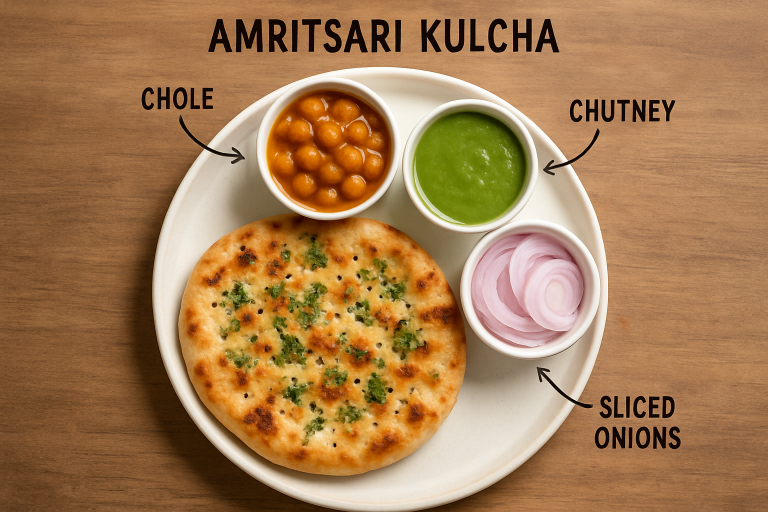
Serving is equally essential, as accompaniments such as chole (chickpea curry), pickled onions, and tangy tamarind chutney elevate the overall experience. These side dishes accentuate the kulcha’s spiced stuffing and flaky bite, securing its spot as a celebrated centerpiece in any meal.
Pairing and Serving Suggestions
For a truly immersive meal, complement Amritsari Kulcha with classic pairings:
- Chole (Chickpea Curry): This spicy, tangy curry is the most famous partner, its rich flavors balancing the kulcha’s buttery layers.
- Tamarind or Mint Chutney: These condiments offer a sweet, sour, or cooling touch to each bite.
- Pickled Onions or Salad: The crunch and acidity cleanse the palate and add bright flavors.
Enthusiasts may also experiment with yogurt-based dips or fresh raita to further customize their tasting experience. Whether served in bustling eateries or at home, this culinary tradition offers comfort and delight with every mouthful.
Preserving Culinary Heritage
Efforts to protect Amritsari Kulcha go beyond the table. Securing a GI tag is about sustaining artisans’ livelihoods, preserving centuries-old techniques, and upholding a sense of identity for communities that have nurtured and passed down the recipe.
In a rapidly evolving culinary world, such preservation serves as a bridge between history and new generations of food lovers. It stands as an invitation: taste, experience, and continue the legacy of Punjab’s rich culinary heritage.
Conclusion
Amritsari Kulcha is more than bread. It is a celebration of Punjabi excellence and resilience, rich in flavor and history. Its journey from a local favorite to a global icon mirrors how food can break boundaries and foster connections.
By learning about its roots, supporting the ongoing battle for authenticity, and bringing it to life in modern kitchens, we ensure that this beloved dish remains a vibrant part of our shared cultural tapestry.