


Key Takeaways
- A Closing Disclosure presents the final loan terms, projected payments, and closing charges for a mortgage transaction.
- Review it beside your earlier Loan Estimate, not as a stand-alone document.
- Pay close attention to lender fees, title and settlement charges, prepaid items, credits, and cash to close.
- Ask for explanations or corrections before signing if a number, name, or charge is unclear.
Buying a home involves a large amount of paperwork, but the Closing Disclosure deserves especially close attention. This five-page form brings together the near-final terms of your mortgage, the money due at closing, and many of the charges connected to the transaction. It can also show a charge for lender’s title insurance, which generally protects the lender’s interest in the property rather than the buyer’s ownership interest.
Do not treat the form as paperwork to scan while rushing toward the keys. A change in prepaid insurance, a missing seller credit, or a revised fee can alter the amount you need to bring to closing. Reviewing the disclosure early gives you time to understand the final numbers and resolve questions with the lender or settlement agent.
Why The Closing Disclosure Deserves Careful Review
The Closing Disclosure turns many of the estimates from the loan process into figures that are much closer to final. It helps you verify the loan amount, interest rate, monthly payment, and closing costs before you become responsible for the mortgage.
For example, a small increase in prepaid property taxes or the initial escrow deposit may not mean the loan terms changed, but it can still increase your cash-to-close amount. The document also separates costs tied directly to the mortgage from other expenses connected to transferring and recording the property.
What A Closing Disclosure Includes
The first page provides a high-level snapshot, including the borrower and property information, loan amount, interest rate, loan term, projected payment, closing costs, and cash to close. Later pages provide the details behind those totals.
- Loan terms: The amount borrowed, interest rate, loan term, and whether features such as a prepayment penalty or balloon payment apply.
- Projected payments: Principal and interest, mortgage insurance when applicable, estimated escrow payments, and the total expected monthly payment.
- Closing costs: Loan costs, other costs, title-related services, recording charges, taxes, and government fees.
- Prepaids and escrow: Amounts collected for interest, homeowner’s insurance, property taxes, and the initial escrow account.
- Credits and deposits: Seller credits, lender credits, earnest money deposits, and other adjustments that affect the final balance.
- Additional disclosures: Late-payment terms, escrow details, loan calculations, and contact information for the parties involved.
How To Compare The Closing Disclosure With The Loan Estimate
Place the Closing Disclosure next to your Loan Estimate and work through both documents line by line. Some changes may be legitimate because figures were estimated earlier, but every material difference should be understandable.
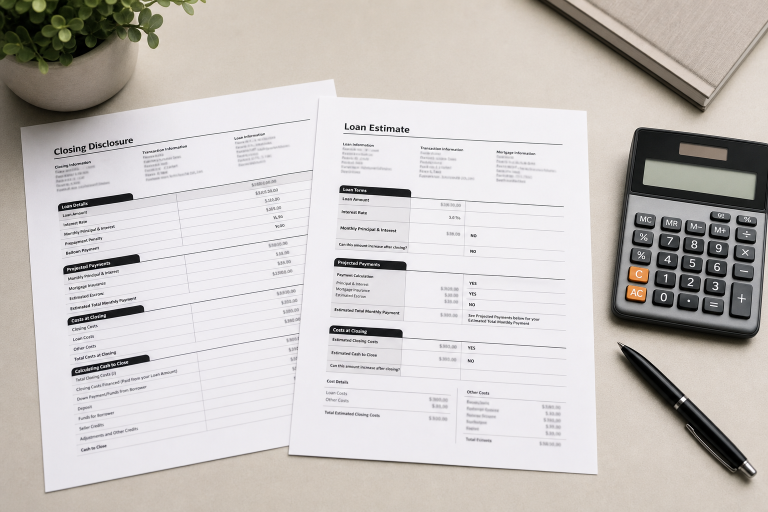
- Confirm the property address, purchase price, borrower names, and loan purpose.
- Check that the loan type, term, and loan amount match your agreement.
- Compare the interest rate and the principal-and-interest payment.
- Review lender charges and fees for third-party services.
- Check prepaid interest, homeowner’s insurance, property taxes, and escrow deposits.
- Verify seller credits, lender credits, deposits, and repair-related agreements.
- Confirm the final cash-to-close amount and how the settlement agent expects payment.
Title And Settlement Charges To Review
Title and settlement expenses often appear in the “Other Costs” section. These may include title search or examination work, settlement services, recording fees, endorsements, and policies required by the lender. Fees can vary by location, transaction details, and local practice.
- Ask what service each title or settlement charge pays for and who receives it.
- Confirm that the loan amount, property address, and purchase price are accurate where applicable.
- Check whether the charge was estimated earlier or finalized after title work and local fees were confirmed.
- Review any title-related credit, discount, or negotiated allocation between buyer and seller.
Questions To Ask About Taxes, Insurance, And Escrow
Prepaid items are often confusing because they may be collected at closing without being traditional lender fees. Ask whether property taxes are prorated correctly between buyer and seller, whether the homeowner’s insurance premium matches your current quote, and how much is being deposited into escrow.
Also check for homeowner association charges, municipal assessments, county fees, and future payment changes. If your monthly payment includes escrow, it can change later when the servicer analyzes actual tax and insurance bills.
Common Errors Buyers May Find
Errors are not always dramatic. A misspelled name, incorrect property address, wrong loan amount, duplicate service charge, missing seller credit, or outdated insurance figure can still create problems. Pay particular attention to unexplained changes in the interest rate, total monthly payment, or cash to close.
The Three-Business-Day Review Period
For most covered consumer mortgage transactions, the lender must provide the Closing Disclosure at least three business days before consummation. That period is meant for reading the form, comparing it with your Loan Estimate, and raising concerns before you sign. This guide to reading a Closing Disclosure can help you become familiar with the document’s page-by-page layout.
What To Do When The Numbers Do Not Match
- Mark the line item that looks different, missing, or unclear.
- Compare it with the Loan Estimate, purchase agreement, insurance quote, and any written credits.
- Contact your loan officer or settlement agent and request a clear written explanation.
- Ask for a corrected disclosure if the figure is inaccurate or the transaction terms have changed.
- Review the revised cash-to-close amount after any correction is made.
Ways To Prepare Before Closing Week
Keep your purchase agreement, Loan Estimate, insurance documents, inspection records, deposit receipts, and written repair agreements in one place. Avoid opening new credit accounts or making large financial changes before closing unless your lender tells you otherwise. Confirm wire instructions by phone using a trusted number, rather than relying only on an emailed message.
A practical home closing preparation checklist can also help you organize final documents, funds, and moving-related tasks before settlement day.
How To Spot A Closing Cost That Needs More Detail
Vague labels are a reason to ask questions, not a reason to guess. Find out whether a charge is a lender fee, government fee, prepaid amount, tax, or third-party service. Ask who receives the money, what service it covers, whether it can change, and whether it appeared on the Loan Estimate.
Questions First-Time Buyers Often Ask
Does Receiving A Closing Disclosure Mean The Loan Is Fully Approved?
Not necessarily. Receiving the disclosure is an important stage, but borrowers may still need to satisfy final underwriting conditions or provide requested documentation.
Can Closing Costs Change After The Disclosure Is Issued?
Some figures may change because of updated taxes, insurance, prepaid interest, credits, or settlement adjustments. Ask promptly about any change you do not understand.
Who Should Answer Questions About A Title Charge?
The settlement agent, title professional, or lender should be able to identify the charge, explain its calculation, and clarify who is responsible for paying it.
What If The Final Cash-To-Close Amount Is Too High?
Review credits, deposits, and calculations first, then speak with the lender before signing. Do not assume a surprise amount is correct or wait until after closing to address it.
Final Checklist Before Signing
- Read all five pages.
- Confirm the final loan terms and projected payment.
- Compare key figures with the Loan Estimate.
- Review title, settlement, recording, tax, insurance, and escrow entries.
- Verify credits, deposits, and cash to close.
- Ask questions about every unfamiliar charge before signing.
Conclusion
A Closing Disclosure gives you a final opportunity to review your mortgage and the costs of completing the purchase.
Taking time to check every page, compare earlier estimates, and question unexplained changes can make closing more predictable and help prevent avoidable surprises after you take ownership.